
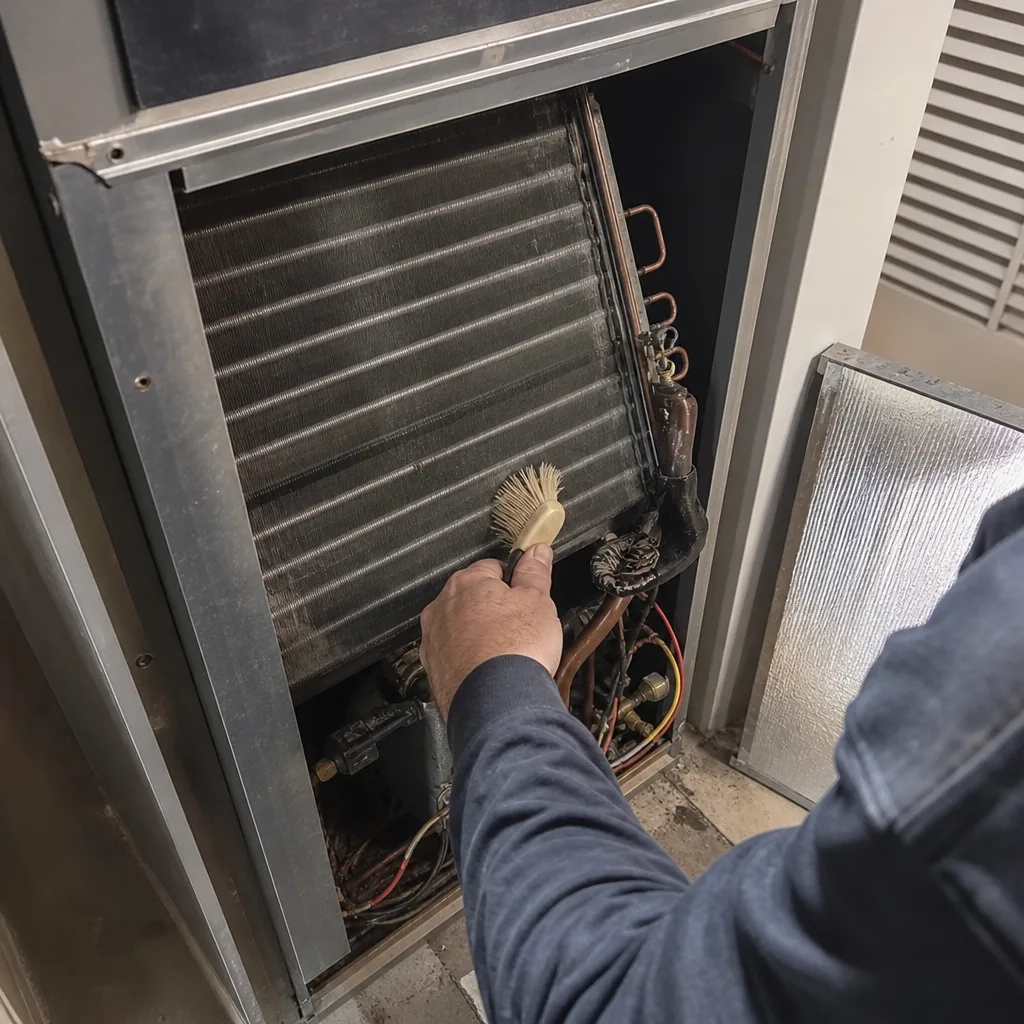
Last updated November 25, 2026
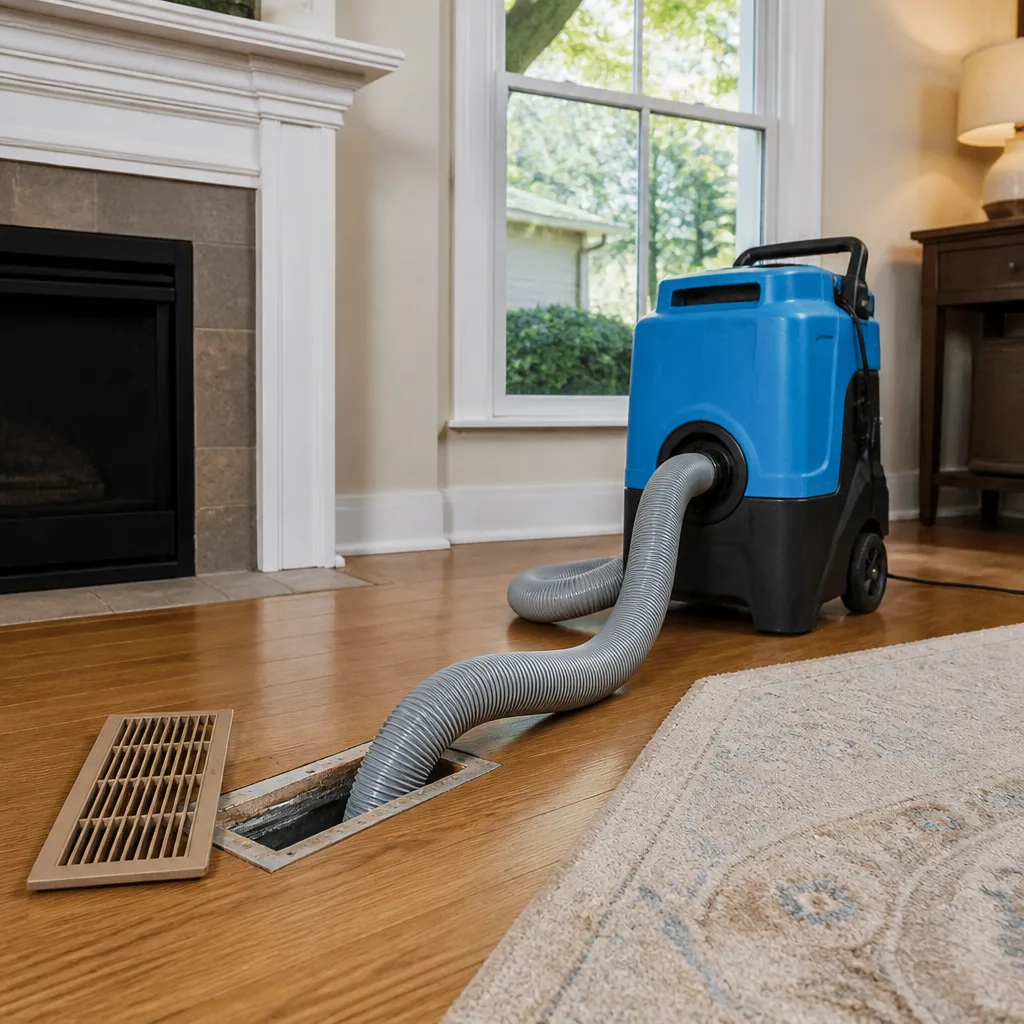 Whole-home duct cleaning
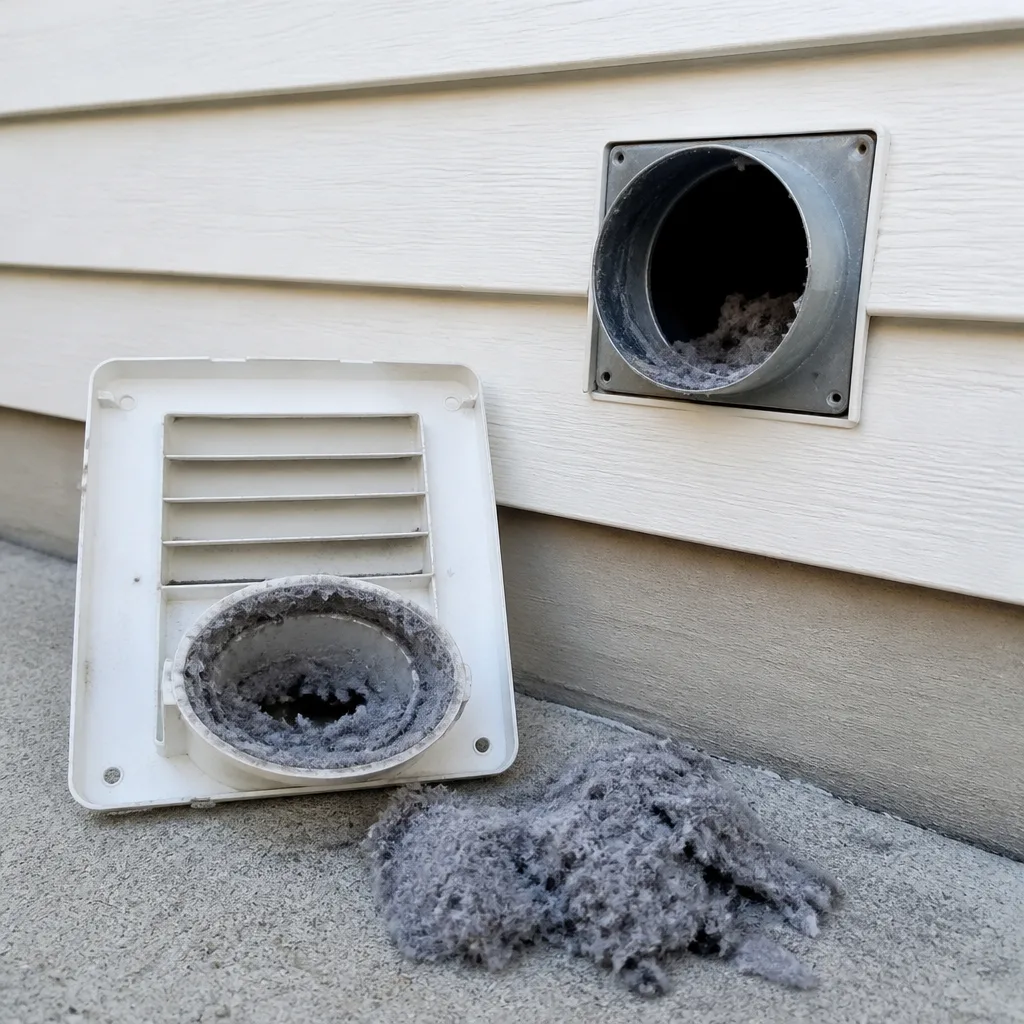 Dryer vent cleaning
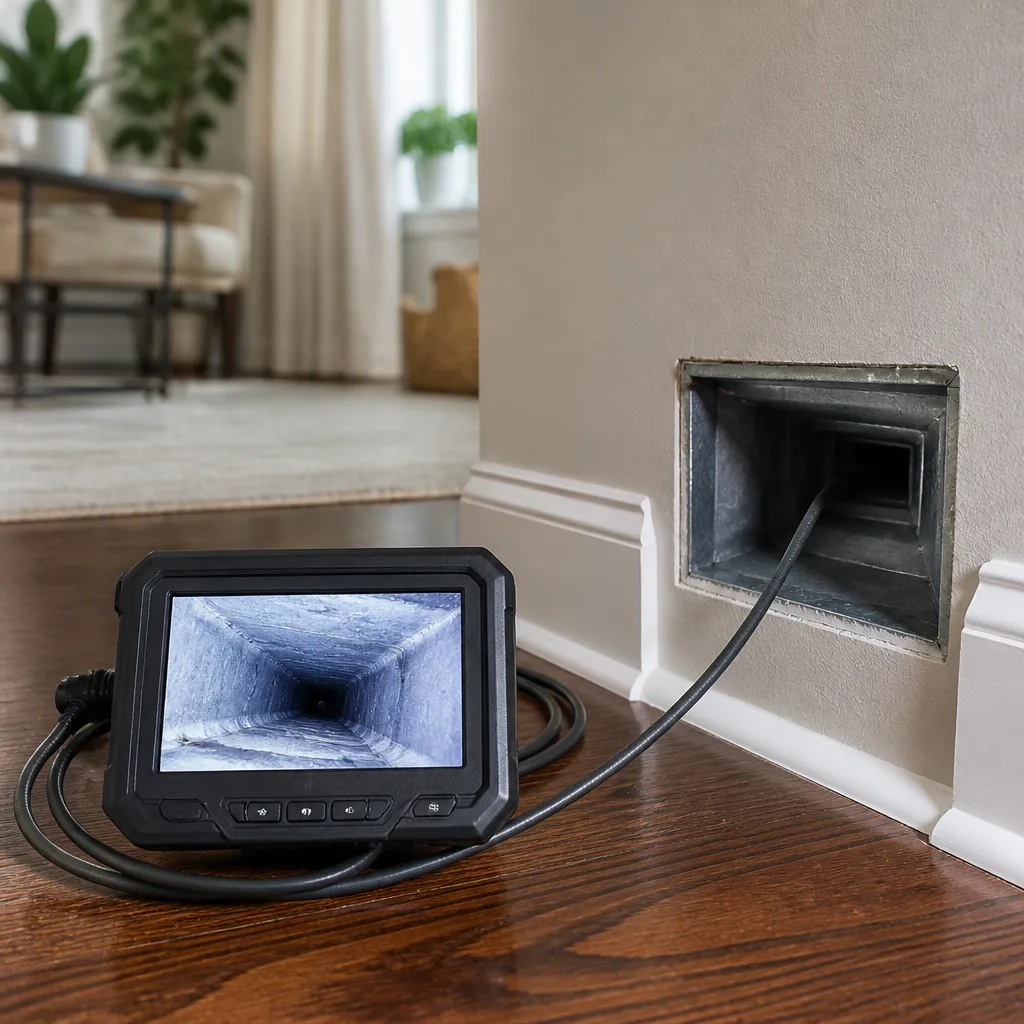 Camera inspection
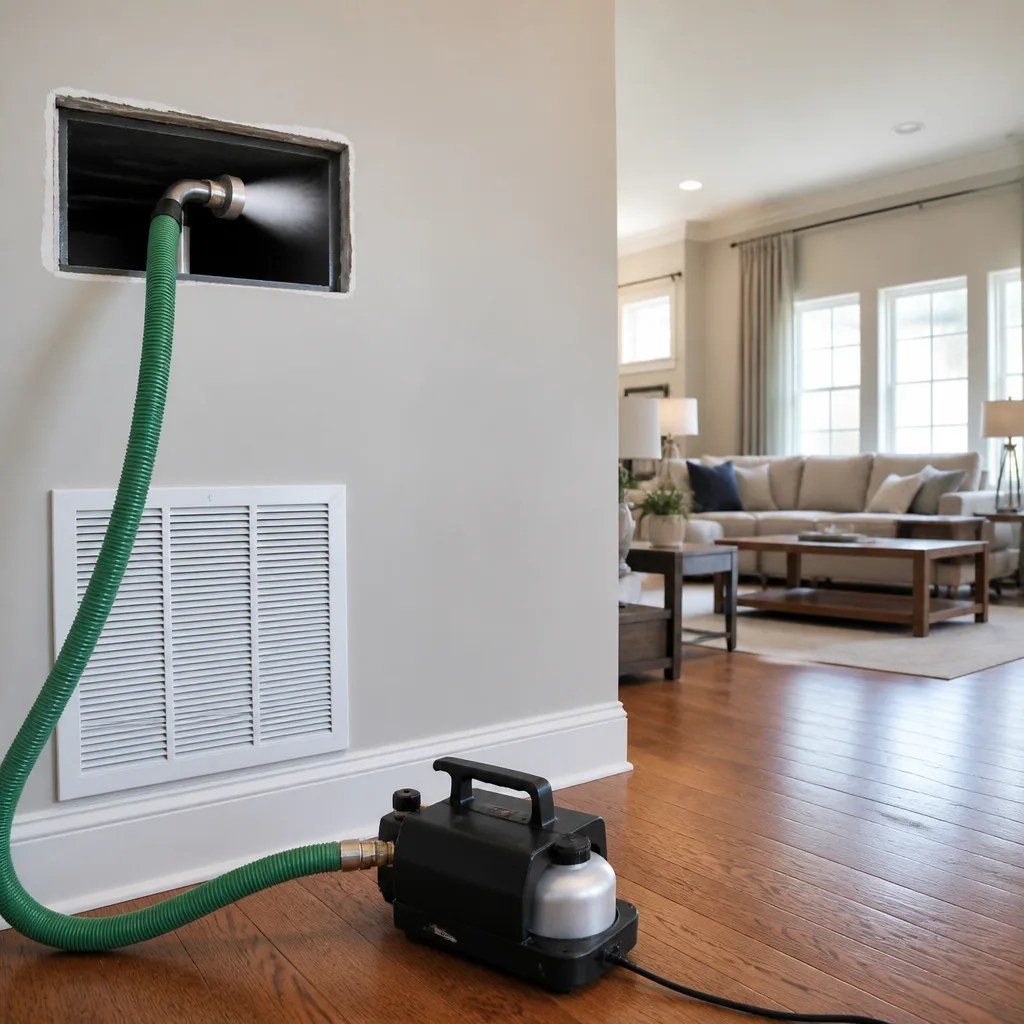 Sanitizing & deodorizing
Whole-system duct and dryer vent check with before-and-after photos - you see exactly what came out of your vents
That "$99 whole-house special" is a bait ad - the real number appears once they are in your hallway, or the "clean" is a shop-vac at the register. We photograph the inside of your ducts before and after instead.
DIY vs Professional Air Duct Cleaning: The Broomfield Homeowner’s Decision Guide
Most guides to this question set up a choice that doesn’t really exist. Nobody seriously argues that a homeowner should pull a full duct system apart with a shop vac, and nobody sensible argues that a professional cleaning is worth paying for on a system that’s two years old and spotless. The useful question is narrower, and it takes the whole decision apart: which tasks can a Broomfield homeowner actually do well with consumer tools, which tasks need professional equipment to work at all, and which DIY attempts leave the house worse than they found it. We’ll cover all three, plus the hybrid approach that saves the most money over time. This guide is written for homes in Broomfield specifically, where the climate and housing stock shape what the ductwork goes through.
Quick Answer
DIY air duct cleaning works for surface-level maintenance only: wiping register faces, vacuuming the grate at the intake, and clearing light dust from the visible boot. Anything beyond that requires professional negative-pressure equipment, and brushing flex duct without it tends to spread debris through the house instead of removing it. A professional cleaning is the right call for post-renovation debris, confirmed mold or rodent intrusion, a newly purchased home with unknown duct history, or any system that hasn’t been cleaned in years. Between those poles, a homeowner who does the small maintenance tasks at the right intervals gets more years out of the system before a professional job is needed.
Styles & brands we work with
- Whole-home duct cleaning
- Dryer vent cleaning
- Camera inspection
- Sanitizing & deodorizing
Table of Contents
- Why the Equipment Gap Matters More Than the Labor Gap
- Task-by-Task Capability Matrix: What You Can and Can’t Do
- When DIY Makes the Problem Worse
- Equipment Rental Reality in Broomfield
- The Hybrid Approach: What Homeowners Should Do Between Cleanings
- When Professional Service Is Non-Negotiable
- What a Professional Cleaning Actually Involves
- The Five-Year Cost of Ownership Comparison
Why the Equipment Gap Matters More Than the Labor Gap
Most DIY-versus-professional comparisons focus on effort: how long it takes, how tedious the job is, what a Saturday afternoon is worth. That’s the wrong axis. The gap that matters is suction and pressure, because duct cleaning only works if dislodged debris gets captured and removed from the house rather than pushed through the supply side. A consumer shop vac generates roughly 100 CFM of suction at the hose. A professional negative-pressure system, the kind mounted in a truck or a purpose-built trailer, pulls somewhere in the range of 10,000 to 16,000 CFM. That’s not twice as good or five times as good. It’s roughly two orders of magnitude. When you pull that kind of vacuum on the system and seal the openings behind the cleaning tools, the entire duct network goes into negative pressure, meaning air moves into the ducts and up the exhaust rather than into the living space.
In controlled settings, DIY duct cleaning has been shown to increase airborne particulate counts during and after the work. The mechanism isn’t mysterious: brushing loosens dust that a shop vac can capture at the register but not in the trunk line running through the house, and the loosened dust ends up settling out into the bedroom or the home office a few hours later. That’s why we treat the vacuum capacity as the first question in the whole decision. If the vacuum can’t create whole-system negative pressure, the cleaning is a partial intervention at best.
- Consumer shop vac: pulls dust into the hose, cannot pressurize a whole duct network, no HEPA containment unless the unit is specifically rated for it.
- Professional negative-pressure system: pulls the entire duct network into negative pressure during cleaning, uses HEPA filtration on the exhaust, captures airborne debris rather than redistributing it.
- Rotary brush system: agitates dust from every interior duct surface via a spinning brush head on a flexible shaft, driven by the vacuum’s suction at the other end.
- Video inspection camera: lets the technician see inside the trunk line and branches before and after, without cutting into the ductwork.
Our own equipment lineup reflects what commercial HVAC contractors rely on. The Rotobrush system is the industry benchmark for contact cleaning of duct interiors, Nikro HEPA units hold the debris under negative pressure, and Abatement Technologies containment equipment runs on every job to keep the work area clean while the ducts are open. That’s the equipment bar a professional cleaning is defined by. If a company is showing up with a shop vac and a drill brush, that’s a homeowner-grade intervention with a professional invoice attached.
Task-by-Task Capability Matrix: What You Can and Can’t Do
The clearest way to settle the DIY question for your own home is to walk through the tasks one by one and be honest about what you can realistically accomplish with consumer tools. The table below is the one we’d hand a homeowner who called to ask whether they needed us at all. Some of it we borrowed from how aerial duct cleaning crews talk about the work, minus the sales tone.
| Task | Realistic with consumer tools? | What it actually accomplishes |
|---|---|---|
| Wiping register faces and grilles | Yes | Removes surface dust that would otherwise get stirred into the room. Quick, harmless, worth doing. |
| Vacuuming the return-air grate at the intake | Yes, with a HEPA-rated vac | Captures what’s sitting on the face of the grate. Doesn’t reach the dust inside the boot. |
| Clearing visible debris in an accessible boot | Sometimes, if you can physically reach it | Removes what’s loose and close to the register. Doesn’t touch the trunk line. |
| Cleaning inside the trunk line | No | Requires a rotary brush on a flexible shaft plus whole-system negative pressure to move debris out of the house. |
| Brushing flexible duct without negative-pressure capture | Harmful | Loosens debris that settles back into rooms. If biological growth is present, brushing without containment spreads spores through the house. |
| Inspecting duct interiors without cutting access | No | Requires a video inspection camera. Without it, neither you nor a technician can actually see what’s there. |
| Repairing and sealing leaking duct joints | No | Requires mastic, foil tape rated for ductwork, and the training to know which joints actually leak. |
| Sanitizing after mold or rodent intrusion | No | Requires containment, professional-grade sanitizer, and post-cleaning verification. |
Notice that the “yes” column is short and the “sometimes” column is shorter. That’s the honest picture. Most of what a homeowner can do is register-level maintenance, which is genuinely worth doing, but modestly. The trunk line, the branches, the boots, the plenum, and the filter rack are all behind sheet metal you can’t reach with a vacuum attachment. The professional job is defined by the parts of the system you can’t see from the register.
In a Broomfield home, the register-level maintenance takes on slightly more weight than it does in, say, a coastal climate. Our dry, windy spring and the Front Range dust that blows across the suburbs around Anthem and Interlocken means more particulate loading at the return air intake. That’s a reason to wipe registers more often, and a reason the annual filter-change schedule matters. It’s not a reason to think you can clean the ducts yourself with a better shop vac.
When DIY Makes the Problem Worse
Here’s the part of the conversation most DIY guides skip: there are specific situations where a homeowner with a brush and a shop vac will leave the house worse off than if they’d never started. The two most common we see in the Broomfield area both involve disturbing contamination without being able to capture it. Once you’ve done that, the remediation cost goes up, not down.
- Brushing flexible duct without negative-pressure capture. Flex duct has a ribbed plastic interior, and dust clings to those ribs. When you push a consumer brush through it without pulling the whole system into negative pressure, the brush breaks the dust loose, some of it makes it to the vacuum, and the rest moves downstream into the branch or back out into the room. The result is a partially disturbed system with no way to evaluate what’s still there.
- Disturbing biological growth without containment. If there’s visible mold or a musty smell at a register, brushing it without HEPA containment and biocidal treatment spreads the spores through the house in a plume. That’s the opposite of what you were trying to accomplish, and it can trigger symptoms for anyone in the household who has allergy or asthma sensitivity.
- Vacuuming a rodent-contaminated system without PPE or containment. Rodent droppings in a duct aren’t a dust problem, they’re a contamination problem. Consumer vacuums without HEPA filtration aerosolize what they pick up. This is a call-a-professional situation, not a Saturday project.
- Hammering on ductwork to shake debris loose. Flexible duct is delicate, and sheet-metal trunk line is sealed at the joints. Beating on either one opens leaks that weren’t there before, and leaks work against the system’s efficiency once the cleaning is done. Sealing those leaks afterward is part of the professional job, and a service we offer separately as a full duct repair and sealing visit.
- Cleaning without inspecting. A homeowner with a flashlight can see a register face. They can’t see the ten feet of duct behind it. Anything that gets cleaned without being inspected first is a guess.
The dry Broomfield climate complicates this slightly in a helpful direction: because our winters are dry and moisture problems in ductwork are less common than in, say, the humid Southeast, the mold scenario is less frequent here. But the Front Range wind kicks up a lot of fine particulate, and it’s not unusual for a Broomfield home to see visible dust accumulation at the return within a few weeks of a filter change. That dust is exactly the kind that goes airborne when disturbed.
Equipment Rental Reality in Broomfield
If the equipment matters this much, why not rent it? It’s a reasonable question and we hear it often. The answer is that the good equipment either isn’t rentable to consumers or it costs more than a professional cleaning once you factor in everything else. Here’s the honest breakdown.
- Rotary brush systems. These are designed for trained operators. The brush head can scar flex duct if the operator uses the wrong size or feeds it too fast, and the flexible shaft is easy to kink. Rental availability in the Boulder County and Broomfield area is limited because the equipment is expensive and damage risk is high. Most rental yards don’t stock them.
- HEPA negative-pressure units. Trailer-mounted or truck-bed units typically aren’t available at consumer rental yards. Smaller HEPA units exist in some rental inventories, but their CFM rating usually isn’t high enough to pull a whole residential duct system into negative pressure. The “professional-grade” label on a rental unit doesn’t always mean what the label implies.
- Video inspection cameras. Rentable in the metro area, but only useful if you already know what you’re looking at, and only after you’ve cut an access hole the camera can fit through.
- Cost of a one-time rental vs. a one-time cleaning. Even when the equipment is available, the total cost of a professional rental plus a day of your time, plus the risk of damaging the ductwork, tends to land at or above what a professional cleaning costs. The economics only work if you’re planning to do this on many different homes.
What we’d say to a Broomfield homeowner considering rental: the equipment is not the only thing you’d be renting. You’d also be renting the experience of an operator who knows when a duct run needs the smaller brush head, when a joint needs sealing instead of cleaning, and when the right answer is to stop working and call a specialist. Our technicians have up to 10 years of experience with the equipment, and that experience is doing roughly half the work.
The Hybrid Approach: What Homeowners Should Do Between Cleanings
The real answer to “should I DIY or hire a professional” is that most Broomfield homeowners should do a mix of both, sequenced correctly. The professional cleaning resets the system. The DIY maintenance extends the interval before the next professional cleaning is needed. Done together, the two save more money than either one on its own, and the system runs cleaner in between. Here’s what we recommend, in order.
- Change the air filter on schedule. This is the single highest-leverage maintenance task in the entire system. A clogged filter forces the blower to work harder, and it lets more dust slip past into the ductwork. Check the filter monthly during the summer cooling season and the winter heating season. The filter your system uses will specify a change interval; honor it.
- Wipe the register faces once a month. A damp microfiber cloth on the supply grilles and the return grate takes two minutes and keeps surface dust from getting stirred into the room air. This is genuinely useful and completely safe.
- Vacuum the return grate with a HEPA-rated vac. Use the brush attachment on the return grate, not the supply registers, so you aren’t pushing dust into the supply side. A HEPA-rated shop vac is worth the extra cost over a non-rated unit.
- Watch for signs of debris at the registers. Black dust streaks at the supply registers, a musty smell when the HVAC kicks on, visible debris in the return boot. These are the signals that a professional inspection is due. Not a DIY project.
- Clear the area around the outdoor condenser unit. A clean condenser pulls less dust into the return side in the first place. Rake leaves, clear weeds, and rinse the coils with a garden hose once a season.
- Schedule the next professional cleaning when the signs reappear. For a Broomfield home with a filter-change habit and a clean outdoor unit, the interval between professional cleanings can stretch meaningfully compared to homes that ignore maintenance. It’s not a schedule to fix in months; it’s a schedule to fix in years, because what you’re buying is time, and time depends on the home.
One note on a service that often gets missed in these conversations: dryer vent cleaning runs on the same DIY-versus-professional logic, but with more at stake. A clogged dryer vent is a fire-safety issue, and the lint pack that builds inside the vent can’t be reached with a household vacuum. It’s worth doing professionally every couple of years, even for homeowners who do everything else themselves.
When Professional Service Is Non-Negotiable
Some situations don’t belong on a DIY-versus-professional spectrum. They’re professional-only, and no amount of consumer equipment closes the gap. If any of these apply to a Broomfield home, the decision is already made.
- Post-renovation debris. Drywall dust, sawdust, fiberglass insulation, and construction debris migrate into the ductwork during a remodel. A shop vac can’t pull drywall dust out of a trunk line, and disturbing it without containment coats the whole house in the process. This is the single most common reason we get called to Broomfield homes post-renovation.
- Confirmed mold in the duct system. Visible mold at a register, a persistent musty smell, or a moisture problem in the ductwork. Remediation requires containment, professional-grade sanitizer, and post-treatment verification. A homeowner doing this with bleach spray and a shop vac makes the problem worse.
- Rodent intrusion. Droppings in the ductwork, chewed insulation at the boot, or evidence of nesting. This is a contamination problem and a safety problem. Consumer vacuums without HEPA containment aerosolize what they pick up. Professional cleanup, then duct repair and sealing to close the entry points, is the sequence.
- Newly purchased homes with unknown duct history. A home that’s been through several owners may have duct history nobody can document. A professional inspection and cleaning establishes the baseline, and a video camera records what’s actually there, not what the previous owner said.
- Duct leaks and poor HVAC performance. A cleaning doesn’t seal leaks, and leaks waste conditioned air into unconditioned space. If the energy bill is climbing without explanation, the ducts may need repair and sealing, which requires mastic, foil tape, and a technician who knows which joints actually matter.
Some of those situations also call for a broader look at the HVAC system as a whole, which is why we run HVAC cleaning as a separate service rather than a footnote to duct cleaning. When the air handler, coils, and blower assembly are carrying the same contamination as the ducts, cleaning only the ducts leaves the source in place.
What a Professional Cleaning Actually Involves
If you’ve decided to hire a professional, the next question is what you should expect from the job, so the work is something you can actually verify. Here’s the sequence we follow on a standard residential job, from intake to register.
- Video inspection. A camera goes into the trunk line and a few branches to see the actual condition. This establishes what’s there, and the same camera records what’s there after cleaning. You see the before and after.
- Negative-pressure setup. The HEPA unit and a containment device get hooked up at a chosen point in the system, so the whole duct network sits under negative pressure from the start of cleaning to the end. Every debris particle the brush loosens has one path out: into the HEPA filter.
- Rotary brush cleaning of every interior surface. The brush runs through the trunk line and to the end of each branch, cleaning the sides of the duct as it goes. The vacuum pulls against the brush so the dust is captured, not distributed. This step covers every duct surface the brush can reach, which is most of them.
- Hand cleaning of the boots and plenum. The brush can’t reliably contact every corner of the boots or the plenum near the air handler. Those get hand-cleaned with proper tools under the same negative pressure.
- Post-cleaning inspection. Camera goes back in. Before-and-after photographs document what was accomplished. If anything looks off, it gets addressed before the job closes.
- Filter replacement and joint inspection. New filter goes in. Any duct joints that look like they’re leaking get flagged for repair and sealing. If it’s a repair we can do in the same visit, we do.
If a duct cleaner shows up with a shop vac, a drill brush, and no negative-pressure unit, they aren’t performing that sequence. That’s the tell. The five thousand dollar difference between a professional-grade setup and a consumer setup shows up in the CFM number on the vacuum, and in the camera footage you should be able to see afterward.
The Five-Year Cost of Ownership Comparison
The cost question is the one most homeowners come in with, and it’s fair. Rather than quote a single price, let’s walk through the total cost of ownership over a five-year window for the two typical paths. Precise numbers vary by home size, system layout, and condition, so the written estimate is what sets the final price. What follows is the shape of the decision, not a quote.
| Category | DIY-only path (5 years) | Professional path (5 years) |
|---|---|---|
| Register cleaning and filter changes | Homeowner labor + filter cost, ongoing | Homeowner labor + filter cost, ongoing |
| Professional duct cleaning | Zero | One or two cleanings depending on conditions |
| Duct repair and sealing | Tends to get deferred, leaks widen | Identified during cleaning, done in same visit if possible |
| Possible re-cleaning after a failed DIY attempt | Yes if a DIY attempt distributed debris | Not applicable |
| Energy cost of leaking ducts | Ongoing, rises with time | Reduced after any leaks found and sealed |
| Indoor air quality | Depends on maintenance habits | Baseline established with camera footage |
The pattern we see is that the DIY-only path looks cheaper upfront and ends up more expensive across a five-year window, primarily because deferred duct repair and the occasional re-cleaning after a failed attempt add up. The professional path front-loads the investment but rarely has the expensive surprises, because the video inspection finds the problems before they compound. Pricing for a cleaning is estimated per system based on size and condition, and the written estimate sets the final number. We don’t quote per vent, because per-vent pricing is the bait-and-switch structure that inflates the invoice after the technician is already on site. One flat price per system, agreed before work starts.
The X factor is that not every home needs the same scope. A Broomfield home that just came out of a renovation needs a different level of service than a ten-year-old home with a filter-change habit and no signs of problems. That’s why we start with the inspection and the estimate. The estimate is free, and we give you a written number before any work starts.
Common Mistakes to Avoid
- Buying a shop vac and assuming that’s a duct cleaning. A shop vac reaches the register face; it doesn’t reach the trunk line. Calling it a duct cleaning is the most common self-deception in the whole category.
- Running a drill brush through flex duct without negative-pressure capture. The brush loosens dust faster than the vacuum can capture it. Some of it goes into the branch, some of it goes into the room. Either way, the dust you were trying to remove ends up somewhere you didn’t want it.
- Trusting a per-vent quote as a job price. A per-vent quote is a teaser price. The invoice that actually arrives reflects the true scope. Ask for a flat price per system, not a per-vent figure.
- Skipping the video inspection on a newly purchased Broomfield home. The previous owner’s “recently cleaned” claim is only as good as the documentation behind it. A camera-based inspection establishes the real baseline.
- Ignoring the return-air grate. That grate is where the largest volume of air enters the system, and it loads up faster than the supply registers. Wipe it monthly, vacuum it with a HEPA-rated unit.
- Cleaning ducts without addressing leaks. Cleaning a leaking duct system, then leaving the leaks in place, wastes the cleaning on the unconditioned side of the system. If the technician finds leaks, fix them in the same visit.
- Hiring a duct-only company and coordinating a second contractor for repair. The coordination cost is real: two visits, two dispatches, and two chances for the handoff to drop. A full-system provider handles the cleaning, the repair, the sealing, and the air-quality follow-through on the same engagement.
One more: forgetting the dryer vent. It’s not part of the air duct system, but it’s in the same house and the same fire-safety category. Homeowners who check their HVAC filter monthly often haven’t looked at the dryer vent in a decade.
See the difference
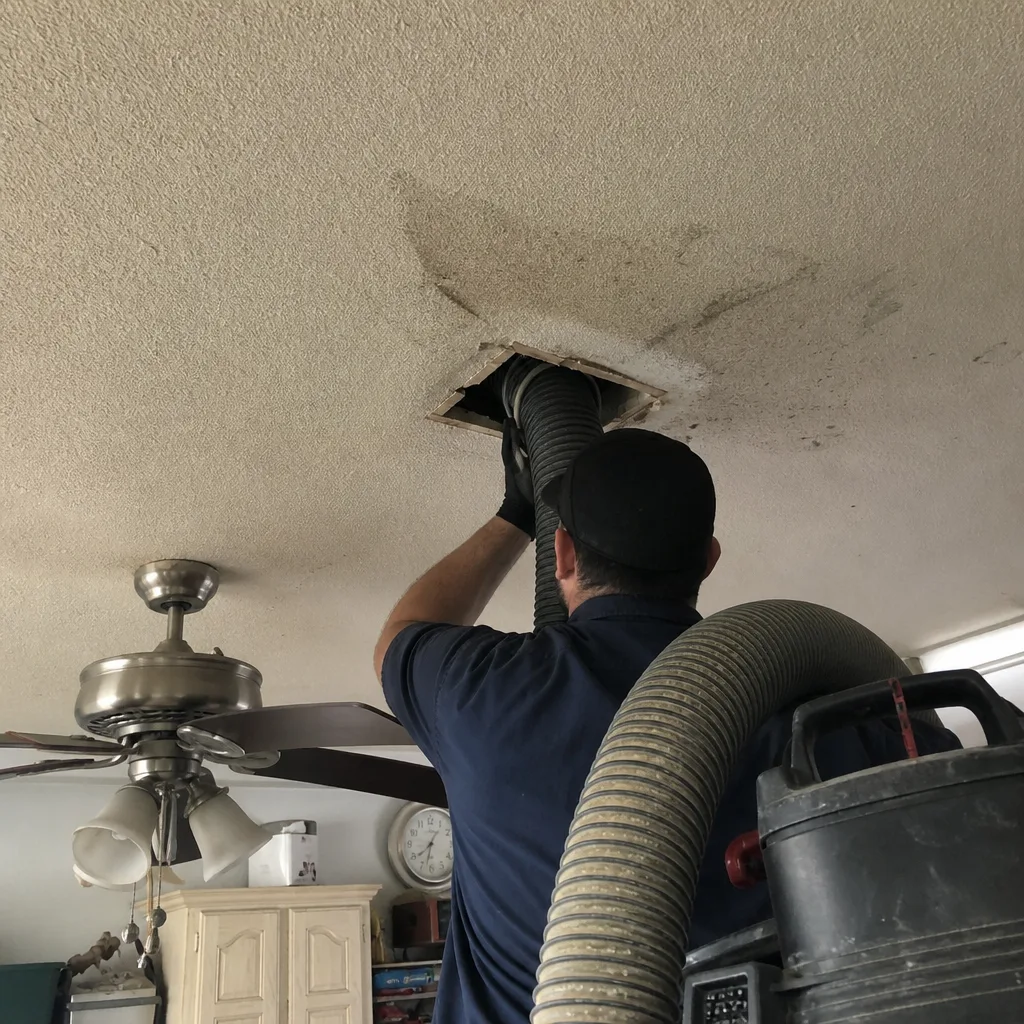 Before
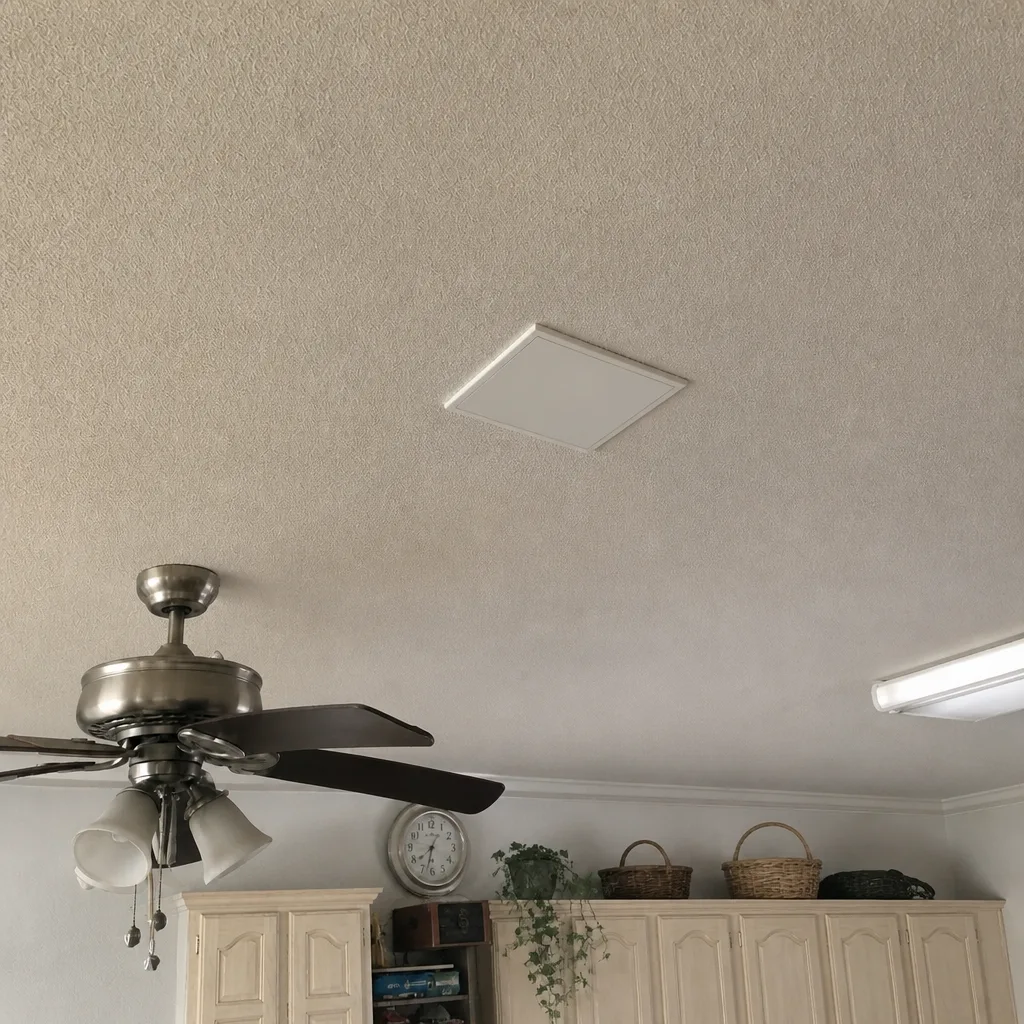 After
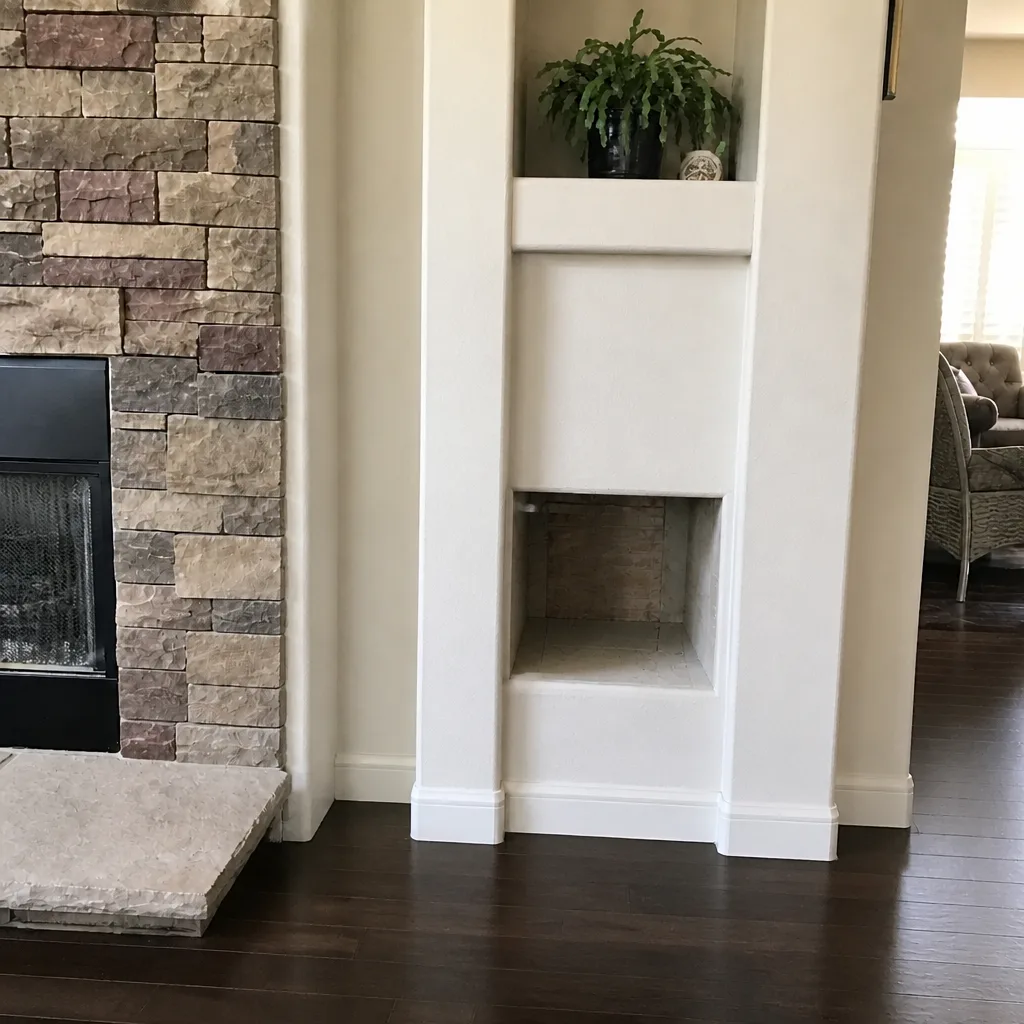
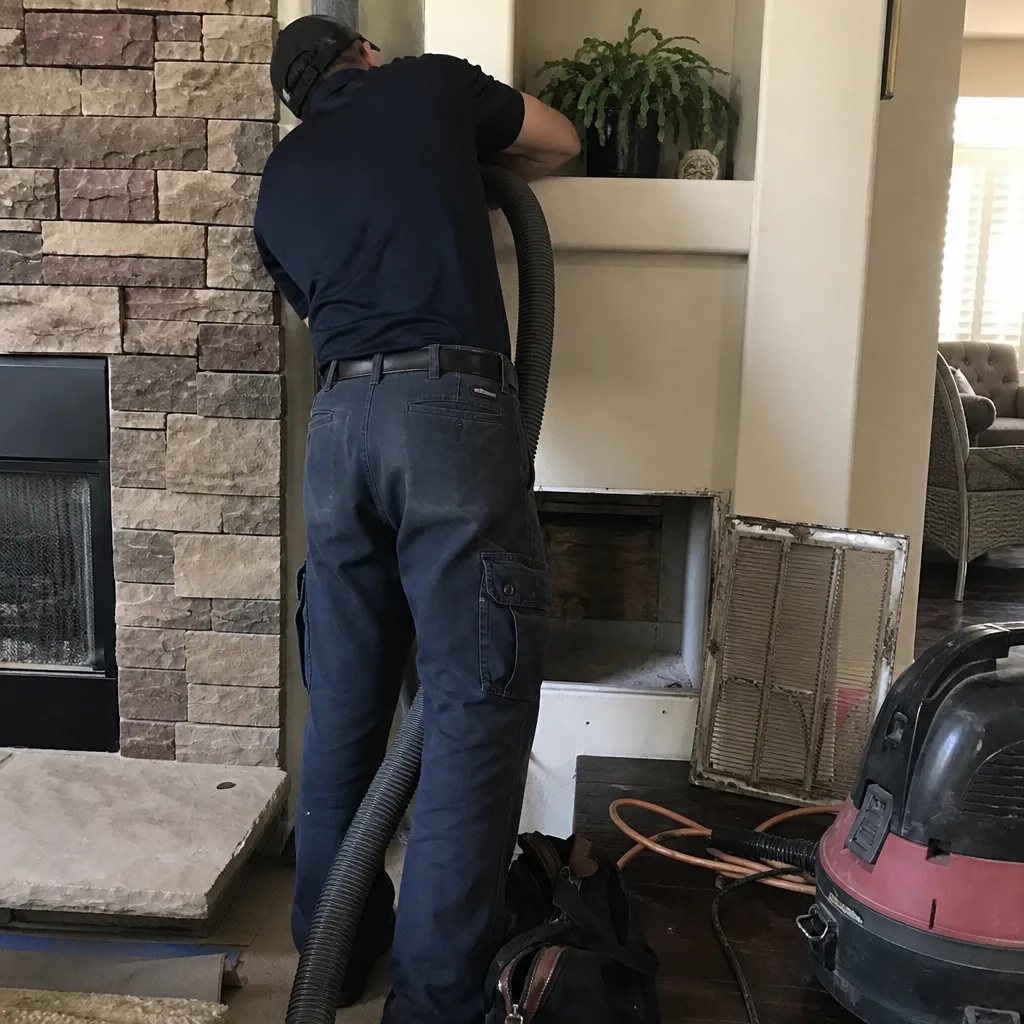 Before
 After
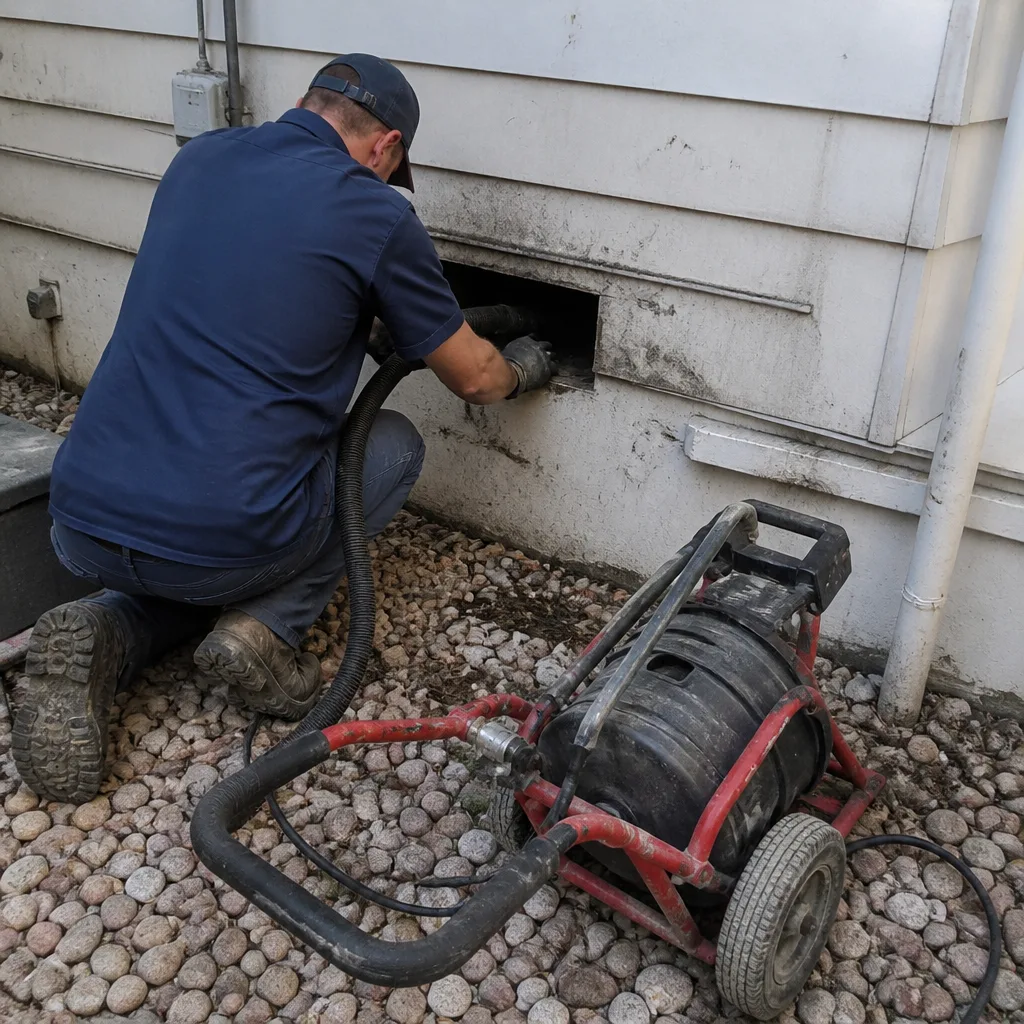 Before
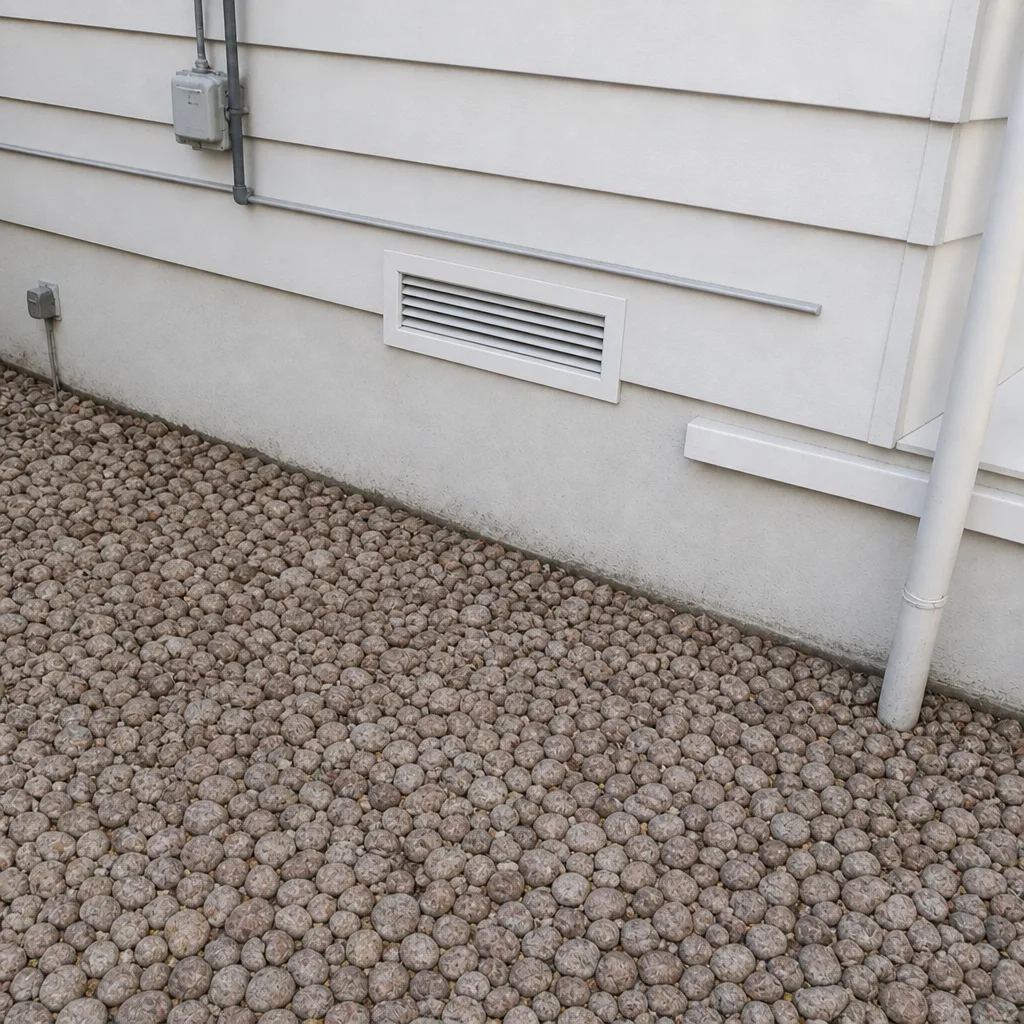 After
When to Call a Professional
You should call a professional duct cleaner in Broomfield if any of these are true: you just finished a renovation, you’ve seen mold or rodent evidence in the system, the home was recently purchased with no documented duct history, dust is visibly accumulating at the supply registers within days of a filter change, a musty smell comes out of the vents when the HVAC kicks on, or the system hasn’t been professionally cleaned in a timespan you can’t actually remember. Those conditions are outside what consumer tools can resolve. Broomfield Air Duct Cleaning Pros offers free estimates in Broomfield. Call (877) 792-6623. We answer 24/7. Fast dispatch from 7am to 7pm, Sunday through Friday. The written estimate comes before any work starts, and it sets the final price.
Frequently Asked Questions
The price depends on the size of the system, the length of the duct runs, the condition of the ductwork, and whether repair or sealing gets folded into the visit. A single-system residential home in Broomfield sits at the lower end of the range, larger homes with multiple zones and heavy debris sit at the higher end. Call (877) 792-6623 for an exact quote – estimates are free, and the written estimate sets the final price so there’s no surprise on the invoice.
Because they’re not quoting the same job. The lowest quotes tend to be per-vent teaser prices that balloon once the technician is on site and the “extra” work gets added to the invoice. A per-vent quote is not a whole-system price and shouldn’t be evaluated as one. Ask for a flat price per system in writing before work begins. Call (877) 792-6623 for an honest estimate structured that way.
By looking at before-and-after photographs of your own ducts, taken by the technician’s video inspection camera. Not a stock photo, not a slide deck. The footage should show the trunk line and branches before cleaning and after, with the same camera. If a company can’t produce before-and-after images from your specific system, the cleaning is unverifiable. Call (877) 792-6623 and ask for the documentation as part of the estimate.
There’s no single schedule that fits every home. A Broomfield home with a filter-change habit and no signs of debris at the registers may go several years between professional cleanings. A home that just came out of a renovation, or one where a pet lives indoors, or one that’s had a rodent issue needs cleaning sooner. The honest answer is that the interval depends on what the inspection shows. Call (877) 792-6623 to schedule the inspection that tells you the answer for your home.
You can clean the register faces and vacuum the return grate, and those tasks are worth doing. You cannot clean the trunk line or the branches, because a consumer shop vac can’t pull a whole duct system into negative pressure and can’t capture the debris a brush loosens inside the ductwork. Brushing flex duct without that negative pressure redistributes the dust into the living space rather than removing it. Call (877) 792-6623 for a professional assessment before attempting a DIY brush-through.
Slightly, yes. The dry Front Range climate and the wind-blown particulate across areas like Anthem and Interlocken mean return-air grates load up faster here than they would in a humid climate, and the summer pollen season is short but intense. The Broomfield housing stock varies from older established neighborhoods to newer builds, and the ductwork reflects the age of the home. That’s a reason to inspect before cleaning, not a reason to guess at a schedule. Call (877) 792-6623 for a Broomfield-specific estimate.
The Bottom Line
The DIY-versus-professional question isn’t a binary. It’s a task-by-task decision. Homeowners can and should handle register cleaning, filter changes, and return-grate vacuuming, because those tasks extend the interval between professional cleanings and reduce the total cost of ownership over years. What a homeowner can’t do is clean the trunk line, inspect the system with a camera, or fix leaking joints – and trying tends to spread the problem rather than fix it. Broomfield homes with post-renovation debris, confirmed mold, rodent intrusion, or unknown duct history need a professional job, full stop. For everything in between, the right next step is an inspection and a written estimate before any work starts. Free estimates, flat price per system, before-and-after photos in hand when the job is done.
Call (877) 792-6623 for a free estimate on air duct cleaning. We answer 24/7. Fast dispatch from 7am to 7pm, Sunday through Friday. Our technicians have up to 10 years of experience, and the Broomfield Air Duct Cleaning Pros team runs every job with Rotobrush, Nikro, and Abatement Technologies equipment because the equipment is what makes a cleaning a cleaning. From intake to register.
Written by the team at Broomfield Air Duct Cleaning Pros.