
Last updated November 25, 2026
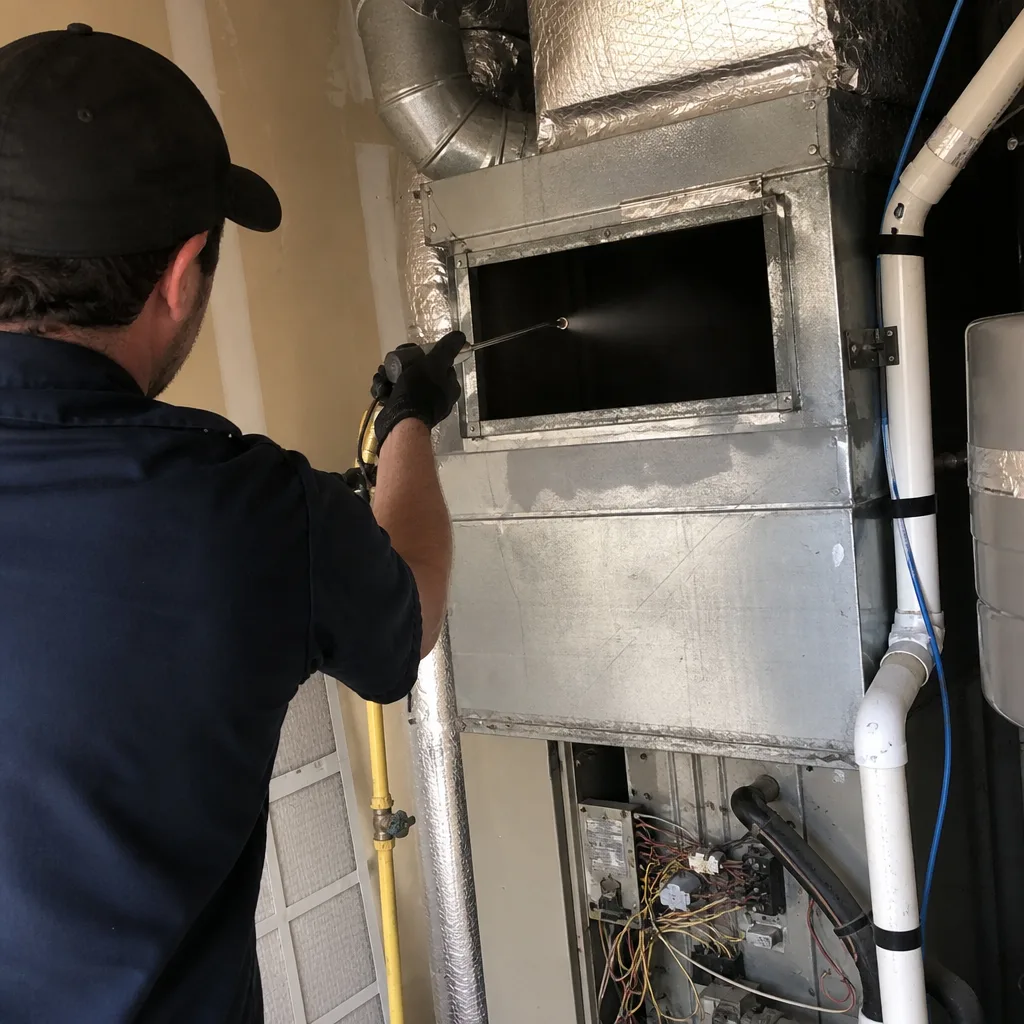
 Whole-home duct cleaning
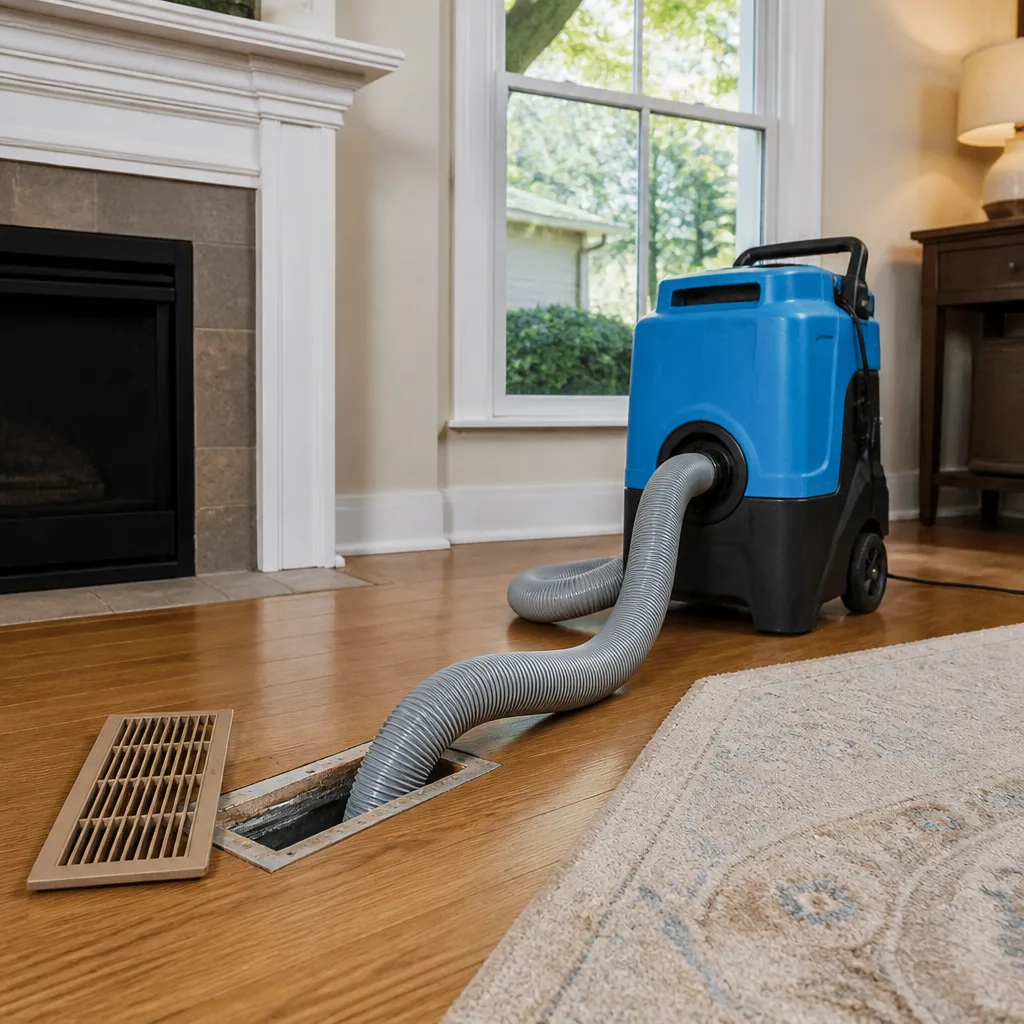
 Dryer vent cleaning
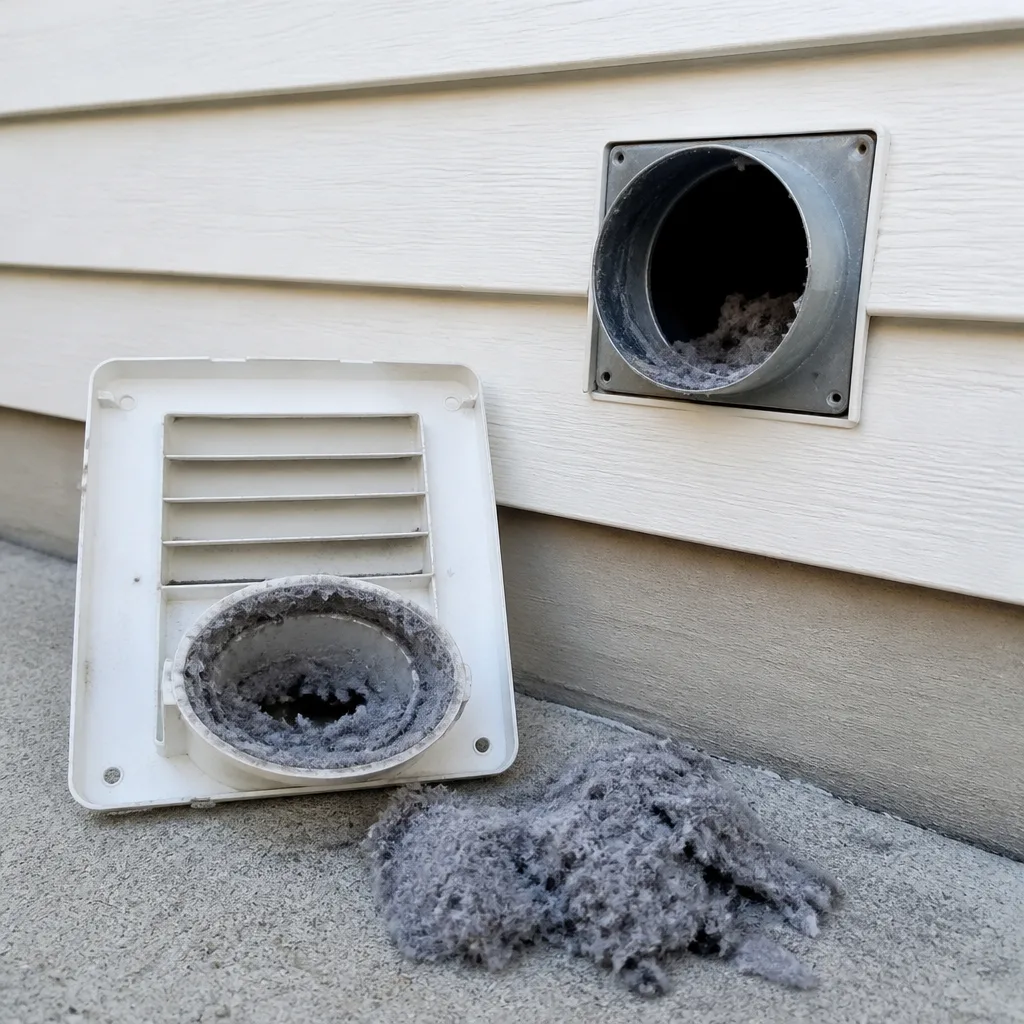
 Camera inspection
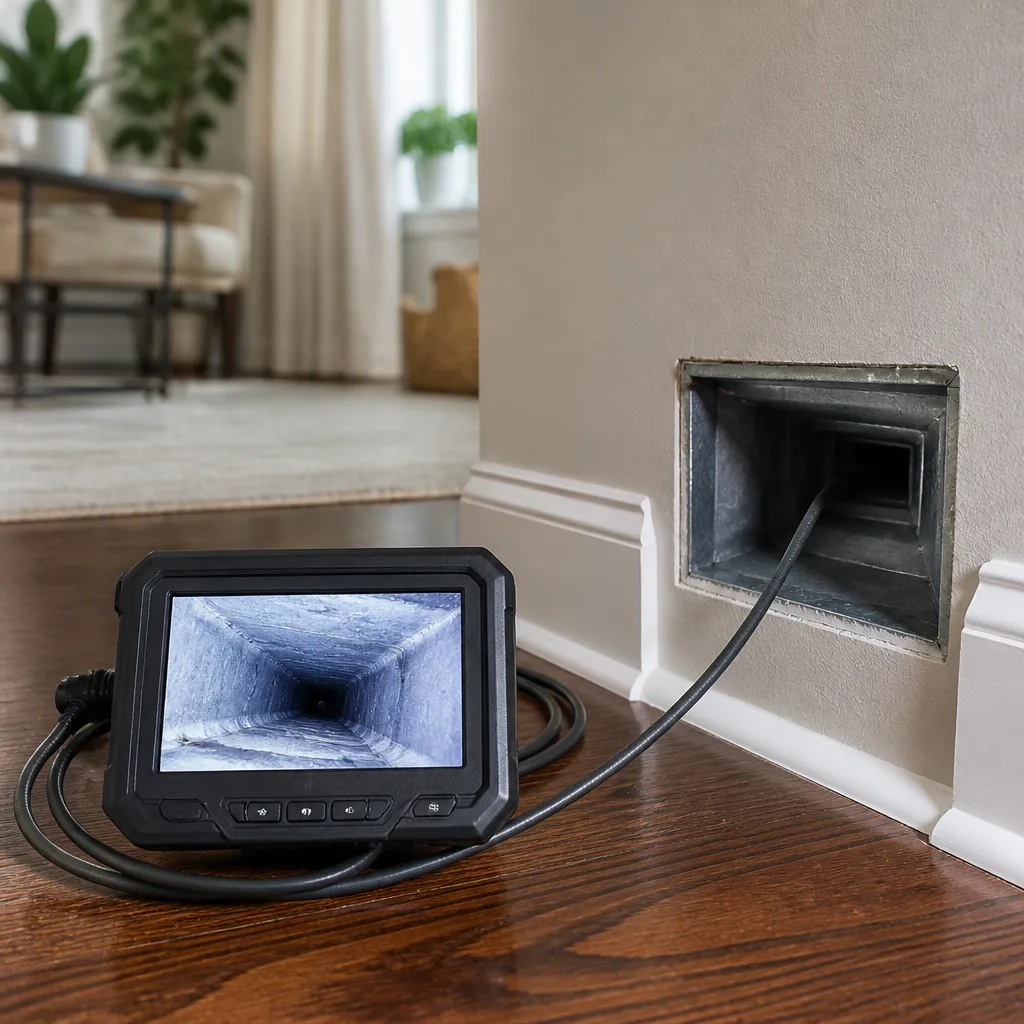
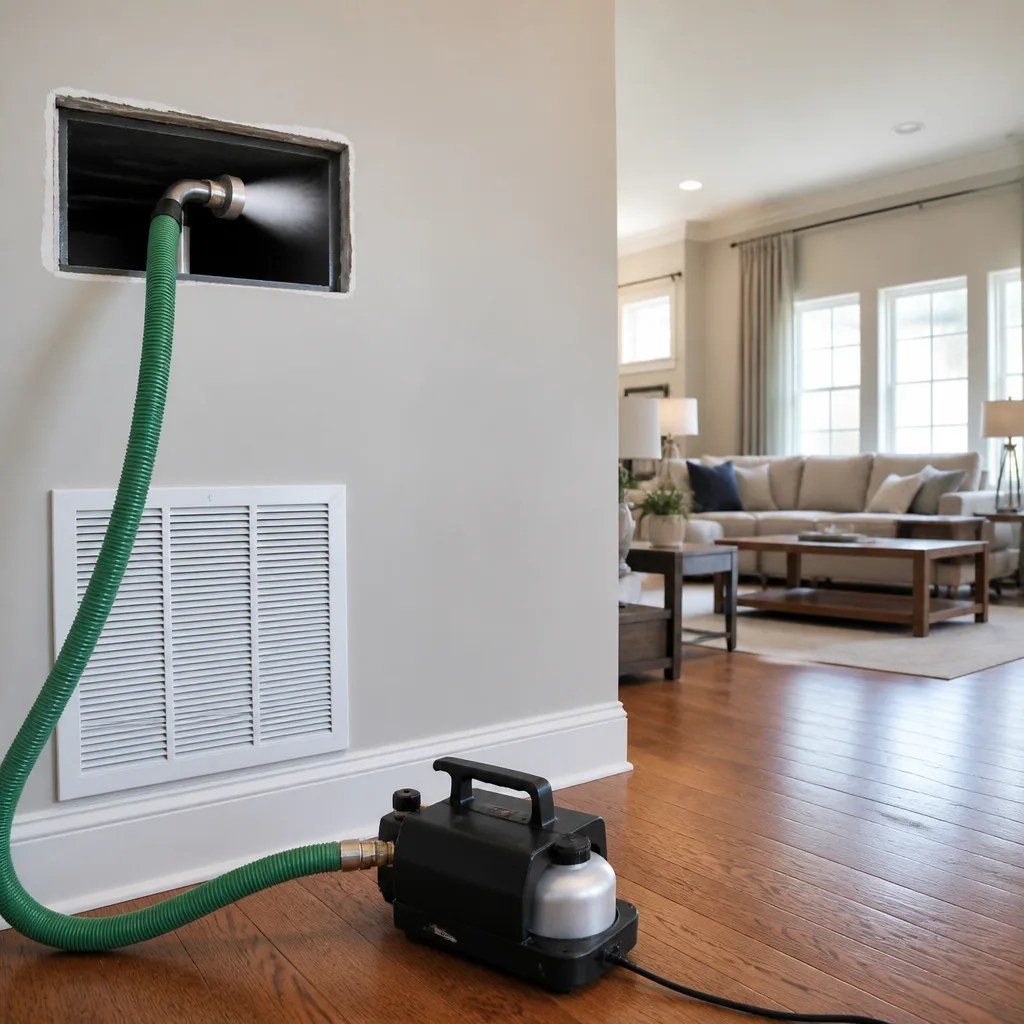 Sanitizing & deodorizing
Whole-system duct and dryer vent check with before-and-after photos - you see exactly what came out of your vents
That "$99 whole-house special" is a bait ad - the real number appears once they are in your hallway, or the "clean" is a shop-vac at the register. We photograph the inside of your ducts before and after instead.
Seasonal Air Duct Cleaning Care for Broomfield: Year-Round Homeowner’s Guide
Most homeowners set one duct cleaning reminder and call it done. That assumes your duct system loads up at the same rate all year. In Broomfield, it doesn’t. You live on the Front Range at 5,344 feet, in a metro area that logged 32 days of unhealthy air quality in 2023. A single August wildfire smoke event can push more particulate into a duct system than the previous six months combined, and then dry winter heating bakes that dust onto the sheet metal. This guide maps what to do each season inside your ducts, from June smoke to March pollen, so the system you breathe through stays clean between professional visits.
Quick Answer
Air duct cleaning in Broomfield is best treated as a seasonal practice, not an annual checkbox. The two highest-value professional cleanings land in late November, after smoke season ends and before heating takes over, and in late May, after tree pollen peaks. Between those visits, filter changes, humidity control and a simple indoor air quality monitor tell you when the system is loading up again. A full cleaning, inspection and any duct sealing belong in the same appointment, because cleaning a leaking duct network only gets you half the benefit.
Styles & brands we work with
- Whole-home duct cleaning
- Dryer vent cleaning
- Camera inspection
- Sanitizing & deodorizing
Table of Contents
- Why Broomfield’s Four Seasons Load Your Ducts Differently
- Summer: Wildfire Smoke and Particles Your Filter Can’t Stop
- Fall: The Pre-Heating Inspection Checklist
- Winter: Dry Air and Electrostatic Dust Adhesion
- Spring: Timing Professional Cleaning Around Front Range Pollen
- How to Use a $30 Air Monitor as a Duct Gauge
- Clean Ducts Are the Start, Sealed Ducts Are the Finish
- What a Professional-Grade Cleaning Actually Involves
Why Broomfield’s Four Seasons Load Your Ducts Differently
Most duct care advice treats the system as a static box that collects dust at a steady rate. A house in Broomfield doesn’t work that way. Four separate events hit your duct interiors each year, and each one leaves a different kind of debris behind.
Summer brings wildfire smoke from the mountains and the larger western fire season. Combustion particles in that smoke reach down into the sub-2.5-micron range, and those particles slip past standard filters and land inside duct walls. Fall brings the switch from cooling to heating, when an air handler moves from pulling cool air to pushing warm, dry air and any debris left from summer gets baked onto surfaces. Construction dust from the development happening around Broomfield adds a base layer that never fully leaves, particularly in newer neighborhoods where infill and grading are ongoing. Then spring floods the intake with Front Range tree pollen at concentrations that coat filter media in days.
Each of these events responds to a different action. A filter change handles some of the summer smoke. A duct cleaning handles the accumulation. A duct inspection in October catches the leaks that let pollen and dust bypass the filter in the first place. If you run the same annual routine every year, you’re ignoring three out of four of the actual loads on your system.
That’s the case for a seasonal framework instead of a single reminder. The rest of this guide walks through each season with actions tied to what’s actually happening in the air around Broomfield at that time of year. For the basics on whole-house service, our air duct cleaning page covers what a full visit includes.
Summer: Wildfire Smoke and Particles Your Filter Can’t Stop
Wildfire smoke is the biggest single duct-loading event of the Broomfield year. It also has the widest particle size range of any pollution source, which is why a filter change alone doesn’t neutralize it. Smoke plumes carry large ash flakes you can see, mid-size particles that land on surfaces, and sub-2.5-micron combustion byproducts that stay airborne for hours and slip through standard filter media.
The sub-2.5 particles are the problem. A standard 1-inch filter is designed to catch larger dust and debris. It stops some smoke, but a meaningful fraction of fine combustion particles passes through and settles on duct walls and the inside of the air handler. That layer then recirculates every time the system runs. When cooling season ends and the system switches to heating, that same layer gets reheated and pushed into rooms.
Here’s what to do between June and August in Broomfield:
- Upgrade filtration before smoke season, not during it. A thicker media filter or a higher-efficiency cabinet filter catches more fine particles than a basic 1-inch. Ask a technician what your air handler can accommodate without restricting airflow.
- Change the filter after the first big smoke event, not on a rigid schedule. A filter can load in two weeks during a heavy plume and sit clean for eight weeks in quiet air. Check it visually after any prominent smoke event.
- Run the fan in “on” or “circulate” mode during smoke days. Continuous circulation keeps air moving through the filter, which is better than running only when the thermostat calls for cooling.
- Keep windows shut during plume days and seal obvious gaps at doors and windows. Air that leaks in past weatherstripping brings smoke with it and bypasses the filter entirely.
- Book a professional duct cleaning for late summer or early fall so the smoke layer leaves before heating starts.
We’ve seen duct systems in Broomfield collect a visible smoke-film layer through one hot August. That layer isn’t obvious from inside the house, but it shows up clearly during a cleaning, and it’s the reason fall service matters more here than in a city with cleaner summer air. If you have a dryer vent that hasn’t been checked recently, summer is also a good time to schedule dryer vent cleaning and get both services on one visit.
Fall: The Pre-Heating Inspection Checklist
Fall is the most important window for duct inspection in Broomfield, and most homeowners miss it. The logic is simple: the debris that lands during summer is still sitting inside the ducts when heating season starts. Once the furnace runs, that layer bakes onto the heat exchanger and duct surfaces, and the air that reaches your rooms carries the smell of it.
An inspection before the switch to heating catches three things: smoke residue from summer, leaks in duct joints that were never sealed properly, and wear on the air handler components that handle dust and moisture. If you’ve never looked inside your air handler, here are the specific surfaces a technician checks:
- The evaporator coil face. Smoke residue and dust collect on the upstream side of the coil, where airflow is slowest and particles drop out.
- The blower wheel and housing. A dusty blower moves less air, which raises static pressure and pushes up energy use. The blower wheel is where dust accumulation is most visible.
- The filter rack and door gasket. Air that bypasses the filter at the rack seals isn’t filtering anything. A gasket that’s worn lets unfiltered air straight into the plenum.
- The supply plenum takeoff. Where the plenum meets the trunk line is a common leak point, particularly in older homes and any system that has been modified.
- Duct joints and boots at registers. Unsealed joints pull in dust from unconditioned spaces, including the garage ceiling and crawlspace.
- The condensate pan and drain line. A dirty pan breeds mold and holds moisture that migrates into duct surfaces.
Pair the inspection with a cleaning if the summer layer is visible. That’s the one time of year when cleaning delivers the highest immediate return, because everything you remove is debris that would otherwise be reheated for the next four months. A thorough HVAC cleaning covers the coil, blower and duct interior as a single system, which is the correct scope going into heating season. Fall is also when duct sealing pays off, because leaks that went unnoticed in cooling season waste heat all winter.
Book this between late September and mid-November, before the furnace runs hard. In our experience, October is when Broomfield homeowners get the most from a cleaning visit, because the smoke layer is fresh and easy to remove, and there’s still time to seal leaks before the first cold snap.
Winter: Dry Air and Electrostatic Dust Adhesion
Winter is when ski-slope-dry heating air does the most damage inside your duct system. Relative humidity drops sharply in a heated home, and low humidity increases the static charge that builds on dust particles. Charged particles cling to sheet metal duct walls instead of staying suspended in the airflow, which is why dust seems to accelerate in winter even when the same filter is doing the same job.
That adhesion matters because it’s harder to remove than loose dust. A shop-vac pass won’t touch electrostatically bonded dust, and a consumer-grade brush attachment tends to push the top layer around rather than break the static bond. Professional cleaning uses contact methods that physically scrub the duct surface, which is the only reliable way to dislodge winter dust without leaving a residue.
Winter is also the worst season to skip filter checks. Furnace runtimes in winter are long, so the filter sees more air volume in three months than it does in six months of cooling. A filter that looks fine in November can be loaded by January. Check it monthly between December and February, and change it the moment you see visible loading or a drop in airflow at the registers.
Humidity control helps too. Keeping indoor humidity in a reasonable range for comfort slows the electrostatic buildup and reduces how aggressively particles cling to duct walls. A whole-home humidifier ties directly into the duct system and is one of the upgrades we install through the Aprilaire line. The same visit that checks your ducts can assess whether your air handler is sized for one.
If you have a heat pump or high-efficiency furnace with a variable-speed blower, a dusty blower wheel compounds the winter problem because it moves less air at every speed. Winter is a good time for an inspection even if you schedule the cleaning for spring. The inspection catches blower issues before they become winter performance issues.
Spring: Timing Professional Cleaning Around Front Range Pollen
Spring cleaning timing matters more than most homeowners realize. Front Range tree pollen peaks between March and May, driven mostly by the cottonwoods, junipers and elms that fill out the Broomfield landscape. Cleaning your ducts in early March means you’re cleaning before the pollen load lands. Cleaning in early June means you’re removing a full season of pollen that’s already settled inside the system.
The correct window is late May to early June, right after the tree pollen peak and before cooling season starts pulling that pollen through the system. That timing gets you two benefits: the pollen that did land inside the ducts comes out before it recirculates all summer, and the ducts are clean heading into the smoke season, which is exactly when you want maximum filter efficiency with no residual dust clogging the system.
Between cleaning visits, three actions reduce the pollen load in spring:
- Use a higher-efficiency filter during pollen season. A MERV 11 to 13 filter catches more of the tree pollen than a basic filter, and the extra airflow resistance is worth it for six to eight weeks.
- Keep windows shut during the highest pollen days, usually the warm, windy stretches in April and May when pollen counts climb.
- Wipe registers and intake grilles weekly so pollen that lands on the visible face doesn’t get pulled into the duct.
Spring is also the right time to address duct leaks if you haven’t already. Leaks in the return side draw unconditioned air in from basements, garages and attics, and in spring that air is loaded with pollen. Sealing those leaks reduces the pollen burden on the filter and improves efficiency going into the cooling season. If you or anyone in the house struggles with spring allergies, this pairing of cleaning plus sealing delivers a bigger measurable improvement than cleaning alone.
Our Broomfield Air Duct Cleaning Pros team handles cleaning and sealing in the same visit, which matters because you want the ducts sealed before summer smoke season rather than after. A local inspection during spring also catches any winter damage to the duct network, including disconnected joints that pulled apart as the ductwork expanded and contracted through the heating season.
How to Use a $30 Air Monitor as a Duct Gauge
You don’t need a professional-grade air quality meter to know when your ducts need attention. A simple indoor air quality monitor in the $30 range gives you enough data to spot the seasonal loading pattern of your own home, provided you use it consistently. The key is treating it as a trend gauge, not a single reading.
Here’s how to set it up and use it seasonally:
- Place the monitor in a main living area, away from the kitchen, windows and any direct register airflow. The room where you spend the most waking hours is the right spot.
- Record a baseline in the first week. Note the PM2.5 reading at several points during the day. This is your “clean duct” reference for the season.
- Compare indoor and outdoor readings on smoke days. Indoor PM2.5 that stays above outdoor readings, or climbs when you run the fan, means the system is recirculating rather than filtering.
- Watch for a step change after filter changes. If a new filter drops PM2.5 by a meaningful margin, your old filter was overdue. That tells you your change interval was too long.
- Track readings across the year and write them down. A jump in the same month two years running is a signal that seasonal duct service belongs on your calendar for that month.
- Use the reading before and after professional cleaning. Since the cleaning removes bonded particulate from the duct walls, a monitor gives you a rough before-and-after comparison you can see yourself.
Combustion byproducts are the measure where a monitor is most useful in Broomfield, because wildfire smoke is exactly the pollution type that generates fine PM2.5. If your indoor reading spikes on a smoke day and doesn’t come back down when the smoke clears outside, the ducts are holding particulate rather than passing it through the filter. That’s your signal to schedule cleaning.
One caveat: monitors only measure the air in the room they sit in. They don’t see inside the duct. Use them to spot the seasonal pattern and confirm the after-cleaning result; the actual inspection of duct interiors still belongs to a technician with proper equipment.
Clean Ducts Are the Start, Sealed Ducts Are the Finish
Cleaning a leaking duct network delivers partial results. If the return ducts pull air from a dusty crawlspace or an attic full of insulation fibers, that air is bypassing your filter every time the system runs. A thorough cleaning gets the interior surfaces clean; sealing keeps them clean and stops the leaks from importing new dust.
Duct repair and sealing addresses the leaks that cleaning alone can’t fix. Common locations we check include:
- Joints between trunk lines and branch takeoffs, which open up as ductwork expands and contracts
- Register boots that never got sealed to drywall or flooring, particularly in retrofits
- Flex duct connections at the plenum and terminal fittings
- Return duct runs through unconditioned spaces, where leaks pull in outdoor air
- Original installs from the 70s and 80s that used duct tape, which dries out and fails
A full-system visit is the right scope for a Broomfield home with a seasonal routine. That means cleaning the full duct network from intake to register, repairing and sealing leaks in the same appointment, and if you want to upgrade air quality going forward, adding filtration or humidity control through the Honeywell and Aprilaire product lines. Clean air you can measure isn’t just a result of what came out of the ducts; it’s what the system delivers after the leaks are closed. That combination of cleaning and repair is what separates a professional service from a low-bid surface clean.
What a Professional-Grade Cleaning Actually Involves
The equipment matters more than the sales pitch. A shop vac and a brush on a flexible rod will clean some dust off the visible duct surfaces, but it won’t touch bonded dust on duct walls, and it won’t stop dislodged debris from circulating through the home during the work. Professional-grade service uses different tools for different jobs.
Here’s what a professional-grade visit includes:
- Rotobrush contact cleaning of every interior duct surface. The Rotobrush brush-and-vacuum system physically scrubs duct walls, moving through the full run from intake to register. This is the industry standard for contact cleaning, not just blowing air through.
- Nikro HEPA equipment under negative-air pressure. The vacuum system holds the duct under negative pressure throughout the work, so dislodged debris gets captured at the source instead of being redistributed into the home.
- Abatement Technologies air containment. Containment and purification equipment runs during the visit so the household air stays filtered while the work is in progress. This is standard practice from the remediation trade, applied to every cleaning.
- Inspection and repair of duct leaks. Any sealing or repair happens in the same appointment so the system is both clean and sealed when the day is done.
- Air quality upgrade assessment. After the cleaning, the technician can recommend filtration, humidity control or UV treatment through Honeywell and Aprilaire lines if the home has a specific need.
- Before-and-after photos. A real cleaning produces visible evidence. Photos of your own ducts before and after give you a record of what was removed and what the interior looks like now.
Having five services under one provider removes a real headache. Cleaning, inspection, repair, air quality upgrades and routine HVAC service all happen on one schedule, with one technician who sees the whole system. Property managers and homeowners who’ve coordinated three separate contractors for one duct-and-repair job know the difference. The Broomfield Air Duct Cleaning Pros team works with professional-grade equipment on every visit, and technicians with up to 10 years of experience to interpret what they find.
Common Mistakes to Avoid
- Skipping the pre-heating inspection entirely. If you never look at the duct interior before heating season, you won’t see the summer smoke layer until it has been reheated for months. That’s the wrong order for Broomfield’s climate.
- Relying on a single annual reminder. Four seasonal loading events need four response points, not one. Even if you clean professionally once a year, add two filter checks and a monitor check between the visits.
- Treating a filter change as a full duct service. Filters catch a fraction of what summer smoke and construction dust deposit in the ducts. Filter changes extend the time between cleanings, they don’t replace them.
- Timing the cleaning before the pollen peak. A March cleaning in Broomfield means the ducts collect the tree pollen that follows. Late May or early June is the correct spring window.
- Cleaning without sealing. Leaking duct joints re-load the system with dust from unconditioned spaces as soon as the fan runs. Sealing belongs in the same visit as the cleaning.
- Ignoring the dryer vent as a separate fire-safety item. Dryer vent lint buildup is a fire risk and it’s unrelated to duct cleanliness. Add it to your seasonal routine and don’t assume a duct cleaning covers it.
- Hiring on price alone. A low bid usually means a shop-vac pass with no negative-air equipment, no sealing and no photos. That’s the surface clean you’ll need again in six months.
See the difference
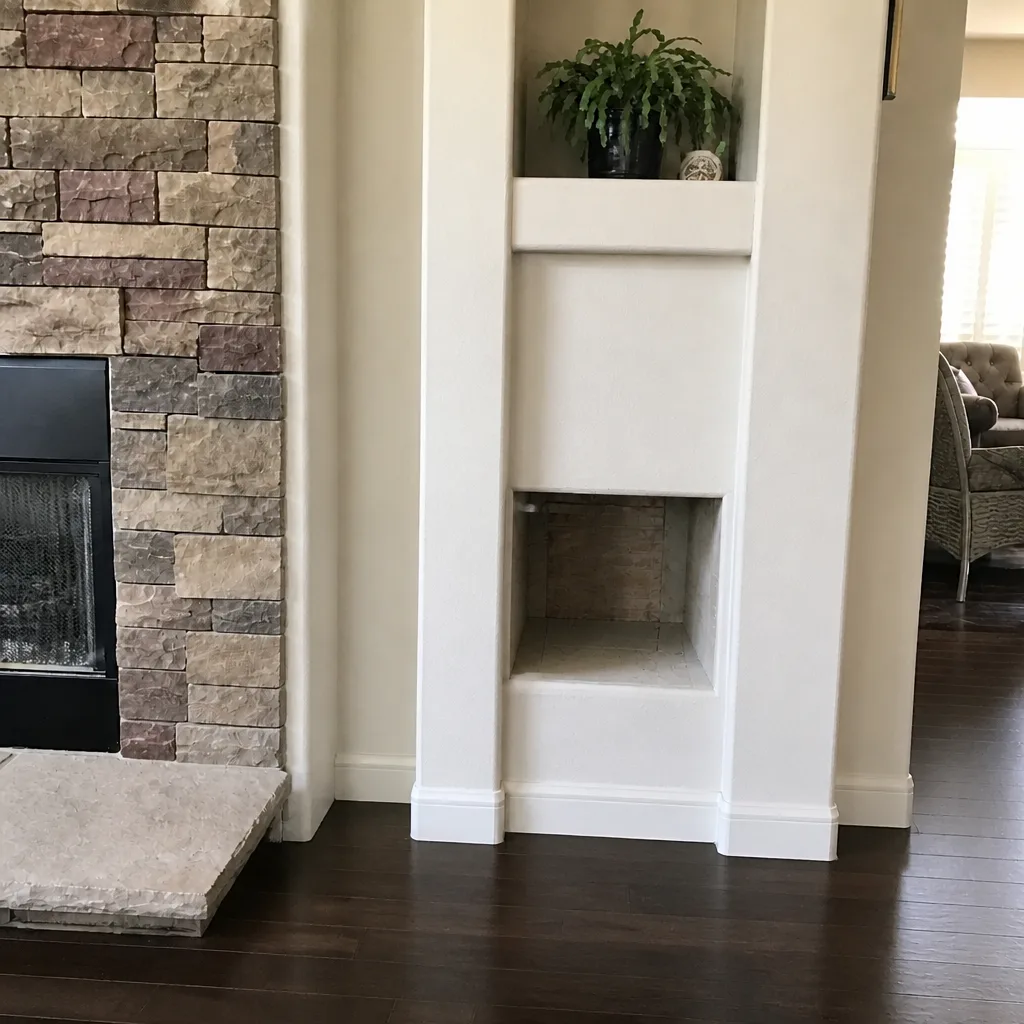
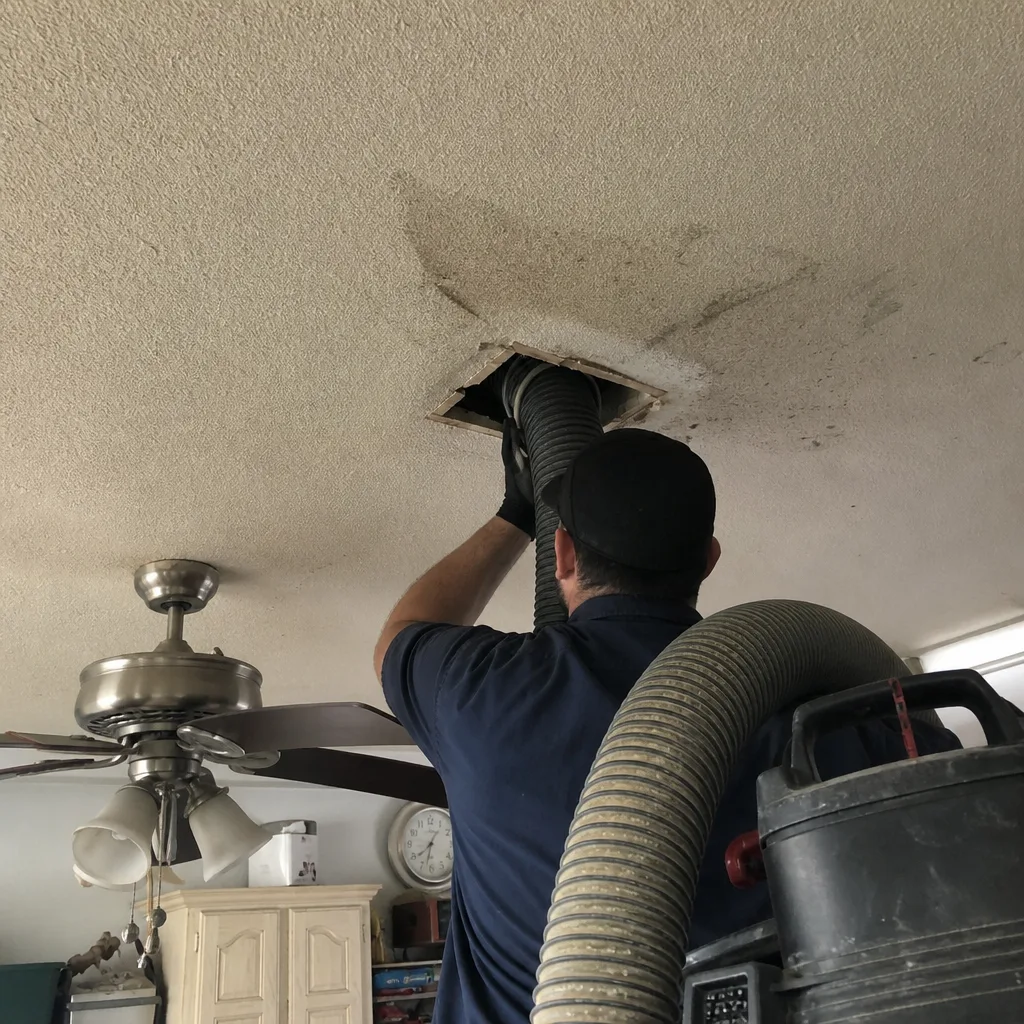 Before
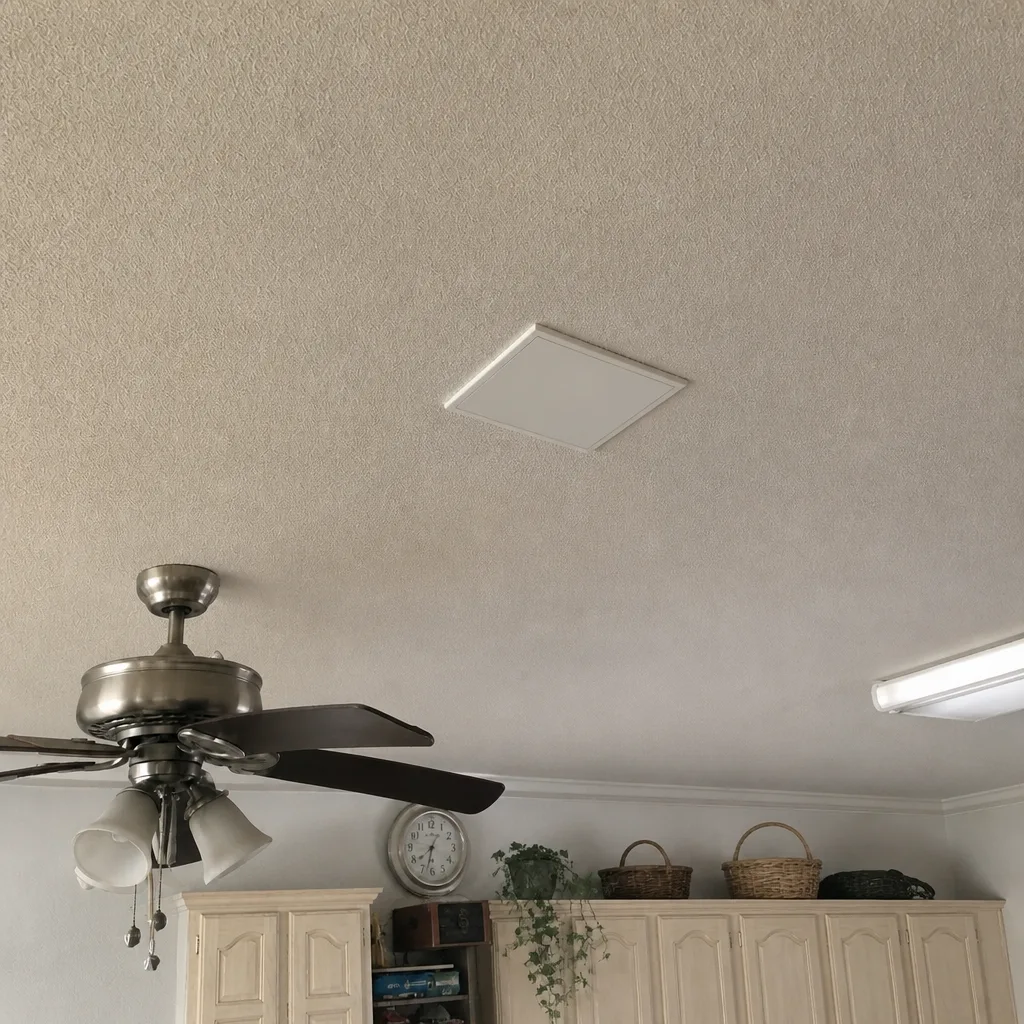 After
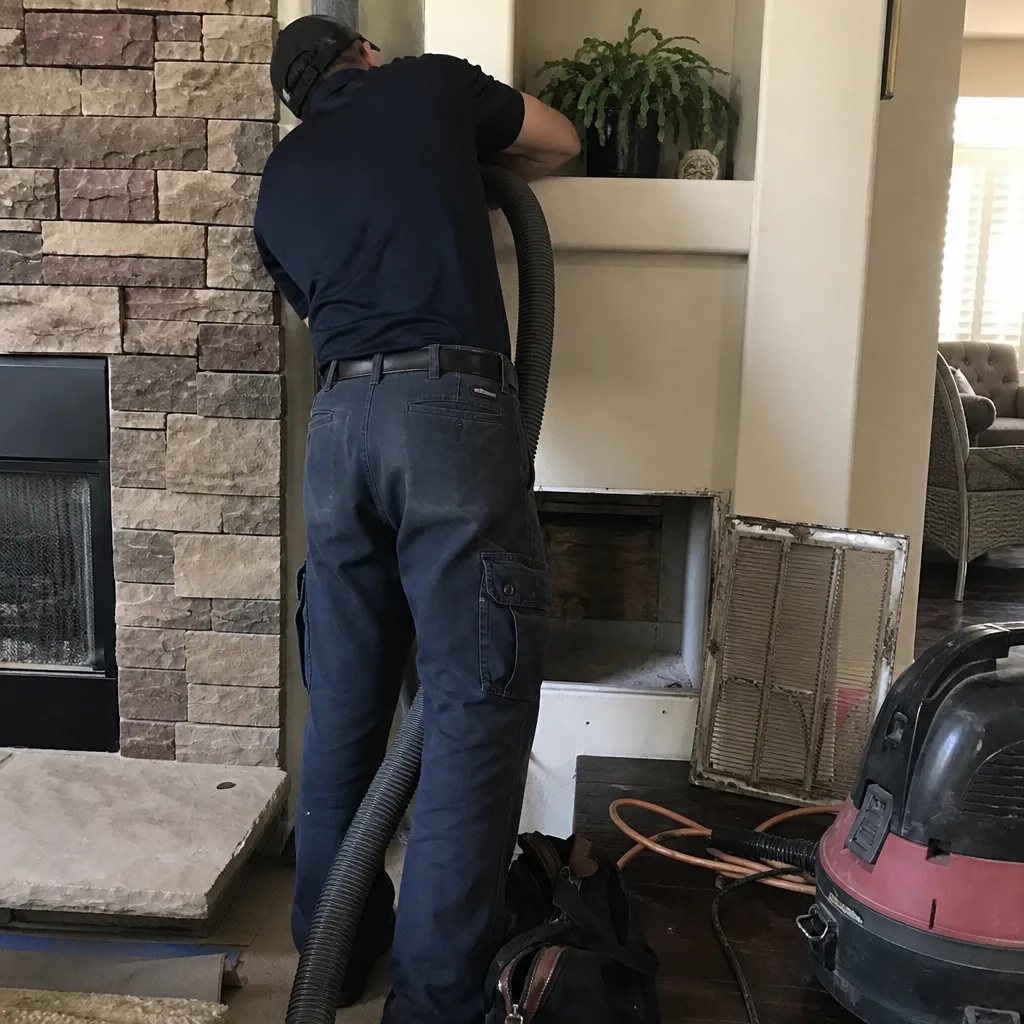 Before
 After
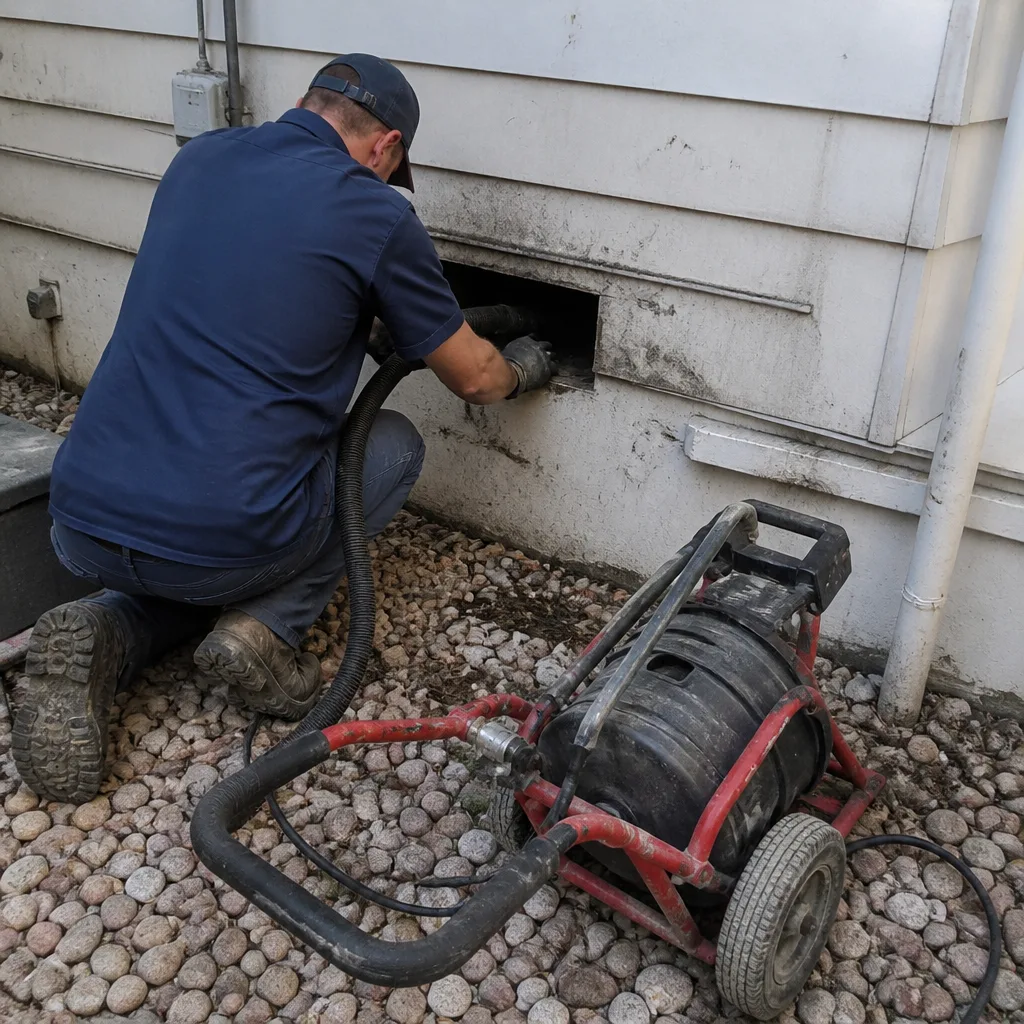 Before
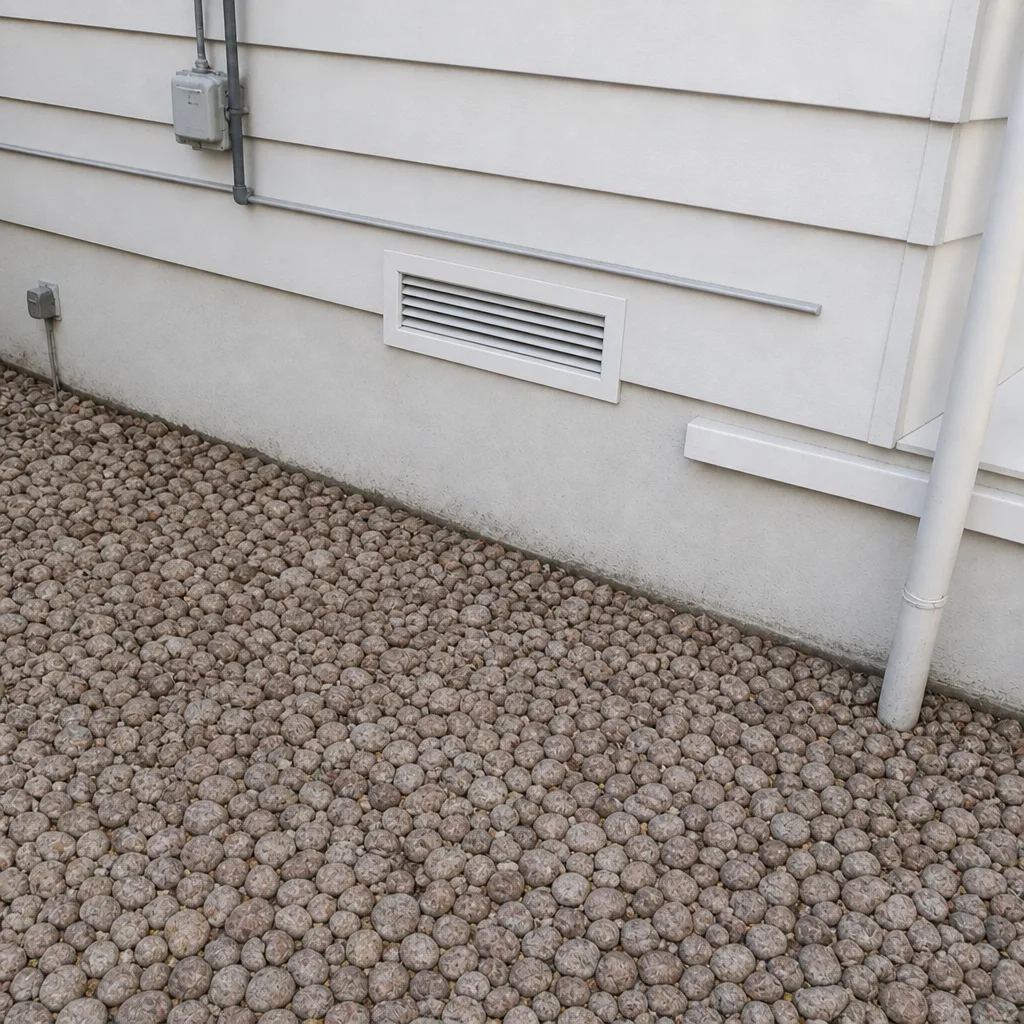 After
When to Call a Professional
Fall is the single most important month for a professional visit, but there are seasonal signals that say “call now” regardless of the calendar. Visible dust plumes from registers after a filter change, indoor PM2.5 readings that stay elevated after outdoor smoke clears, musty odors in the first ten minutes of heating or cooling, a blower that’s louder than it used to be, and duct joints you can see pulling apart all point to a system that needs attention. In Broomfield, add spring pollen load and summer smoke accumulation to the list of triggers. Broomfield Air Duct Cleaning Pros offers free estimates in Broomfield – call (877) 792-6623. We answer 24/7. Fast dispatch from 7am to 7pm, Sunday through Friday. The written estimate sets the price per job, and the visit includes before-and-after photos of your own ducts.
Frequently Asked Questions
For most Broomfield homes, a full professional cleaning once a year timed for late fall or late spring is the right baseline, with a second visit if summer smoke or construction dust was heavy. Homes with pets, allergy or asthma concerns, or a recent remodel usually benefit from the two-visit seasonal schedule described in this guide. The fall pre-heating inspection is the visit that matters most, because it removes the summer smoke layer before heating bakes it into the system. Call (877) 792-6623 for a free estimate tailored to your home.
Wildfire smoke carries sub-2.5-micron combustion particles that standard 1-inch filters don’t catch, so a meaningful fraction reaches the duct walls and air handler. Once that layer settles, every heating or cooling cycle recirculates a slice of it back into the rooms. That’s why the fall cleaning timing matters so much in Broomfield: you want that layer out before the furnace starts. A simple indoor air quality monitor will show you the pattern if you watch it through a smoke event. Call (877) 792-6623 for an exact quote, and estimates are free.
More frequent filter changes help, but they don’t replace professional cleaning. Filters stop a fraction of what lands in your ducts, particularly fine combustion particles and electrostatic-bonded winter dust. The layer that builds on duct walls and inside the air handler isn’t reachable from the filter slot. Filter changes extend the interval between cleanings and reduce how heavily the system reloads, but they aren’t a substitute for contact cleaning of the duct interior. Call (877) 792-6623 for a free estimate that covers cleaning plus inspection.
Yes, for three reasons beyond allergy relief. First, a dusty blower wheel and dirty coil reduce system airflow, which raises energy use and can shorten equipment life. Second, dust accumulation from winter heating and summer smoke is a source of odors that show up as soon as the system runs. Third, the inspection that comes with a cleaning often finds duct leaks that are quietly wasting conditioned air year-round. Broomfield’s smoke-and-pollen load makes that case more clearly here than in a typical metro. Call (877) 792-6623 for a free estimate.
A cheap quote usually means a shop-vac pass with no negative-air equipment, no containment, no inspection and no sealing. That process can actually redistribute dust through the home rather than removing it. Professional-grade service uses the Rotobrush contact system and Nikro HEPA equipment under negative pressure, plus Abatement Technologies containment during the visit, and it includes an inspection and any sealing in the same appointment. Compare what’s covered in the scope, not just the headline number. Call (877) 792-6623 for an estimate that lists the scope clearly.
Ask for before-and-after photos of your own ducts. A professional-grade cleaning produces visible evidence inside the duct, from the duct walls themselves and from the air handler components. Pair that with a simple indoor air quality monitor, which shows the before-and-after reading in the room where it sits. If a service can’t show you photos of your own system, you don’t have proof. Broomfield Air Duct Cleaning Pros includes before-and-after photos as a standard part of the visit. Call (877) 792-6623 for a free estimate.
The Bottom Line
Broomfield’s four seasons don’t load your ducts the same way, so the routine that works here is seasonal, not annual. Summer brings sub-2.5-micron wildfire smoke that slips past standard filters. Fall is the pre-heating window when that layer should come out before it gets baked in. Winter’s dry heating air drives electrostatic dust adhesion and makes filter checks mandatory. Spring pollen peaks between March and May, which sets late May or early June as the correct cleaning window. Pair cleaning with duct sealing in the same visit, use a simple indoor air quality monitor to track the pattern across the year, and treat the dryer vent separately. For Broomfield, that routine delivers more from a single annual service than a generic “clean the ducts once a year” reminder ever will.
Get a Free Seasonal Assessment
If you’re not sure where your duct system sits on the seasonal cycle, a professional assessment settles it quickly. Call (877) 792-6623 for a free estimate. We answer 24/7. Fast dispatch from 7am to 7pm, Sunday through Friday from our Broomfield service area. Broomfield Air Duct Cleaning Pros works with professional-grade Rotobrush, Nikro and Abatement Technologies equipment on every job, and technicians with up to 10 years of experience read the duct interior, the air handler and the seasonal history together. The written estimate sets the price per job, so there’s no per-vent pricing and no surprise invoice once the technician is on site. If you’re a property manager coordinating multiple units, the five-service scope means cleaning, repair and air quality upgrades happen on one schedule with one point of contact.
Written by the team at Broomfield Air Duct Cleaning Pros.