
Last updated November 25, 2026
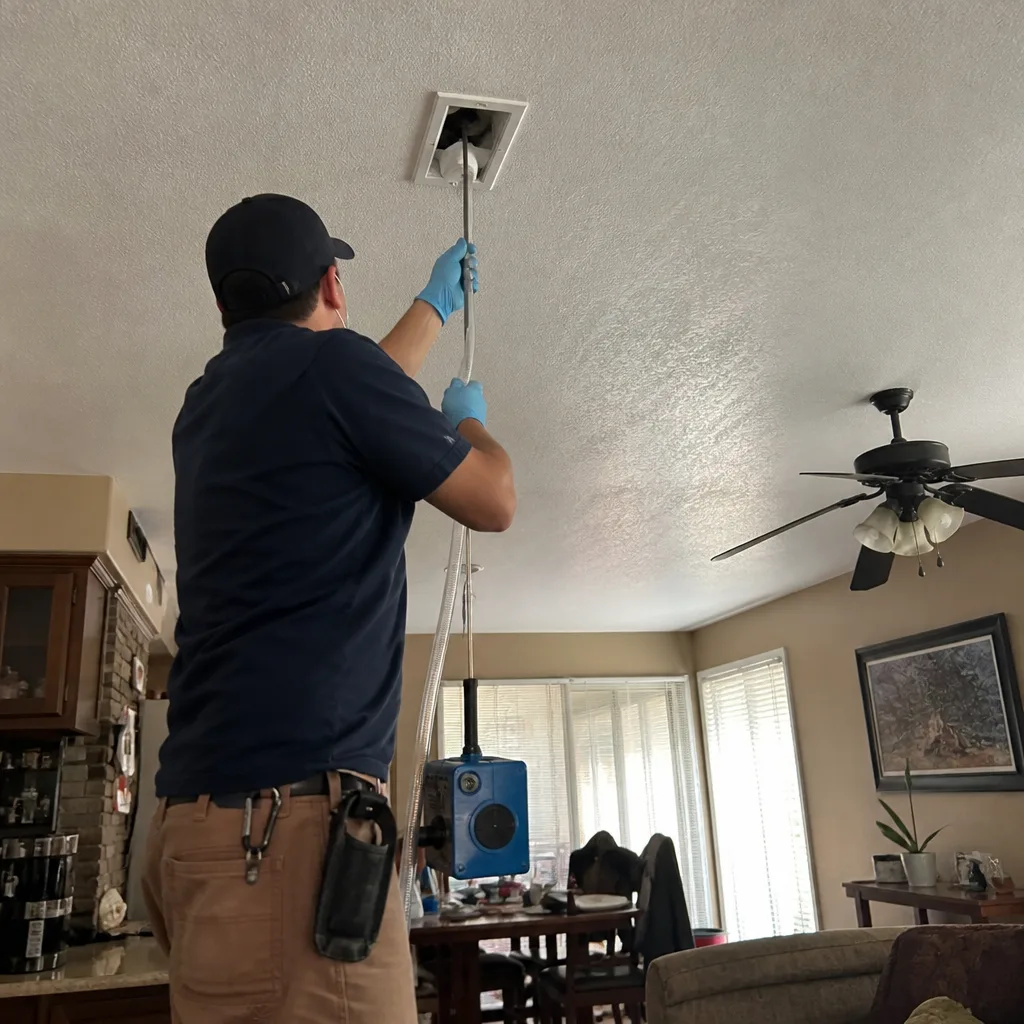
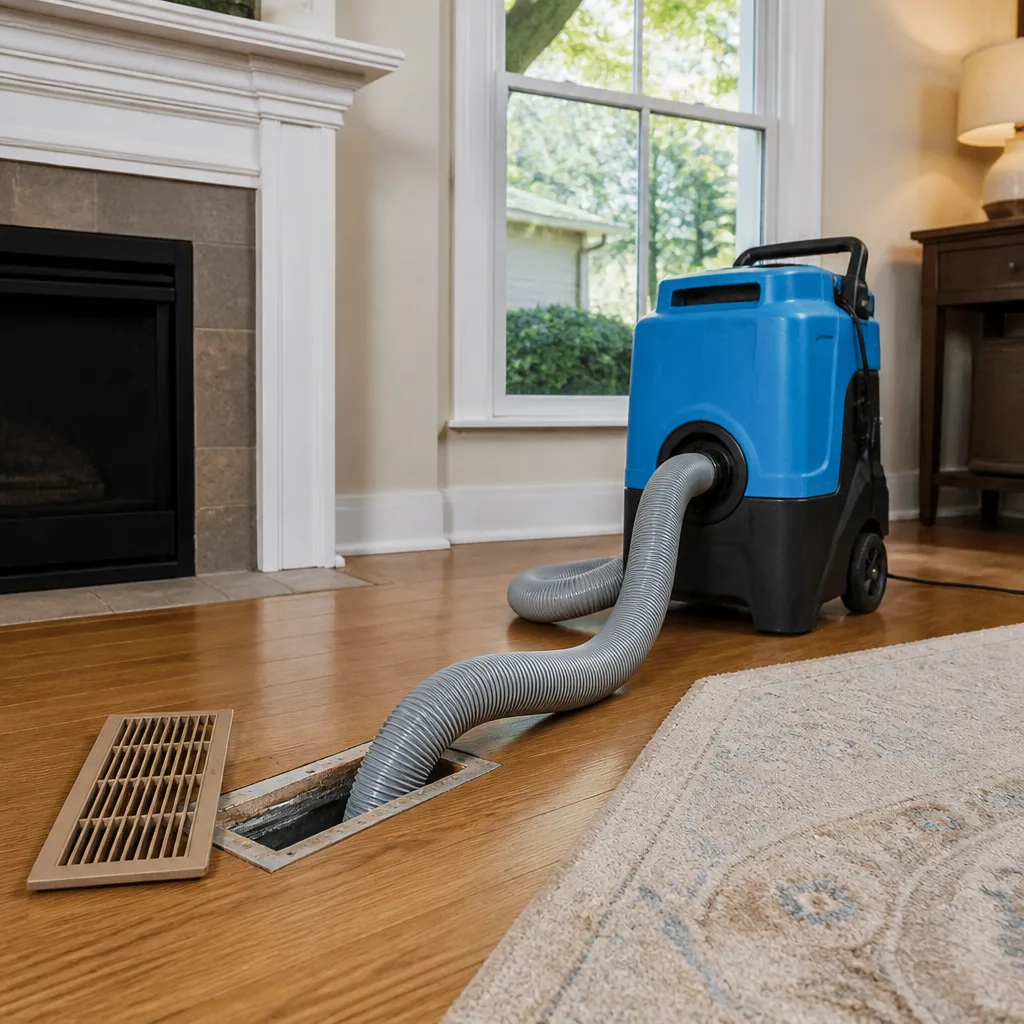 Whole-home duct cleaning
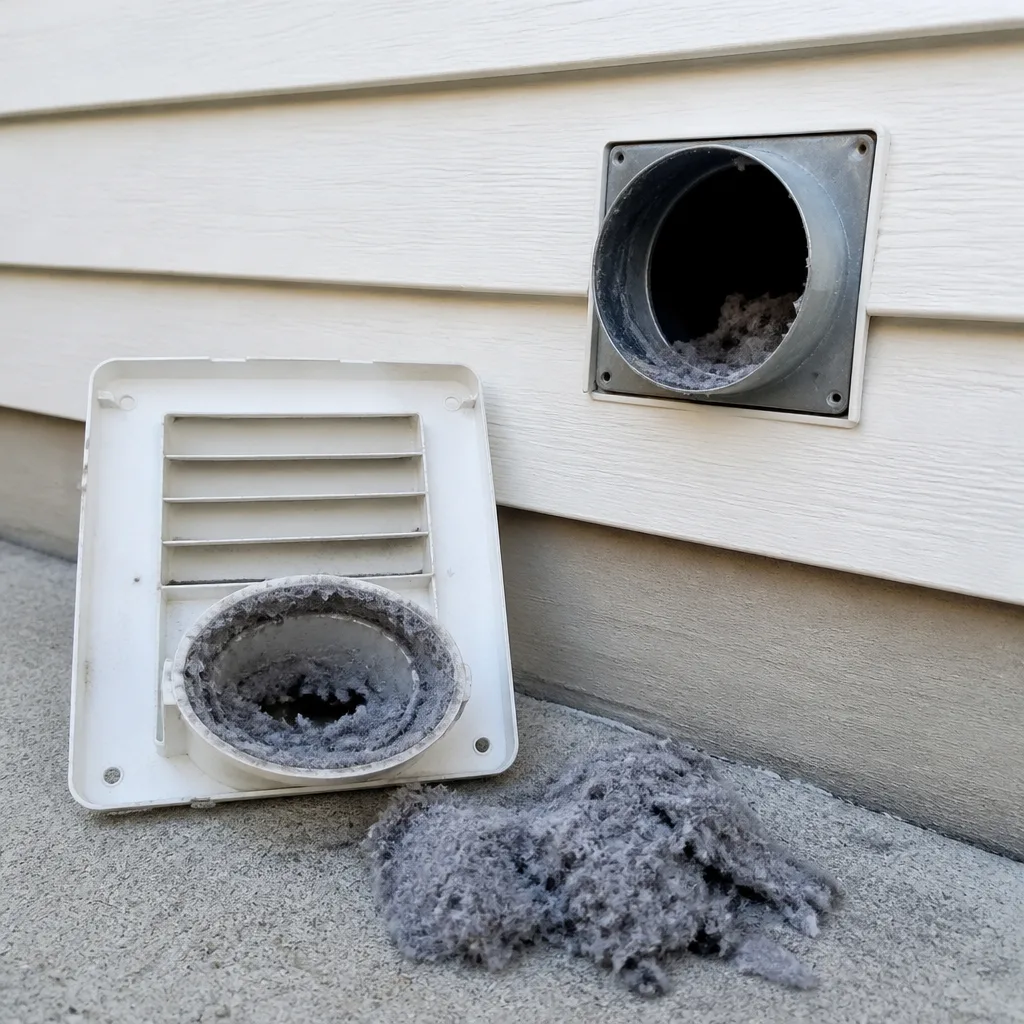 Dryer vent cleaning
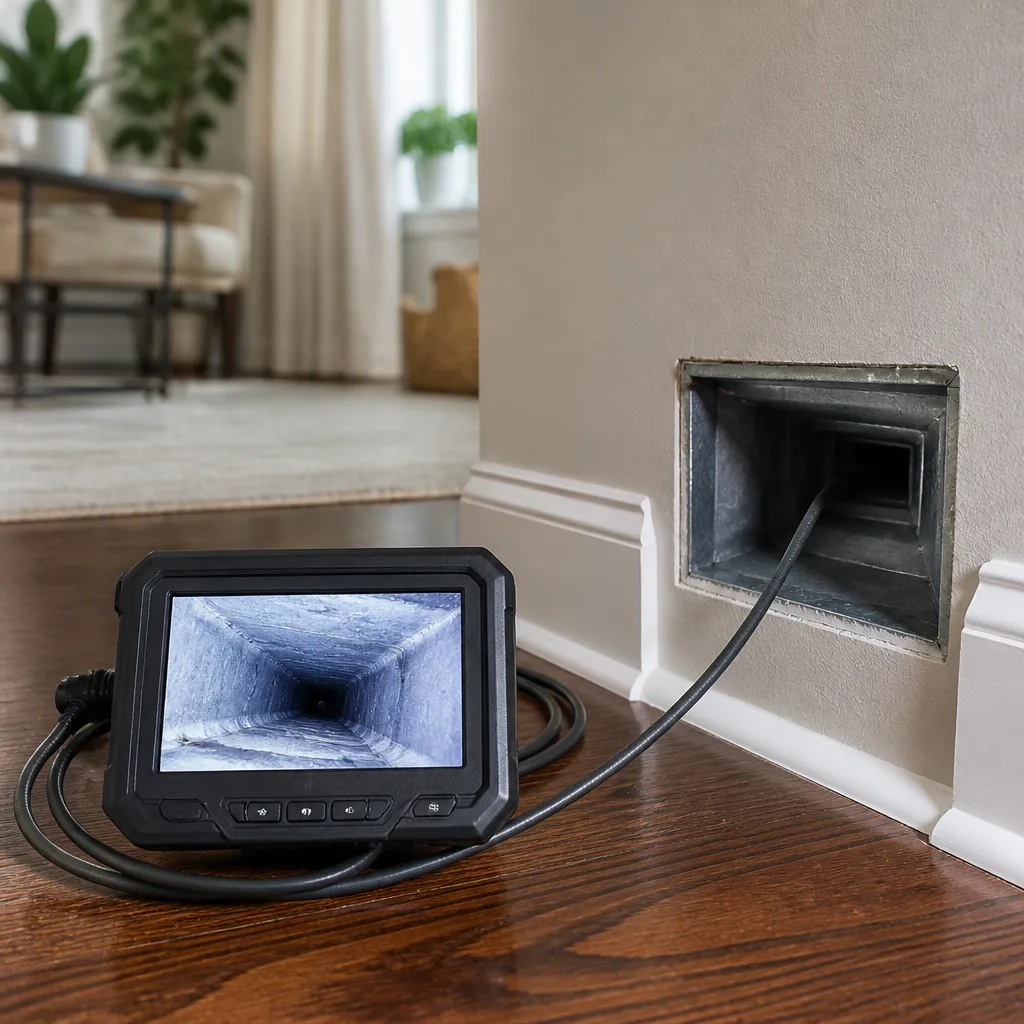 Camera inspection
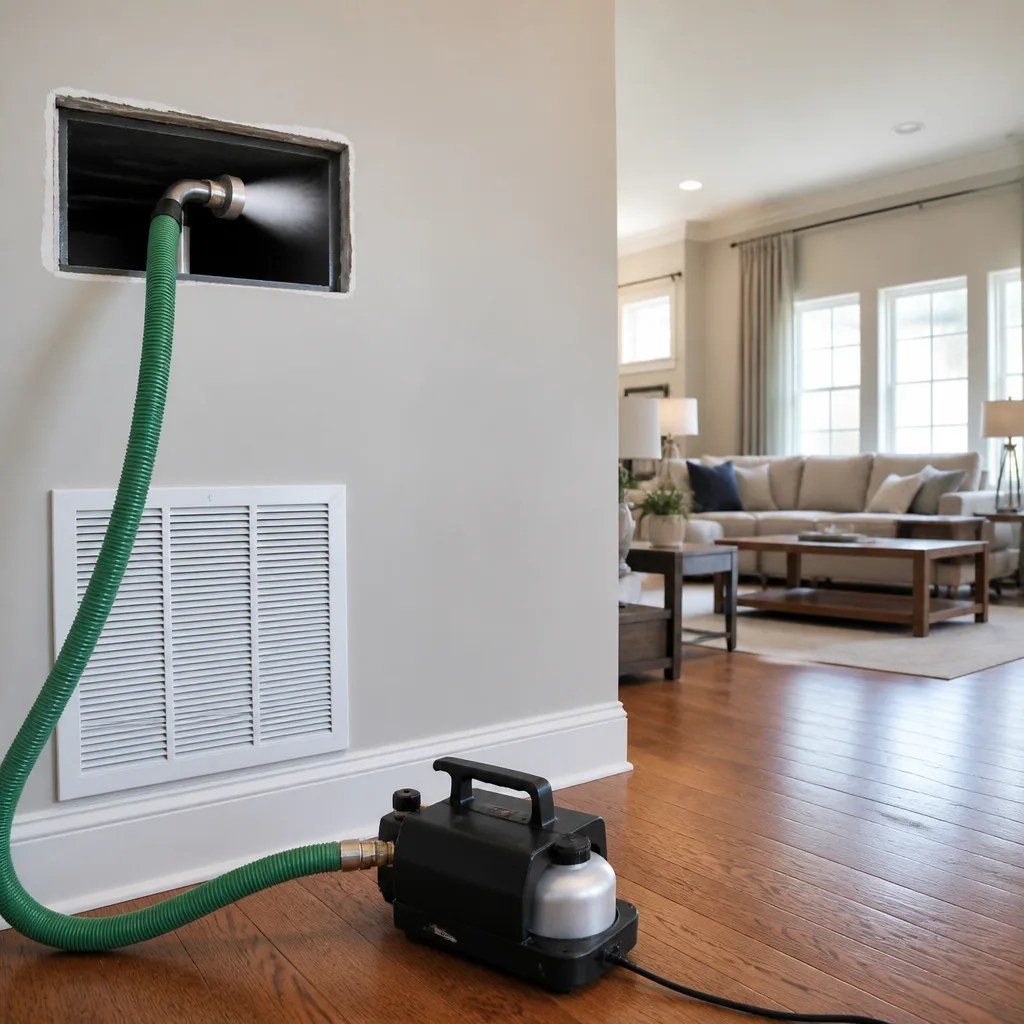 Sanitizing & deodorizing
Whole-system duct and dryer vent check with before-and-after photos - you see exactly what came out of your vents
That "$99 whole-house special" is a bait ad - the real number appears once they are in your hallway, or the "clean" is a shop-vac at the register. We photograph the inside of your ducts before and after instead.
How to Hire an Air Duct Cleaning Contractor in Broomfield: A Step-by-Step Guide
Most homeowners shop for duct cleaning the way they shop for a haircut: whoever quotes the lowest price gets the job. That instinct is exactly backwards in this trade. Duct cleaning is one of the few home services where the cheapest bid is usually the least thorough job, and where the price you’re quoted on the phone has almost nothing to do with the invoice you sign at the end. In Broomfield, where a tight housing market and a steady stream of new residents make the area worth a long drive for crews based well outside the county, that gap between advertised price and final bill tends to widen. This guide walks you through a vetting framework built on equipment, credentials, and verifiable process, so you can tell a real indoor air-system specialist from a crew with a shop vac and a coupon.
Quick Answer
To hire an air duct cleaning contractor in Broomfield, ask five questions before anyone steps inside: what equipment they use (professional brush-and-vacuum systems like Rotobrush, not a consumer shop vac), whether they hold current NADCA membership or ACR certification you can verify yourself, whether they use negative-air containment such as Nikro or Abatement Technologies gear, whether they put the scope of work in writing with access points and equipment model numbers, and whether they charge one flat price per system instead of per vent. A legitimate contractor answers all five without hesitation and puts the final price in a written estimate before work starts. A contractor who dodges any of them is telling you something.
Styles & brands we work with
- Whole-home duct cleaning
- Dryer vent cleaning
- Camera inspection
- Sanitizing & deodorizing
Table of Contents
- Why Broomfield Homeowners Get Targeted by Low-Bid Duct Cleaners
- The Five Questions to Ask Before a Quote Visit
- How to Verify NADCA Membership and ACR Certification
- What a Legitimate Scope-of-Work Proposal Includes
- Red Flags Specific to the Colorado Contractor Market
- How to Compare Quotes Apples-to-Apples
- What the Right Equipment Actually Looks Like
- Common Mistakes to Avoid
- When to Call a Professional
Why Broomfield Homeowners Get Targeted by Low-Bid Duct Cleaners
Broomfield sits in a part of the Front Range where the housing stock is dense, the incomes are steady, and the drive from Denver or Boulder is short. For a duct cleaning operation built on volume and upsells, that’s an attractive combination. A crew can hit several homes in a day, run a $49 or $79 “whole house special” as the door-opener, then spend the actual appointment selling add-ons: biocide fogging, mold “remediation,” coil cleaning, sanitizing treatments. By the time the invoice is written, the homeowner is paying many times the advertised price.
The pattern is common enough that it has been studied. A 2023 NADCA member survey found that more than 60% of homeowners who hired a duct cleaning company based on price alone reported unexpected add-on charges averaging $340 above the original quote. In a market like Broomfield, where the density of homes makes it worth driving for, that number skews higher. The crews know they can book enough appointments to make the trip profitable, and they know most homeowners won’t comparison-shop until after the first invoice shocks them.
None of this means every low-price bid is a scam, and none of it means every out-of-town contractor is dishonest. It means price alone tells you nothing useful about what will actually happen in your home. What tells you something is the equipment on the truck, the credentials the contractor can prove, and the paperwork they put in your hands before work begins. That’s the framework the rest of this guide builds out. If you’re already past the vetting stage and want the work done, our air duct cleaning page covers how a full-system cleaning is scoped and priced.
The Five Questions to Ask Before a Quote Visit
Before you let anyone into your home for an estimate, ask these five questions on the phone. The answers separate a contractor who owns professional-grade equipment from one who rents consumer gear when a job comes in. You don’t need technical expertise to evaluate the responses. You just need to listen for specifics versus vagueness.
- “What equipment will you use in my ducts?” A professional answers with model names: Rotobrush, Nikro, Abatement Technologies. A low-bid operator answers with “industrial equipment” or “the best on the market” and can’t name a single brand. Brand specificity is the single fastest credibility tell in this trade.
- “Do you use negative-air containment during cleaning?” This is the HEPA-negative-air process that keeps dislodged debris from redistributing through your home. A contractor who doesn’t know what the question means isn’t running containment.
- “Are you currently a NADCA member or ACR certified?” Both are verifiable. Ask for the membership number and check it yourself, which we cover in the next section.
- “Is the price per system or per vent?” Per-vent pricing is how a $300 quote becomes a $900 invoice. One flat price per system, agreed before work starts, is the only structure that protects you.
- “Can you send me a written scope of work before the visit?” A contractor who can’t or won’t put the scope in writing before showing up is planning to sell you something in person.
If a contractor answers all five confidently and specifically, you’re in reasonable territory. If they nail four and fumble one, ask follow-up questions. If they fumble two or more, move on. There are enough legitimate operators working Broomfield that you don’t need to gamble.
How to Verify NADCA Membership and ACR Certification
A logo on a website proves nothing. Anyone can paste a NADCA badge onto a page, and plenty of contractors do exactly that long after their membership has lapsed. The right way to verify is to look up the contractor in NADCA’s public member directory directly, at nadca.com, using the company name and the city. If the contractor isn’t listed, the badge is decorative. If they are listed, check that the membership status is current rather than expired.
ACR, the Air Systems Cleaning Specialist certification, works the same way. Ask for the certification number of the technician who will actually be on site, then verify it through NADCA’s certification lookup. Two things to watch for:
- Lapsed credentials. A contractor who was certified three years ago and hasn’t renewed is not currently certified, even if the website still says so. ACR certification requires ongoing education to stay current, so a lapse is meaningful.
- Company-wide versus individual certification. NADCA membership belongs to the company. ACR belongs to the individual technician. A company with strong membership but no ACR-certified technician on your job is a different proposition than one that has both.
One more layer: ask whether the contractor carries general liability insurance and workers’ compensation coverage, and request a certificate of insurance before the visit. Colorado doesn’t require a statewide duct cleaning license, which means the insurance question is doing a lot of the work that licensing would do in other trades. A contractor who can produce a COI quickly is organized. One who “will get back to you” usually won’t.
Our own technicians have up to 10 years of experience, and the local pro we connect you with is licensed and insured as their state requires. That’s the baseline. Verifying it is still your job before you sign anything.
What a Legitimate Scope-of-Work Proposal Includes
A written scope of work is the contract between you and the contractor, and it should be specific enough that a third party could read it and know exactly what happened in your home. If the proposal is a one-page quote with a total and a signature line, it’s not a scope of work. It’s an invoice waiting to be negotiated.
A real proposal includes, at minimum:
- Access point locations. Where the contractor will cut into or open the duct system to reach every run. A proper cleaning reaches the entire network from intake to register, which means multiple access points, not just one at the main trunk.
- Equipment model numbers. Not “Rotobrush system” but the specific Rotobrush or Nikro model, plus which Abatement Technologies containment equipment will run during the job.
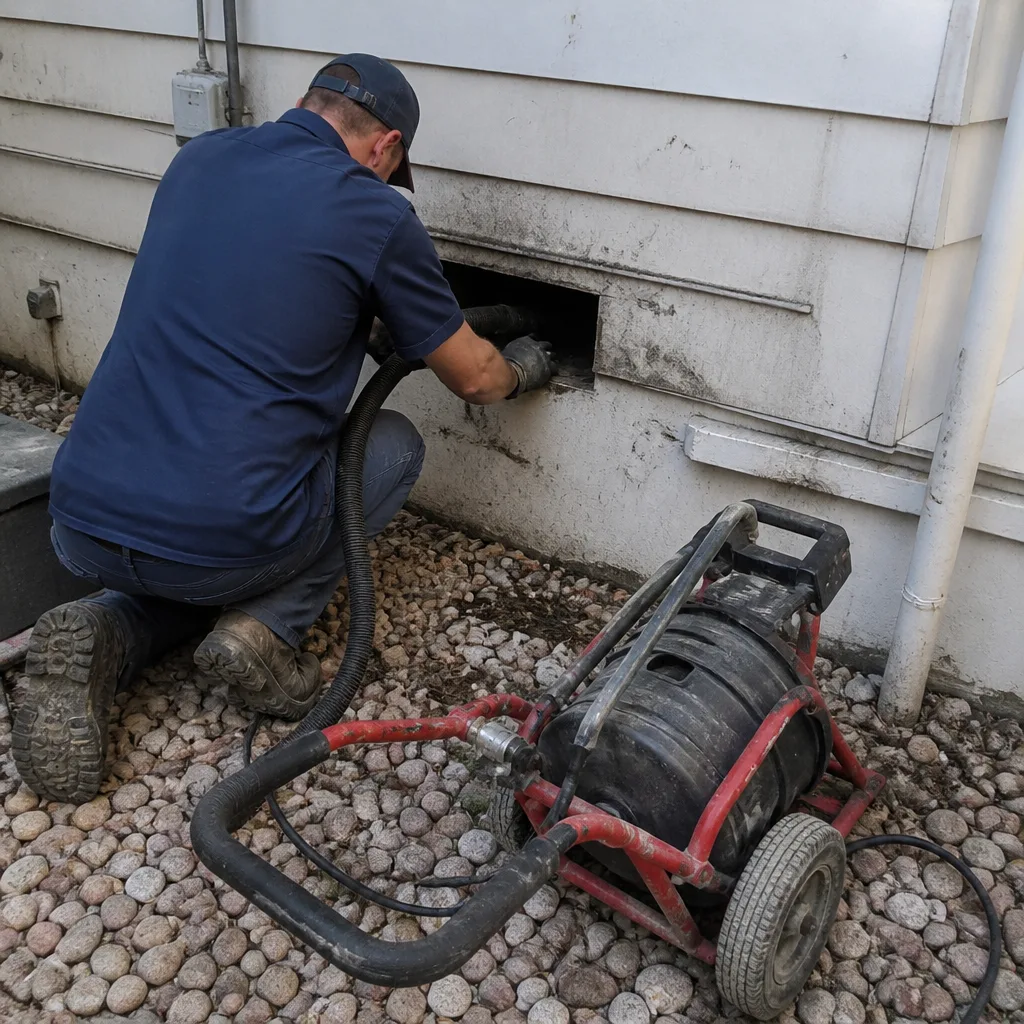
- Pre-inspection protocol. Before-and-after photos of your own ducts, with the camera positioned at the same access points so the comparison is meaningful. Many contractors take before photos and skip the after; insist on both.
- Containment procedures. How negative air pressure will be maintained, where the HEPA filter exhausts, and how the crew will verify containment is holding during the job.
- Line-item pricing. Each task on its own line with its own price, so you can see what you’re paying for and decline anything you don’t want without renegotiating the whole job.
- Post-inspection verification. What the contractor will show you when the job is done, and what your recourse is if the result doesn’t match the proposal.
We put this in writing on every job, and the flat price per system is agreed before work starts. When we scope a job that includes sealing or repairing degraded duct sections, that lands in the same proposal rather than surfacing as a surprise add-on. Clean ducts are the start; sealed, repaired ducts are the finish.
Red Flags Specific to the Colorado Contractor Market
Every state has its own version of the duct cleaning scam. Colorado’s version has a few distinctive features worth knowing before you take bids. These aren’t hypothetical worries; they’re patterns we’ve seen repeatedly in Broomfield and across the metro.
Unlicensed HVAC work bundled into duct cleaning
Duct cleaning doesn’t require a Colorado license. HVAC work, including refrigerant handling, gas line work, and electrical connections, does. Some cleaning crews will offer to “adjust” your system, “top off” refrigerant, or “fix” a furnace issue on the same visit. If the technician isn’t a licensed HVAC contractor, they shouldn’t be touching those systems, and a company that blurs the line is telling you they’ll cut corners wherever the invoice supports it. Ask to see the license before any HVAC work is agreed to.
Unverified mold remediation claims
Mold in ductwork is real, but diagnosing it requires testing, not a flashlight and a confident tone. A contractor who shows you a photo of “mold” in your ducts and offers to remediate it on the spot is making a claim they can’t support and offering a service they may not be qualified to perform. Legitimate mold remediation starts with air sampling or surface testing by a qualified party, and remediation itself is a specialty. Duct cleaning and mold remediation are different trades.
Pressure-selling biocide and sanitizer treatments
Biocide fogging and “sanitizing” treatments are the highest-margin upsell in the industry. Some are legitimate when there’s a verified problem. Most are sold to homeowners who didn’t need them, at prices several times what the treatment costs the contractor. A legitimate air quality conversation starts with filtration, humidity control, and UV treatment options from brands like Honeywell and Aprilaire, evaluated against what’s actually in your home. It does not start with a fogger and a fear pitch.
If any of these three appear in a sales conversation, the correct response is to end the conversation. Our HVAC cleaning page explains where the boundary sits between cleaning and mechanical work, which is worth understanding before you call anyone.
How to Compare Quotes Apples-to-Apples
The most useful thing you can do before taking bids is build a simple line-item checklist and require every contractor to fill it in. Without a shared structure, a $300 bid and a $600 bid are not comparable, because the $300 bid is usually for a smaller scope than the contractor implied on the phone. With a shared structure, the comparison takes five minutes and the pricing becomes honest.
Build a spreadsheet with these rows, and have every contractor quote each one separately:
- Full duct network cleaning (state how many runs, and whether returns and trunk lines are included)
- Main trunk and plenum cleaning
- Register and grille cleaning (removed and washed, or just vacuumed in place)
- Pre- and post-cleaning photo documentation
- Negative-air containment (this should be included, not optional)
- Duct repair and sealing, if any damage is found during cleaning
- Dryer vent cleaning, if bundling is offered
- Any air quality treatment proposed, with brand and model specified
Two things become clear once the checklist is filled in. First, whether the cheaper bid is actually cheaper or just smaller in scope. Second, whether the contractor is confident enough in their work to put specific deliverables in writing. A bid that leaves three rows blank is a bid where those three areas will be negotiated on-site, with you under pressure.
The pattern we see in Broomfield is consistent: the quote that starts lowest ends up highest. Not always. But often enough that the checklist is worth the twenty minutes it takes to build. When you’re comparing bids, insist that the final number on each proposal is the number you’ll pay, subject only to changes you approve in writing.
What the Right Equipment Actually Looks Like
Duct cleaning is not a “shop vac and a ratchet” job, though plenty of contractors operate as if it is. The difference between a surface clean and a real clean comes down to three pieces of equipment, and knowing what each does is the fastest way to tell a professional operation from a low-bid one.
Rotobrush is the industry benchmark for contact cleaning. It’s a brush-and-vacuum system that physically scrubs every interior duct surface while capturing the debris, rather than simply blasting air through the system and hoping the dust settles somewhere useful. The brush head rotates against the duct wall, which is what “contact cleaning” means. If a contractor isn’t running a rotating brush through each run, the job is not complete no matter how long the truck is parked outside.
Nikro HEPA equipment provides the negative-air pressure that captures dislodged debris. The HEPA filter exhausts clean air while the system holds your home under slight negative pressure, which is what prevents the dust you paid to remove from redistributing onto your furniture, curtains, and walls. Negative-air containment is a remediation standard that duct cleaning should have adopted decades ago and mostly hasn’t.
Abatement Technologies equipment provides certified-level air containment and filtration during service. It’s the same class of gear remediation professionals use on mold and asbestos jobs, and it’s on every job we run. The reason matters: when you open up a duct system that’s been sealed for years, you don’t know what’s inside until the containment is running and you look. Running professional containment from the first minute is the only responsible approach.
If the contractor can’t name the equipment they’ll use, ask them to bring the truck. The equipment will be visible in the first minute. If it’s a shop vac with an extension hose, you have your answer. When you’re ready to talk through your own system, our dryer vent cleaning page covers the fire-safety side of this same equipment question.
See the difference
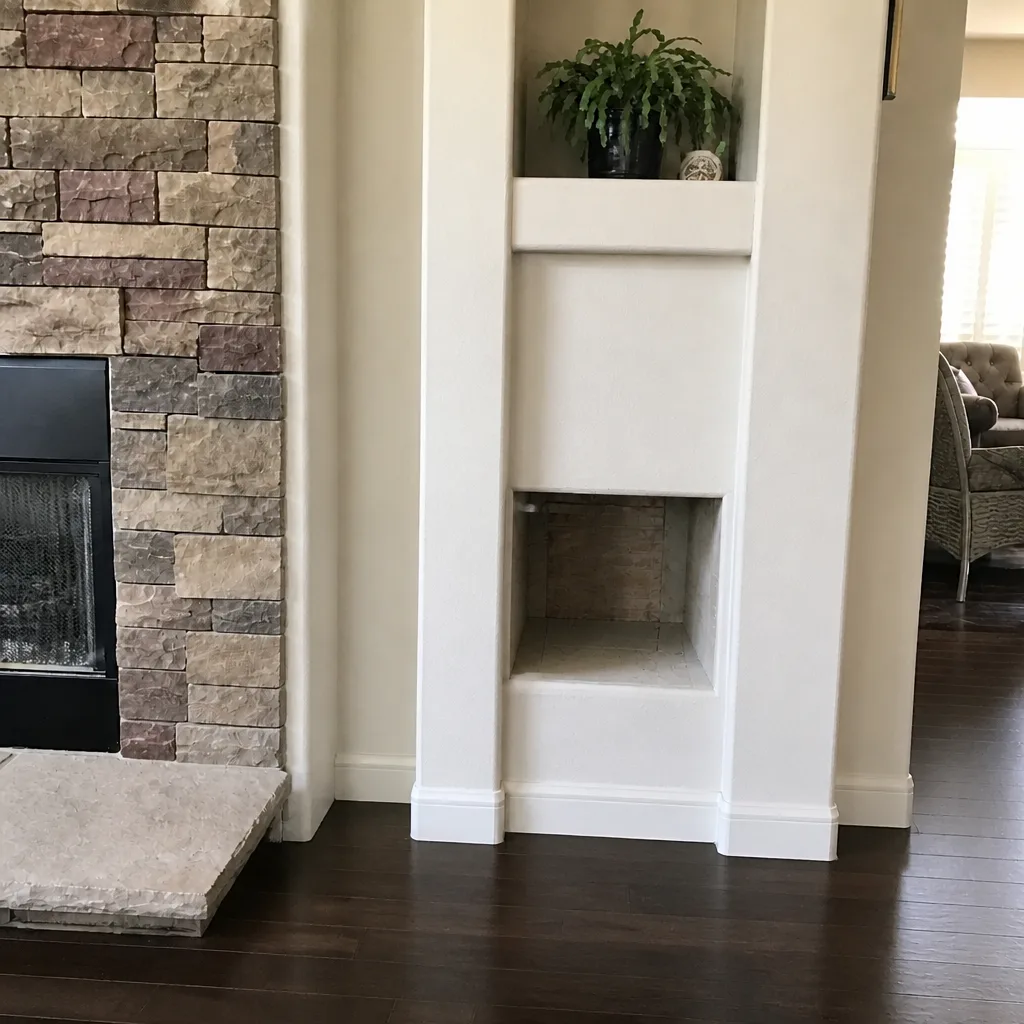
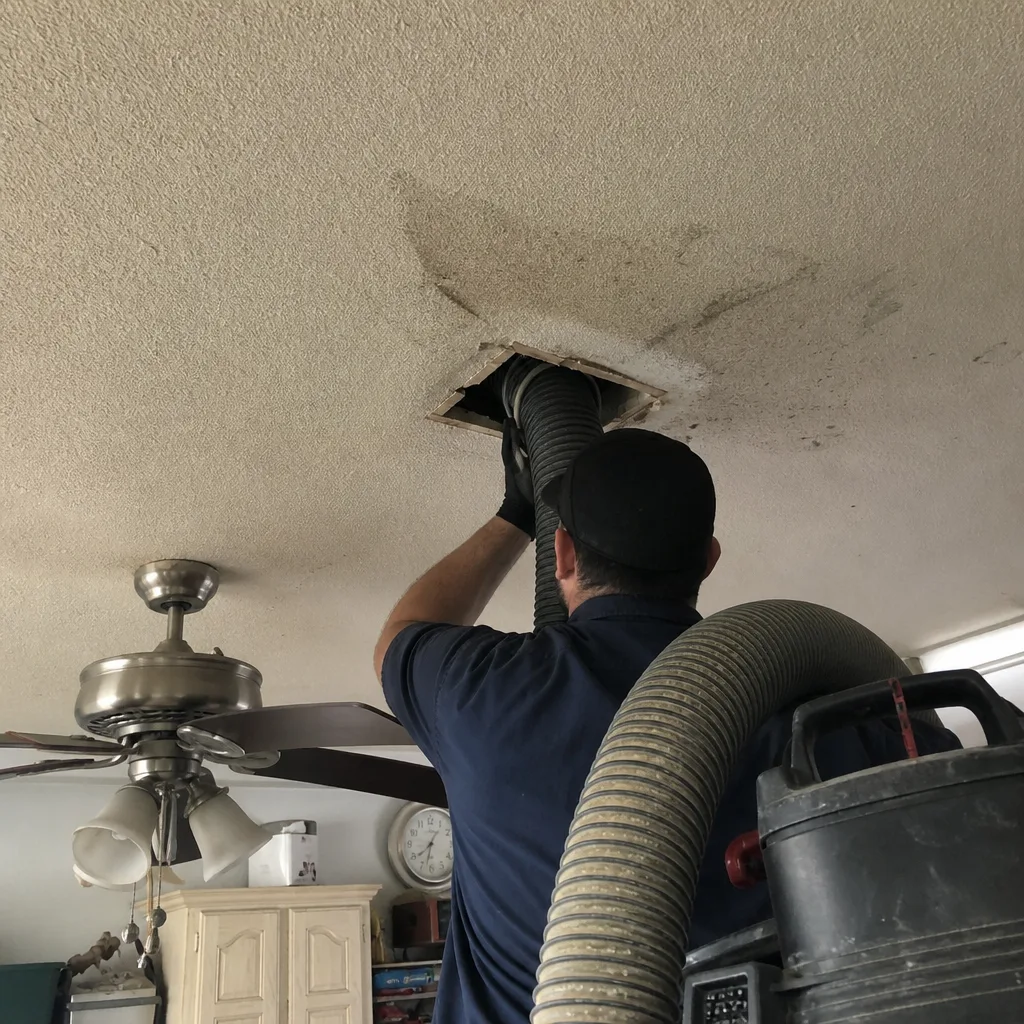 Before
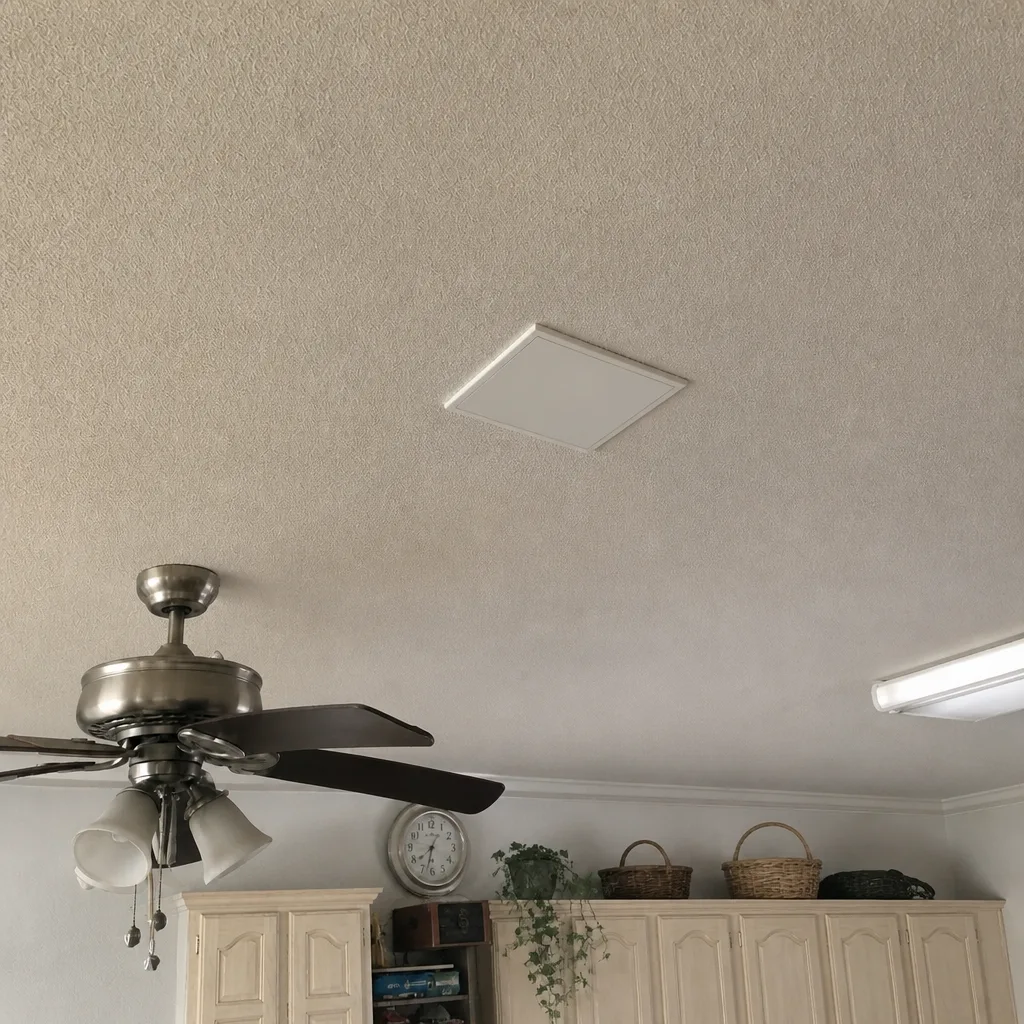 After
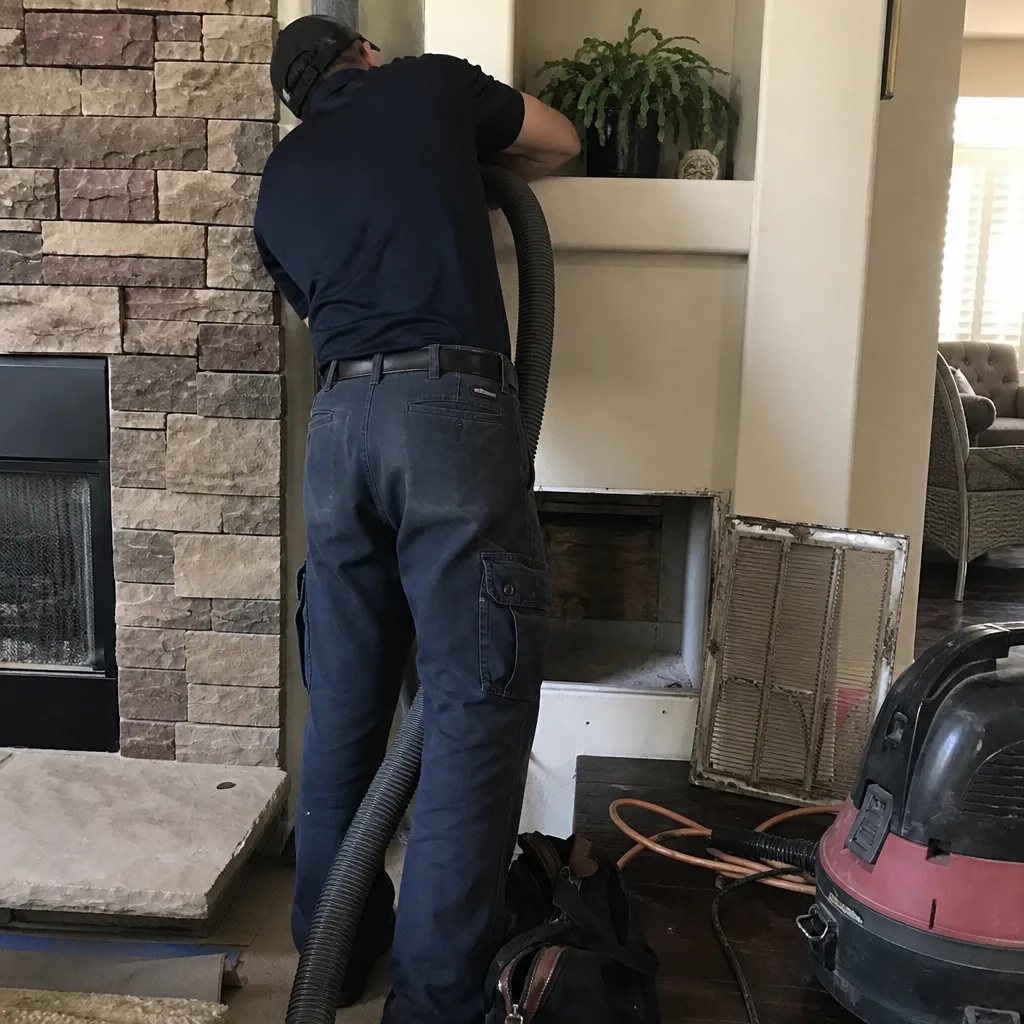 Before
 After
 Before
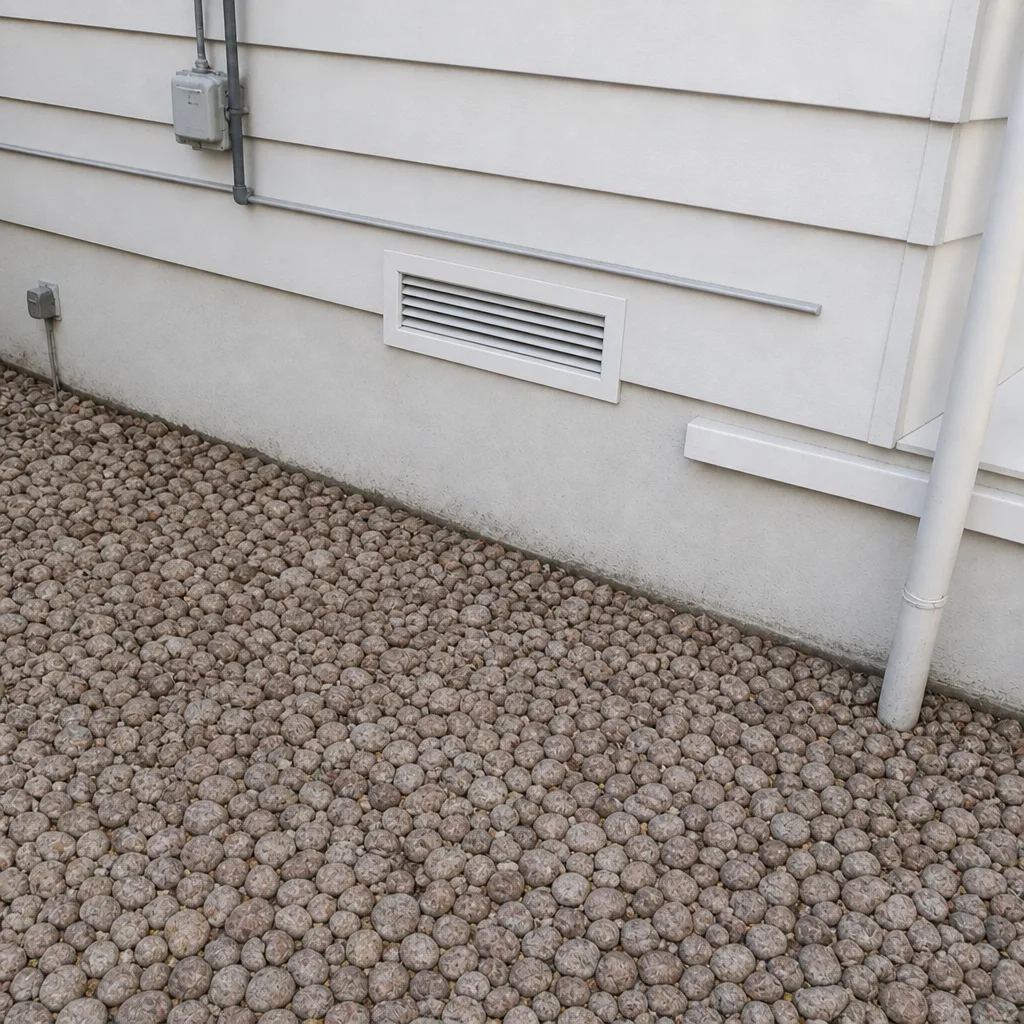 After
Common Mistakes to Avoid
- Booking based on a phone quote alone. A phone quote is a marketing number, not a price. The real number comes on a written estimate, and any contractor who won’t put it in writing is planning to change it in your home.
- Assuming a NADCA logo means current membership. Memberships lapse and badges stay up. Verify through the NADCA member directory directly, every time, for every contractor, including the one you’re leaning toward.
- Comparing per-vent bids to per-system bids. They’re different products, and the per-vent bid will almost always come out lower on the phone and higher at the invoice. Insist on per-system pricing so the comparison is meaningful.
- Accepting a mold or biocide upsell on the same visit. Any treatment added because the technician found something during cleaning is a decision you can defer. There is no duct emergency that requires a signature on the spot.
- Skipping the before-and-after photos. If the contractor can’t show you your own ducts at the same access points, before and after, you don’t actually know what was cleaned. Photos are the only verification a homeowner has.
- Bundling HVAC repair into a duct cleaning visit without checking the license. Colorado requires HVAC licensing for refrigerant and electrical work. Duct cleaning doesn’t cover it, and a company that treats it as the same trade is cutting a corner you’ll pay for later.
- Forgetting the dryer vent while the equipment’s out. Dryer vent cleaning is a fire-safety service that duct-only contractors frequently skip, and running it during the same visit avoids a second appointment. Our Broomfield Air Duct Cleaning Pros team handles it alongside duct work.
When to Call a Professional
Some duct systems need cleaning on a schedule and some need it because something changed. Call a professional when you notice visible dust blowing from registers shortly after a cleaning, when a family member’s allergies or asthma symptoms worsen noticeably inside the house, when you’ve recently finished a renovation that involved drywall or flooring work, when the system hasn’t been inspected since you bought the home, or when your energy bills climb without an obvious HVAC explanation. Call sooner if you smell a persistent musty or burning odor from the registers, if you see pest activity around duct openings, or if a dryer is taking noticeably longer to dry loads.
Broomfield Air Duct Cleaning Pros offers free estimates in Broomfield. Call (877) 792-6623. We answer 24/7, fast dispatch from 7am to 7pm, Sunday through Friday. One flat price per system, agreed before work starts, with before-and-after photos of your own ducts so you can see what was actually done. Our duct repair and sealing work can land in the same visit as cleaning when the scope calls for it, and our air quality and sanitizing offering uses Honeywell and Aprilaire products where a filtration or humidity upgrade makes sense.
Frequently Asked Questions
Prices in Broomfield vary by the size of the system, how many runs need cleaning, and whether repair or sealing is included. We don’t quote per-vent prices, because per-vent pricing is how the industry turns a low advertised number into a much larger invoice once the crew is on-site. Instead, we give one flat price per system, agreed before work starts, with everything in the proposal itemized in writing. Call (877) 792-6623 for an exact quote – estimates are free.
Cheap duct cleaning quotes are usually cheap because the scope is smaller than the customer assumes, and the missing scope gets sold on-site after the technician has already arrived. The other common reason is equipment: a shop vac and a hose cost nothing compared to a Rotobrush and Nikro HEPA setup, and the difference in cost reflects the difference in what actually gets cleaned. When you compare two bids, compare the line items, not the totals. Call (877) 792-6623 for a written proposal you can compare directly.
Before-and-after photos of your own ducts, taken at the same access points, are the only reliable verification a homeowner has. A contractor who can’t or won’t provide those photos is asking you to take their word for it, which is not the same as being able to prove the work happened. Ask for the photos before the invoice, and if they don’t match the scope, say so before signing. Call (877) 792-6623 to schedule a visit with photo documentation included.
Most homes don’t need duct cleaning on a strict schedule. It depends on the home: pets, recent renovation, allergy sufferers in the household, and how well the duct system was originally sealed all affect the answer. A visual inspection is the honest starting point, and cleaning frequency should follow from what the inspection shows rather than from a contractor’s default recommendation. Call (877) 792-6623 and we’ll tell you what we see.
Look for current NADCA membership and an ACR-certified technician on the job, both verified through nadca.com rather than a website logo. NADCA membership belongs to the company; ACR belongs to the individual. Both should be current, not lapsed, and the contractor should be able to produce a certificate of insurance before the visit. Colorado doesn’t require a statewide duct cleaning license, so these credentials do the work that licensing does in other trades. Call (877) 792-6623 if you want to talk through what your system actually needs.
Broomfield’s long heating season and dry winters mean the furnace runs for a substantial part of the year, which means the duct system is moving air through the house for more hours annually than in milder climates. That longer runtime is a real reason to inspect the duct system periodically, though it doesn’t create a fixed cleaning schedule. The honest answer is that every home is different, and inspection should drive the recommendation. Call (877) 792-6623 for a free estimate and an honest read on whether cleaning is warranted.
The Bottom Line
Hiring a duct cleaning contractor in Broomfield comes down to five things: equipment you can name, credentials you can verify, containment you can confirm, a written scope with photos included, and one flat price per system agreed before work starts. Everything else is noise. The $49 special is a marketing number, not a price. The contractor who won’t put the scope in writing is telling you they’re planning to sell you something in your living room. And the contractor who can name the equipment, show current NADCA membership, and hand you a line-item proposal before the truck arrives is telling you something too, which is that the job will go how the paperwork says it will. Use the checklist, verify the credentials yourself, and skip the phone-quote shopping.
Broomfield Air Duct Cleaning Pros deploys professional-grade Rotobrush, Nikro, and Abatement Technologies equipment on every job, with full duct repair and sealing capability in the same visit when the scope calls for it. Our technicians have up to 10 years of experience, and the local pro we connect you with is licensed and insured as their state requires. Call (877) 792-6623 for a free estimate. We answer 24/7. Fast dispatch from 7am to 7pm, Sunday through Friday. One flat price per system, before-and-after photos of your own ducts, and a satisfaction guarantee on the work. Clean ducts are the start; sealed, repaired ducts are the finish. If your Broomfield Air Duct Cleaning Pros team can help, we’d like to hear about your system.
Written by the team at Broomfield Air Duct Cleaning Pros.