
Last updated November 25, 2026
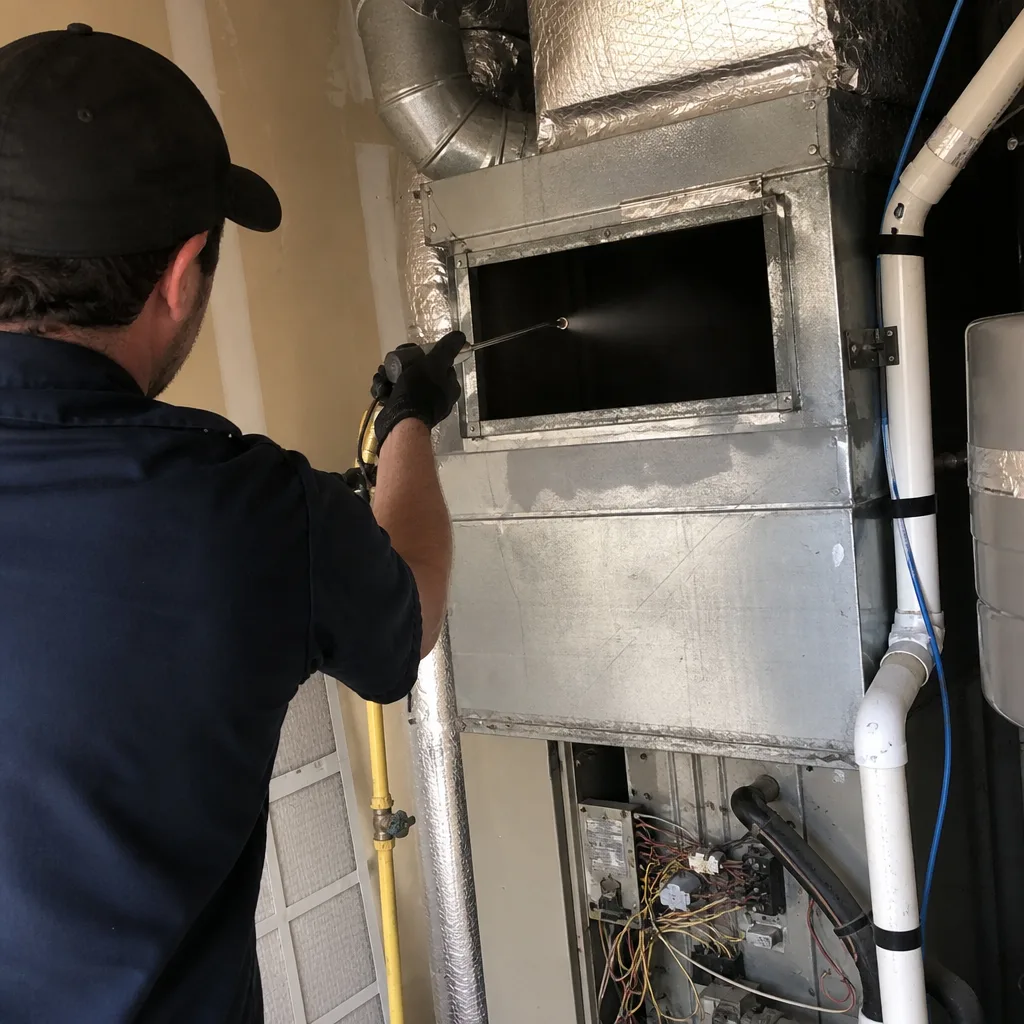
 Whole-home duct cleaning
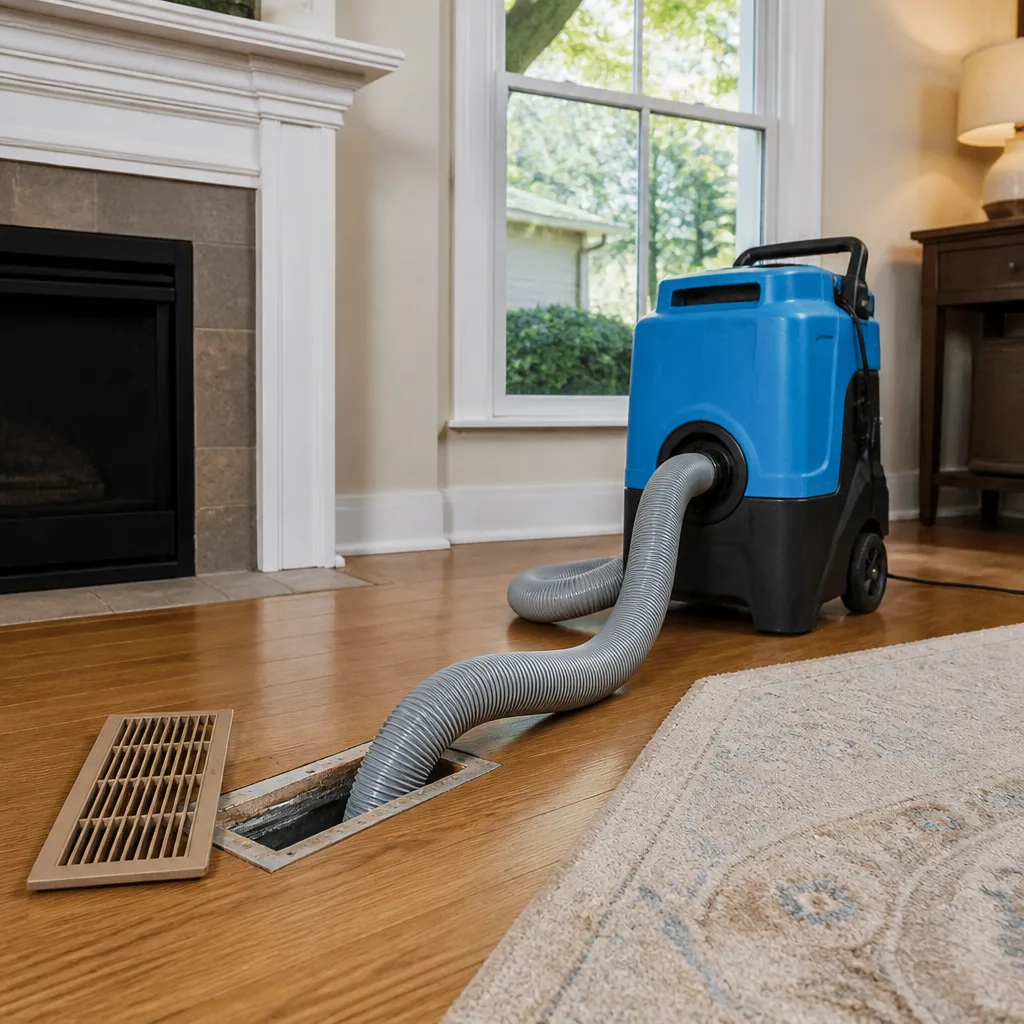
 Dryer vent cleaning
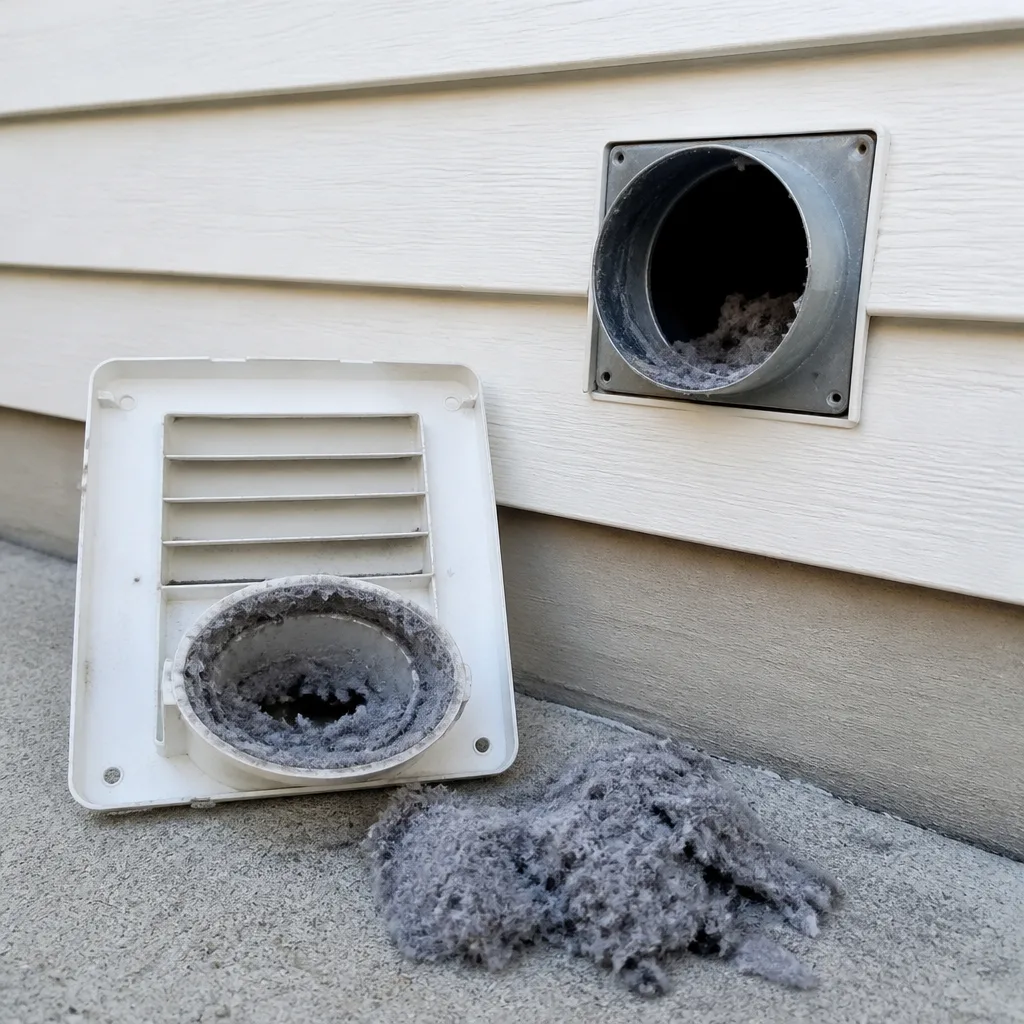
 Camera inspection
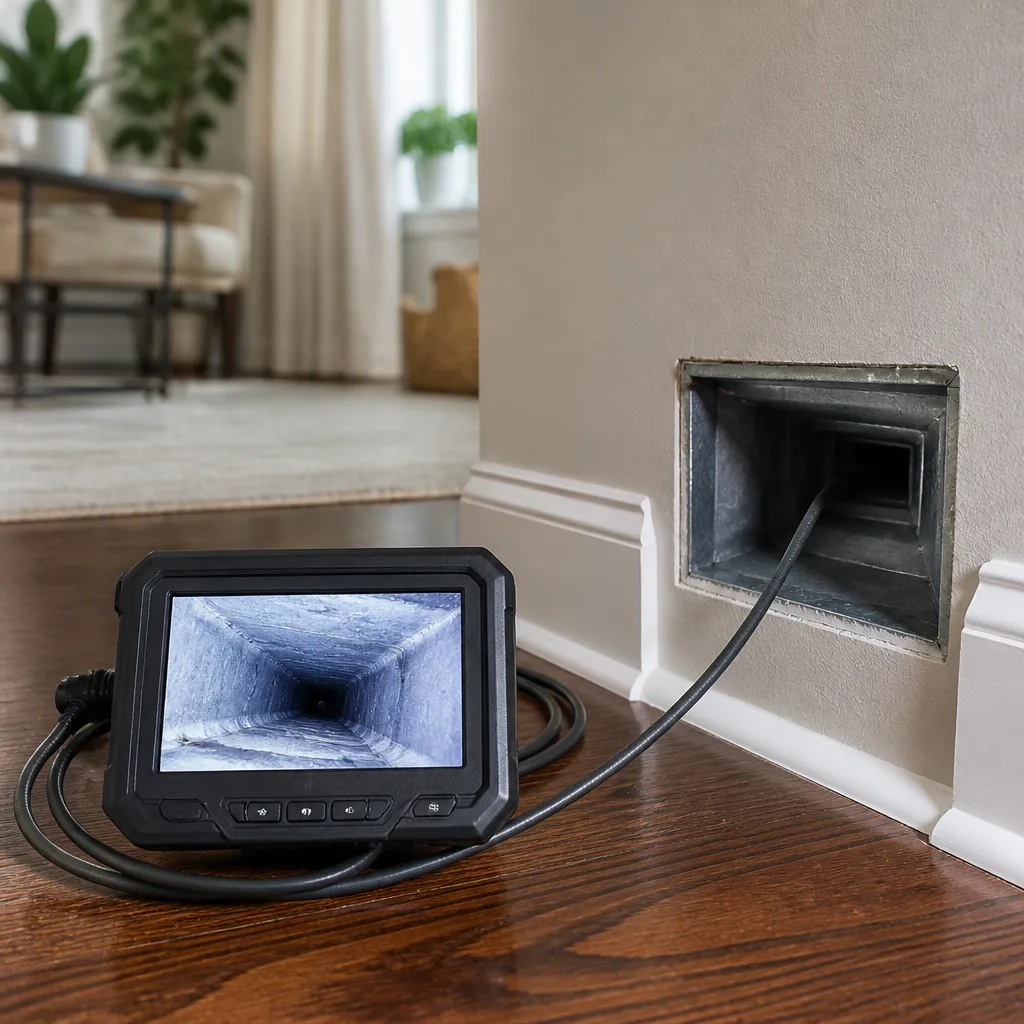
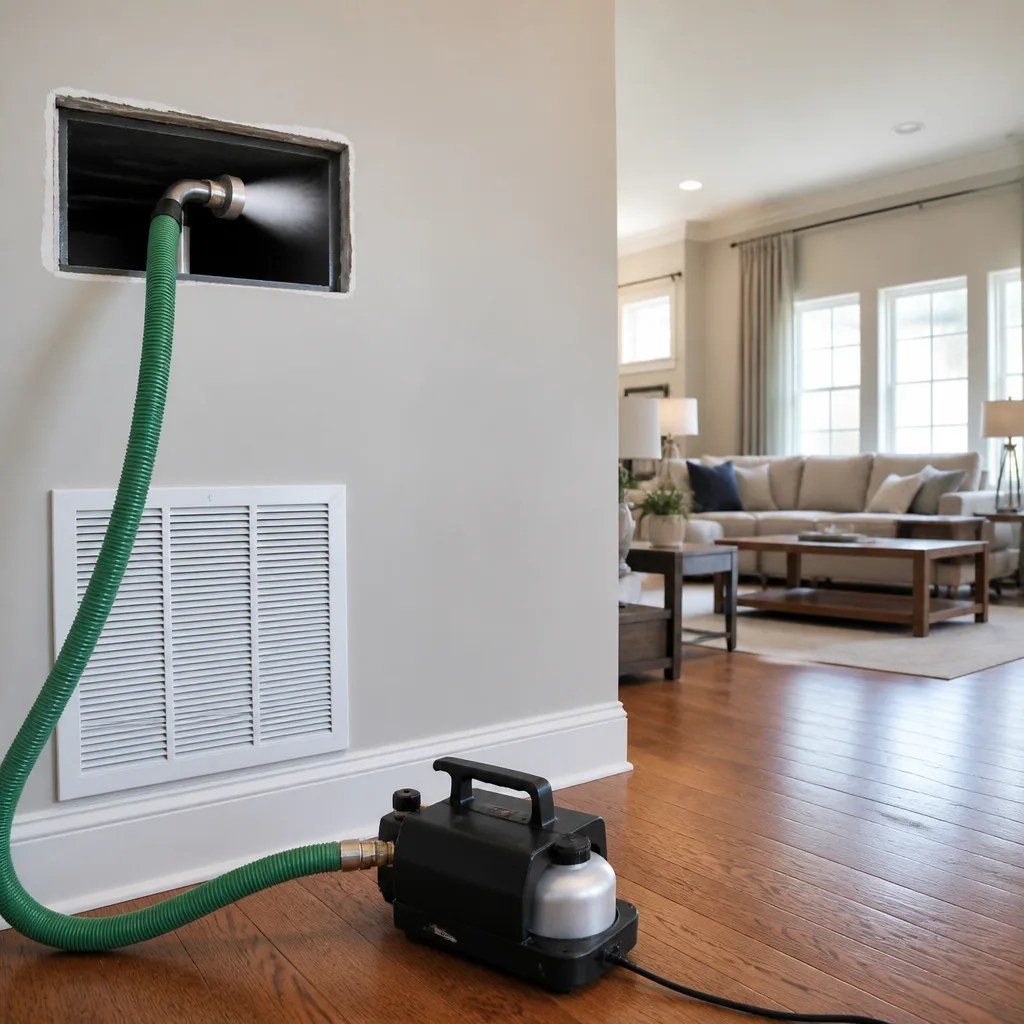 Sanitizing & deodorizing
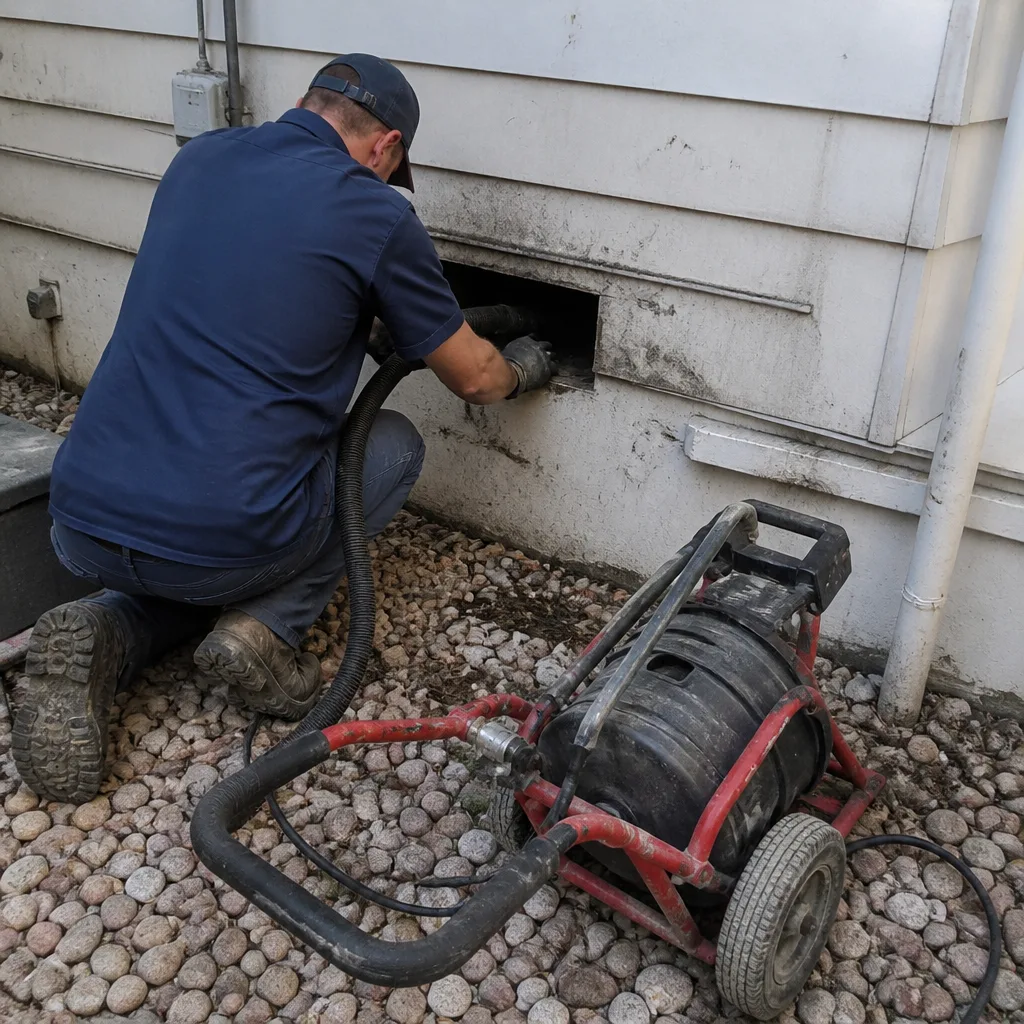
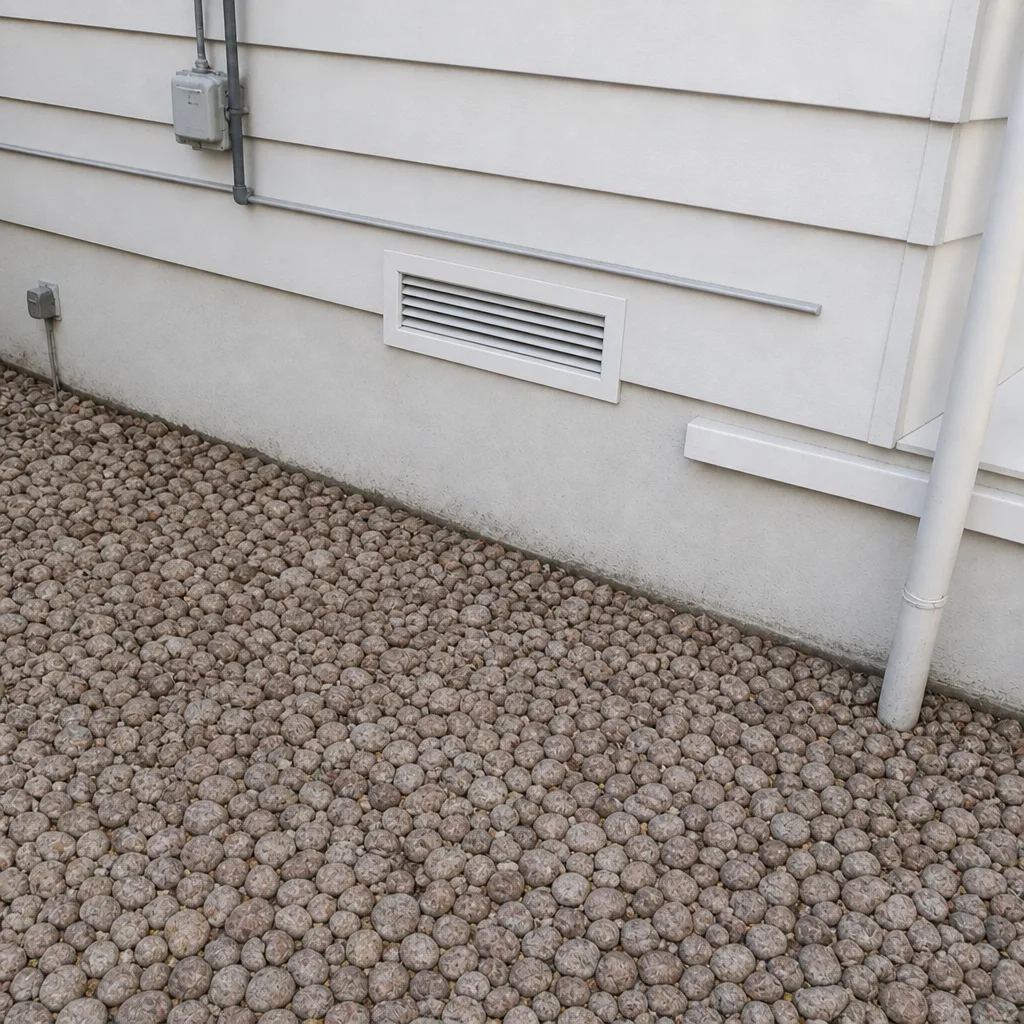
Whole-system duct and dryer vent check with before-and-after photos - you see exactly what came out of your vents
That "$99 whole-house special" is a bait ad - the real number appears once they are in your hallway, or the "clean" is a shop-vac at the register. We photograph the inside of your ducts before and after instead.
Air Duct Cleaning Maintenance Checklist for Broomfield Homeowners
Replacing a MERV-13 filter on schedule but never checking the return-air boot for debris bypass is like changing your oil but never checking for a coolant leak. The part you’re maintaining looks fine, and the expensive failure is still coming. Most Broomfield homeowners treat duct care as a single annual event: call someone, get the ducts cleaned, forget about it. A checklist that actually works is a diagnostic tool, not a calendar reminder. It connects filter ratings, humidity readings, blower amperage, and visual boot inspections into one document that tells you when to act and when to wait. This guide gives you that tool, built around Broomfield’s specific seasonal cycles.
Quick Answer
A working duct maintenance checklist for a Broomfield home should track filter changes, humidity, blower performance, and register-boot condition on a seasonal schedule tied to local conditions: high-pollen spring (March to May), wildfire smoke season (June to September), heating ramp-up (October), and the dry, cold stretch through winter. Most homes need a visual DIY inspection monthly, a filter swap on the manufacturer’s interval or sooner in smoke season, and professional cleaning every three to five years, or sooner if your checklist logs specific trigger findings. The checklist below tells you exactly which findings mean “book service now” versus “watch for another season.”
Styles & brands we work with
- Whole-home duct cleaning
- Dryer vent cleaning
- Camera inspection
- Sanitizing & deodorizing
Table of Contents
- How a Diagnostic Checklist Differs From a Cleaning Schedule
- Broomfield’s Seasonal Task Matrix, Month by Month
- The Flashlight-and-Mirror Register Boot Inspection
- Choosing the Right MERV Rating for Broomfield Air
- Logging Blower Amperage as a Duct Restriction Proxy
- Humidity and Airflow Baselines You Should Track
- Trigger Thresholds: Clean Now vs. Monitor Another Season
- When Cleaning Isn’t Enough: Repair, Sealing, and Air Quality Upgrades
How a Diagnostic Checklist Differs From a Cleaning Schedule
A cleaning schedule tells you when to pay for a service. A diagnostic checklist tells you whether the service is warranted yet, and whether something else is causing the problem. The difference matters in Broomfield, where three distinct seasonal pressures hit home HVAC systems between March and October. Spring pollen loads the return side of the system. Summer wildfire smoke taxes filtration. Fall heating ramp-up sends the first real hot-air cycle through six months of settled dust. If you’re only tracking “last cleaned” on the calendar, you miss what those pressures actually did to the system.
Your checklist should have four tracks running in parallel:
- Filtration: filter MERV rating, filter loading rate, and whether the filter is seated and bypass-free in its slot.
- Airflow performance: blower amperage draw logged over time, supply register velocity (a hand test is fine), and static pressure if you have a gauge.
- Condition observations: register boot appearance, visible dust at the return grille, moisture or discoloration at boots and diffusers.
- Environment: indoor relative humidity from a cheap hygrometer, and outdoor air quality index from a public source during smoke season.
None of these tracks alone tells you much. Together they form a picture. A rising blower amperage with a clean filter and normal humidity points to duct restriction. Stable amperage with rising humidity after a big spring rain points to something else entirely. That kind of distinction is exactly why property managers keep these logs and why most homeowners never learn it. Our technicians have up to 10 years of experience reading these same signals on real systems, and the checklist below borrows from that method.
Broomfield’s Seasonal Task Matrix, Month by Month
Broomfield sits on the Front Range where winter is cold and dry, spring swings hard between 70-degree afternoons and snow, and summer brings weeks of wildfire smoke haze from regional fires. That cycle drives a specific task matrix, not a generic one. Here’s how a Broomfield homeowner’s year should break down.
January and February
Winter is your low-activity window but the highest-water-vapor season indoors because heating dries the air. Check filter loading monthly. Log indoor humidity; if it drops below 30 percent, the air is dry enough to crack wood and irritate sinuses, but that’s an air quality question, not a duct question. Inspect one register boot with a flashlight and mirror to confirm no new condensation or discoloration.
March through May: high-pollen spring thaw
Watch filter loading accelerate. Pollen and cottonwood seed draw into the return side faster than in winter. If you always run a high-MERV filter, this is when you may need to change it more often than the label suggests. Note whether supply registers in bedrooms or sun-facing rooms have visible dust plumes after the fan has run for an hour. Those are common early signs of bypass around a poorly seated filter.
June through September: wildfire smoke window
This is the stretch Broomfield filters work hardest. Smoke particulates are fine enough to slip past cheap filters, and they coat duct interiors the same way they coat everything else in the house. Keep an eye on the outdoor air quality index. When it climbs into unhealthy ranges, running your system periodically on fan-only mode with a properly seated high-MERV filter actually helps, but only if the filter and ductwork aren’t leaking. Smoke season is also the time to check filter seating every two weeks rather than monthly.
October: heating ramp-up
First heat cycle of the year drives settled dust off duct surfaces and into the air. That burnt-dust smell on the first run is normal and settles after a day. Persistent odor after a week is a signal that something organic has accumulated. Check the return grille before the first cold snap.
November and December
Heating season settles in. Log blower amperage if your unit has service ports that permit it, and note any change. Inspect boots in rooms that feel cooler than they should. Cold-spot patterns can point to leaks at the boot-to-floor connections, common in Broomfield homes with finished basements and long supply runs.
The Flashlight-and-Mirror Register Boot Inspection
The register boot is the sheet-metal transition where duct meets floor, wall, or ceiling behind the grille. It’s the most overlooked diagnostic point in a home duct system, and you can inspect it in about fifteen seconds per register with a flashlight and a small hand mirror. You’re not disassembling anything. You’re looking at what the boot is telling you.
- Remove the register grille. Most are held by two screws or a friction latch.
- Shine the flashlight into the boot at an angle. Look at the interior metal surface, not the grille itself.
- Use the mirror to see the boot walls you can’t see directly, especially the inner corner where the boot meets the duct takeoff.
- Note the color and texture of what’s there: even gray dust, streaky dark deposits, fuzzy or crusty patches, or moisture beads.
- Sniff. Musty, earthy odor means something more than dust is present. Dry dust has almost no smell.
- Reinstall the grille and mark the register number in your log with a note.
What you’re distinguishing comes down to these patterns:
- Even, light gray dust: normal accumulation. Schedule cleaning when it reaches the level where you can write in it.
- Streaky dark deposits with clear flow direction: dust that has been pulled past a filter bypass. The filter is failing at its job.
- Fuzzy, crusty, or blotchy growth patterns: often biological, especially if humidity is elevated and the boot has been damp. Do not disturb it with a vacuum; book a professional inspection.
- Moisture beads or water staining: condensation problem, likely from a duct leak or a badly insulated boot in an unconditioned space. Needs professional evaluation.
We’ve seen Broomfield homes where every visible register looked fine but the walk-in closet boot on a north wall was furred with growth. The pattern of discoloration is the diagnostic signal, not the amount of dust.
Choosing the Right MERV Rating for Broomfield Air
Manufacturer defaults typically recommend the cheapest filter that fits, and that’s usually a MERV-6 or MERV-8. In Broomfield, that’s not always the right answer because of two local pressures: wildfire smoke season and pollen-heavy spring. Higher MERV catches more, but it also increases static pressure on the blower. There’s a sweet spot, and it’s not the same for every home.
A practical rating guide:
- MERV-8: minimum acceptable in Broomfield. Fine for homes that barely run the fan and have no allergy concerns.
- MERV-11: good general-purpose choice. Catches most pollen and a meaningful portion of smoke particles without heavy pressure penalty.
- MERV-13: strong choice for allergy or asthma households and homes in the smoke path during June through September. Only if your system’s return duct is properly sized, and only if the filter slot is sealed against bypass.
- MERV-14 or higher: residential resistance usually too high unless your HVAC system was designed for it. A 1-inch pleat rated above MERV-13 will usually restrict airflow more than it helps.
The trick with a MERV-13 in Broomfield is bypass, not the filter itself. A high-MERV filter in a leaky filter slot lets unfiltered air around the edges, so the nominal rating never reaches the system. If you inspect boots and see streaks, that’s your sign to seal the slot. A fresh filter gasket or a properly fitted frame does more than stepping up in MERV. Honeywell and Aprilaire filter cabinets solve this properly by using a deep pleat with a sealed housing, and those are the kind of upgrade we install when a home’s filter approach is fighting itself.
Logging Blower Amperage as a Duct Restriction Proxy
Here’s a technique that property managers keep in their maintenance logs and most homeowners have never heard of: tracking the blower motor’s amperage draw as a proxy for how much restriction is building up in the duct system. The idea is simple. A blower moving air through clean ducts draws a baseline current. As ducts load with debris, or as a leak changes the pressure balance, that current shifts. A drift upward over a season is your signal that the system is working harder.
You’ll need a clamp meter (a residential-grade unit is fine) and a set of service ports, or access to the blower compartment wiring. If opening the blower compartment isn’t something you’re comfortable with, don’t. Electrical panel and motor work carries real risk, and a professional should do this part. The metric is worth tracking, but not worth DIY risk.
- Have a technician record a baseline amperage while the system is running normally, with the filter you intend to keep.
- Log the baseline in your checklist with the date, filter MERV, and outdoor temperature.
- Re-log at the same operating condition (same filter, similar outdoor temp) four times a year: March, June, October, and January.
- Compare. A stable reading means the system hasn’t changed much. A drift of more than a small percentage points to restriction, filter loading, or increased duct leakage.
- Correlate the drift with your boot observations and filter logs. If amperage is up and boots show streaks, restriction or bypass is the likely cause.
A roto-brush-and-vacuum cleaning process removes debris buildup at the source, and this log is how you know it’s time. The technique isn’t a substitute for a professional static-pressure test, but it’s a reliable homeowner-scale proxy that most competing checklists miss entirely.
Humidity and Airflow Baselines You Should Track
Indoor relative humidity drives the moisture story inside your ducts. In Broomfield’s high-desert-adjacent climate, indoor humidity in winter often drops below 30 percent, and the air is dry enough to crack trim. But the summer storm season pushes humidity up, and in a home with a leaking duct in unconditioned space, that moisture can condense inside the duct and feed biological growth. A cheap digital hygrometer near your return grille tracks this in one number.
Reasonable targets: 30 to 50 percent relative humidity year-round. Above 55 percent in summer, look hard at whether the air conditioner’s condensate line is flowing correctly and whether any boot is showing moisture. Below 25 percent in winter, consider whether adding humidity control to the system is worth it for the house, not just for comfort. Aprilaire whole-home humidifiers and dehumidifiers are the products we install when a homeowner’s humidity log consistently shows the home outside the healthy band.
Airflow baselines are simpler. Hold your hand at each supply register. The feel should be roughly consistent from register to register. Note any register that’s weaker or stronger than the others and log it. A weak register in one room and a strong one next door usually means a leak, a collapsed flex run, or a badly balanced damper, not a cleaning issue. A register that’s weaker today than it was three seasons ago in the same room points to restriction buildup.
Static pressure testing is the professional version of the same log. Once a technician measures total external static pressure, you have a hard number that tells you exactly how much resistance the duct system adds to the blower. That number is worth having in your checklist because it turns all the DIY proxies into context.
Trigger Thresholds: Clean Now vs. Monitor Another Season
Here’s the part most maintenance calendars never tell you: specific findings that mean “call now” versus “keep watching.” Clear thresholds:
Schedule professional cleaning now if you see:
- Visible dust streaks at two or more register boots, indicating filter bypass or heavy accumulation downstream.
- Persistent musty odor after heating system has run for a full week.
- Fuzzy or blotchy growth patterns on any boot interior.
- Blower amperage drift of more than a small percentage over a single season with filters changed on schedule.
- Visible dust clouds from supply registers when the system starts.
- Renovation or construction dust has entered the return system (drywall work, flooring tear-out).
- You’ve never had the ducts cleaned and your home is more than a decade old.
Monitor for another season if you see:
- Light, even dust in register boots with no streaks or odor.
- Filter loading at the normal rate for your MERV and season.
- Humidity inside 30 to 50 percent band with no localized moisture.
- Blower amperage stable against baseline.
- No visible dust from supply registers on startup.
The point of the thresholds is to keep you from over-servicing and under-servicing. Duct cleaning every year for a home with mild dust load is waste. Duct cleaning never, in a home near a wildfire pathway with heavy pollen, is neglect. Your log tells you which case you’re in, and that puts you in a much better position than the average homeowner making the call.
When Cleaning Isn’t Enough: Repair, Sealing, and Air Quality Upgrades
Cleaning removes what’s in the ducts. It doesn’t fix what’s leaking out of them. In Broomfield homes with finished basements and long supply runs, duct leakage is often the bigger energy story, especially where flex duct has been compressed during a previous renovation or where boot-to-floor connections were never sealed well. If your checklist shows chronic register weakness, humidity leaking into a boot, or blower amperage drift with filters that are properly changed, cleaning alone is the wrong tool.
Duct repair and sealing addresses cracked seams, disconnected flex runs, and unsealed boot penetrations. When done together with cleaning, the work is one engagement instead of two contractor visits. The equipment matters here: we run a Rotobrush brush-and-vacuum system for the interior cleaning so every surface gets contact, not just airflow, and a Nikro HEPA negative-air setup that contains everything it dislodges instead of redistributing it through the home. Abatement Technologies containment gear during the job protects the living space while work is in progress. Same equipment commercial HVAC contractors use, applied to a residential duct network.
For homes where the checklist consistently shows humidity outside the healthy band or filter loading too fast even with the right MERV rating, the next tier of work is air quality and sanitizing: Honeywell and Aprilaire product lines for filtration, humidity control, and UV treatment. If your dryer vent is exhausted through the same duct chase as the HVAC, add dryer vent cleaning to the annual rotation; lint accumulation is a genuinely overlooked fire risk and it’s a separate service from air duct cleaning. For HVAC cabinet and coil cleaning, the HVAC cleaning service handles the equipment side of the system in the same engagement. It helps to think of your system as three layers: the ducts, the air handler, and the air quality hardware. Broomfield Air Duct Cleaning Pros handles the whole stack.
Common Mistakes to Avoid
- Replacing filters on a calendar instead of a reading. A filter’s “3-month” label is a generic estimate. In Broomfield’s June-to-September smoke season, a MERV-13 loads in weeks. Log filter condition monthly.
- Skipping boot inspections because registers look clean. The register grille is a screen, not a window. The diagnostic information lives behind it.
- Going to the highest MERV rating the housing will accept. A 1-inch MERV-14 in a system sized for MERV-8 can cause more problems than it solves. Match filter to system, not to marketing.
- Believing duct cleaning fixes a leaky duct system. Cleaning addresses debris. Repair and sealing address airflow loss and pressure imbalance. They are different jobs.
- Ignoring the dryer vent in the HVAC rotation. The dryer vent is a separate fire-safety system. It doesn’t benefit from HVAC cleaning and needs its own schedule.
- Trusting a shop vac and a “surface clean.” Contact cleaning requires a brush system, and containment requires HEPA negative air. If a provider isn’t using that equipment, the debris is going back into the house.
- Forgetting humidity entirely. Dust gets the attention, but humidity drives biological growth. A $20 hygrometer prevents expensive surprises in boot interiors.
See the difference
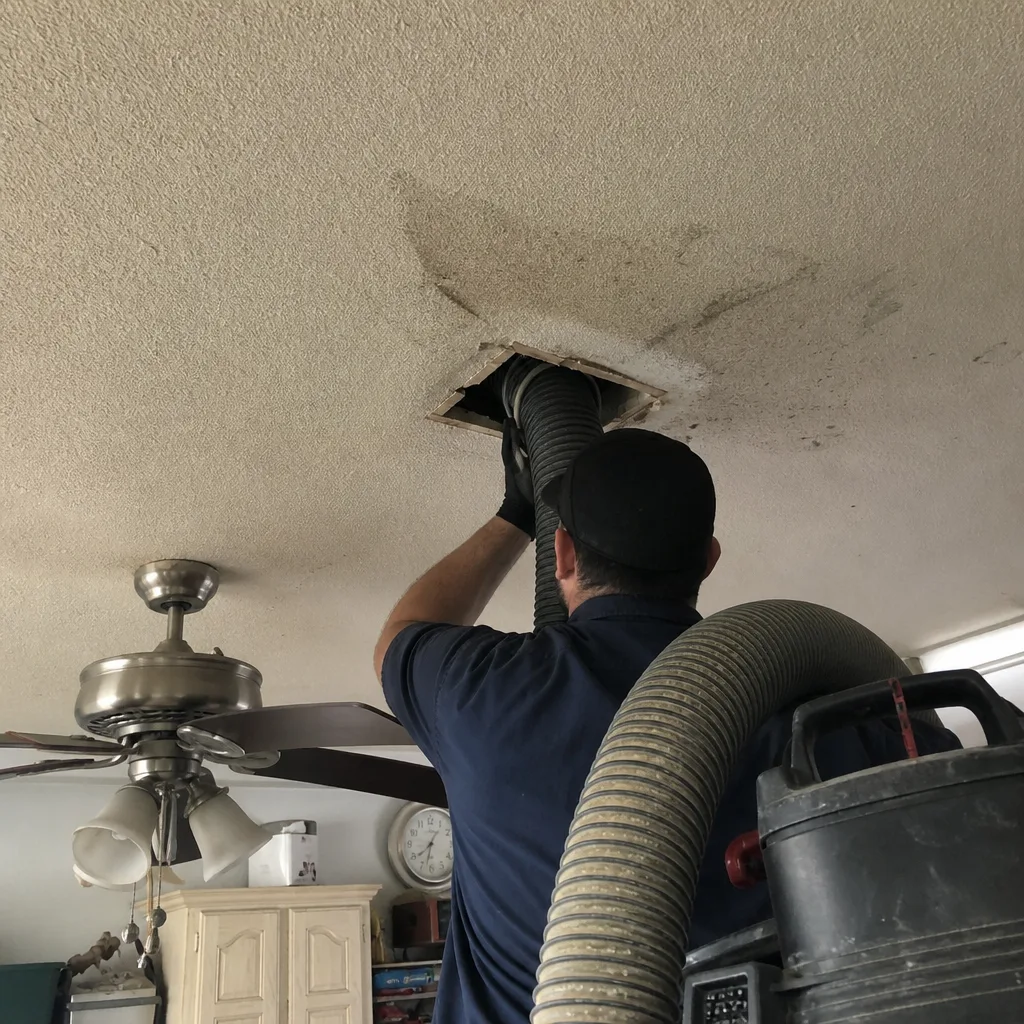 Before
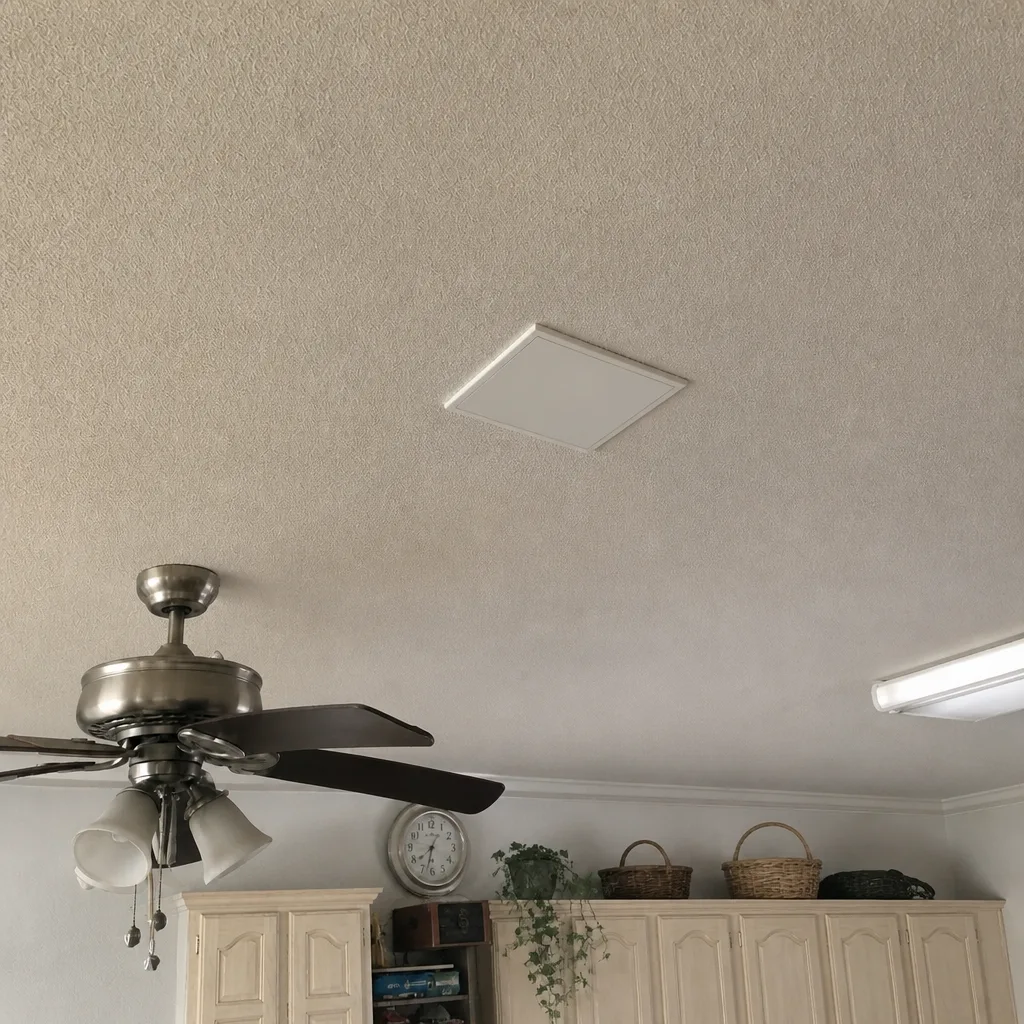 After
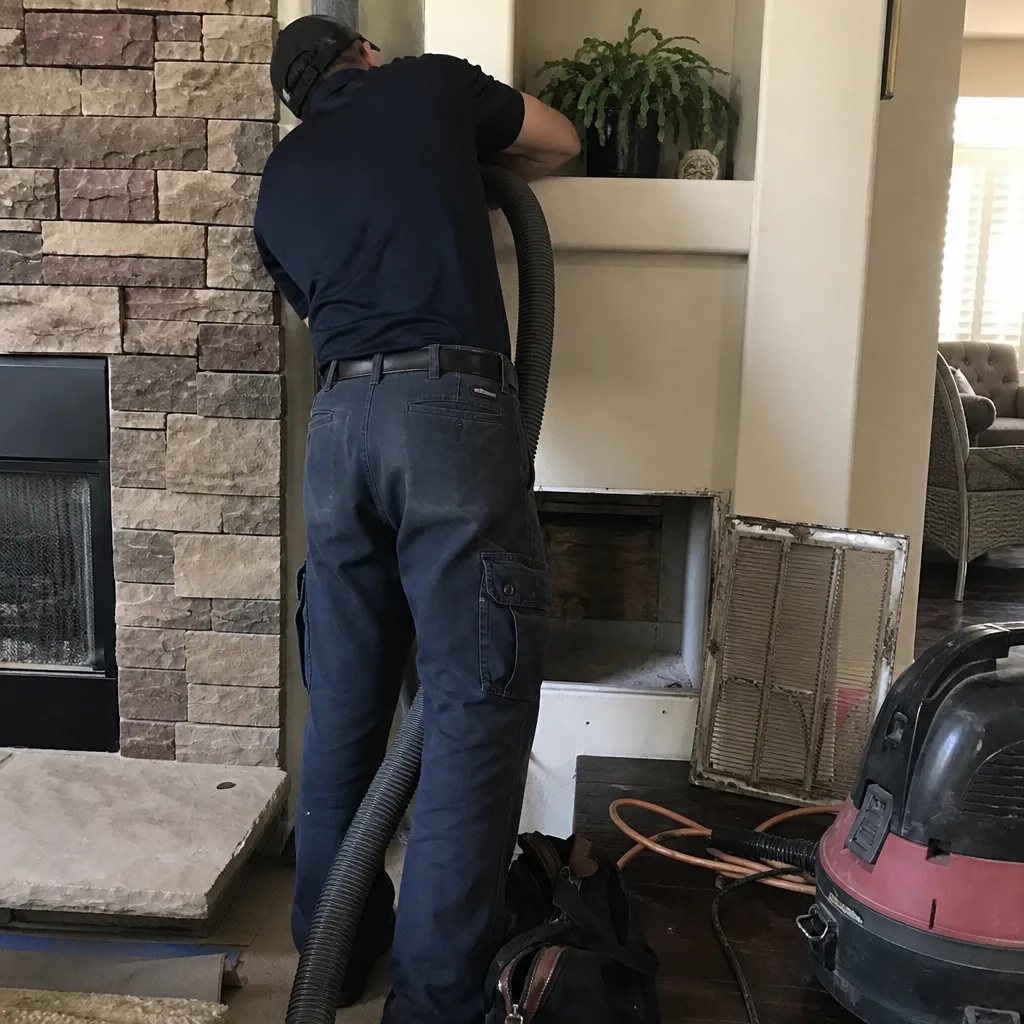 Before
 After
 Before
 After
When to Call a Professional
Call a professional when your checklist shows any of the “clean now” triggers above, or when the findings overlap: streaks at boots plus amperage drift, or musty odor plus elevated humidity. That overlap is usually a sign that cleaning alone won’t be enough and the system needs a full duct-to-equipment evaluation. Also call if your home is more than a decade old and has never had a documented cleaning, or if you’re moving into a Broomfield property where the duct history isn’t known. Broomfield Air Duct Cleaning Pros offers free estimates in Broomfield. Call (877) 792-6623. We answer 24/7. Fast dispatch from 7am to 7pm, Sunday through Friday. The local pro we connect you with is licensed and insured as the state requires, and you get one flat price per system agreed before work starts, with before-and-after photos of your own ducts to show what was actually removed.
Frequently Asked Questions
Most Broomfield homes need professional duct cleaning every three to five years. Homes near wildfire smoke pathways, homes with pets or allergy sufferers, and homes with heavy pollen exposure from March to May may need it every two to three years. If your checklist logs trigger findings early, that overrides the general interval. Call (877) 792-6623 for an exact quote. Estimates are free.
A properly seated MERV-11 or MERV-13 is the practical sweet spot for most Broomfield homes, given spring pollen and summer smoke. Never go above what your system’s return duct is sized to handle, and always fix filter bypass before increasing MERV. A cheaper filter in a well-sealed slot catches more than an expensive filter in a leaky one. Call (877) 792-6623 for help choosing a rating for your specific system.
Ask for before-and-after photos of your own ducts, taken inside the duct, not just of the register grilles. Reputable providers document the cleaning and can show you the resulting airflow and static pressure readings. One flat price per system, agreed before work starts, is the other marker that a provider intends to do the whole job. Call (877) 792-6623 for a free estimate with documented process.
Cheap quotes usually mean a surface blast with a shop vac and no contact cleaning, no HEPA containment, and no photos of the actual work. Debris gets dislodged and redistributed rather than captured. The real cost shows up later as persistent dust and repeated service calls. Call (877) 792-6623 for a quote that reflects the full job, not a teaser price.
A newer home with no construction dust, no pets, and stable checklist readings can usually stretch the interval to five years. Homes built within the last few years often still carry construction drywall dust in the returns, which the checklist will show as heavy boot loading in the first season or two. If you see heavy dust at the boots, schedule cleaning sooner. Call (877) 792-6623 for an inspection-based estimate.
Air duct cleaning removes accumulated debris from the interior of the duct network. Duct repair and sealing fixes leaks, disconnected runs, and unsealed penetrations that allow air loss and pressure imbalance. A home with chronic register weakness or elevated humidity often needs both, and both can be handled in one engagement. Call (877) 792-6623 for a combined free estimate.
The Bottom Line
Your duct maintenance checklist works best as a diagnostic document, not a cleaning schedule. Track filters by loading rate and MERV, inspect register boots with a flashlight and mirror, log blower amperage against a baseline, watch humidity, and tie it all to Broomfield’s March-through-October pressure cycle: pollen, smoke, then heating ramp-up. Use the trigger thresholds to decide when to book service and when to wait. Know that cleaning is the start; sealed, repaired ducts are the finish. And when your log tells you it’s time, call (877) 792-6623 for a free estimate. We answer 24/7. Fast dispatch from 7am to 7pm, Sunday through Friday.
Written by the team at Broomfield Air Duct Cleaning Pros.